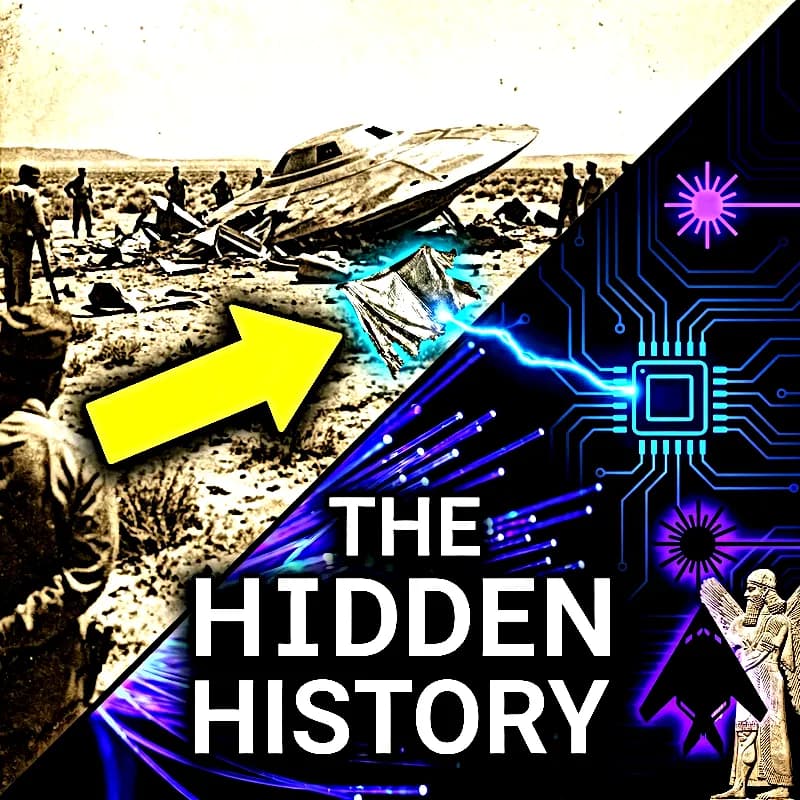
A Secret History: A Chronological Account of Advanced Technology, Unidentified Phenomena, and Clandestine Operations
This chronological dossier traces the intertwined histories of advanced technology development, unidentified aerial phenomena, and clandestine military-industrial operations from ancient prehistory through the early 21st century. Compiled as a companion to the American Computer Company investigation, it maps the key events, institutional actors, and classified programs that constitute the evidentiary foundation for claims of recovered non-human technology and its systematic integration into the American defense establishment.
Dossier Snapshot
Year Span
1939-2009
Word Count
3,080
Source Entries
0
Citation Calls
0
Report Signal Profile
Section Headings
38
Table Lines
0
Unique Citations
0
Source Entries
0
Verification Metrics
| Metric | Value |
|---|---|
| Document ID | drr_american_computer_company_chronology |
| Section Headings | 38 |
| Table Lines | 0 |
| Year Span | 1939-2009 |
| Citation Coverage | 0/0 |
I. Ancient Prologue: Echoes in Deep History
While deeply controversial and often relegated to the realm of mythology, any comprehensive historical review of this subject requires an examination of ancient records, artifacts, and belief systems that some researchers propose as evidence of prehistoric extraterrestrial contact. This perspective, derived from modern analyses of ancient texts and archaeological finds, posits that the technological and sociological upheavals of the 20th century did not occur in a vacuum. Instead, they may be the latest chapter in a long, unacknowledged history of non-human interaction with Earth. This ancient context, as alleged by its proponents, sets a crucial stage for the events that would follow.
c. 450,000 BCE
According to translations of ancient Sumerian tablets by the author Zecharia Sitchin, this period marks the arrival of a race of extraterrestrial visitors known as the "Anunnaki," a term interpreted to mean "those who from heaven to Earth came." Their stated purpose for traveling to Earth was to establish extensive mining operations to procure gold, which they reportedly needed to repair the damaged atmosphere of their home world.
c. 40,000 BCE
The oldest retrievable human DNA, recovered from a specimen known as Mungo Man, dates to approximately 42,000 years ago. Analysis of this ancient sample revealed a mitochondrial DNA profile that appears to differ substantially from that of modern humans. Researchers have noted this could indicate that significant genomic changes have occurred in the human species over the last 40,000 years.
c. 13,000 BCE - 1539 CE
Across a span of nearly 15,000 years, a wide range of archaeological evidence has been presented by some researchers as physical depictions of non-human visitors and their advanced craft. This body of evidence includes:
- The Nazca Lines: The famous geoglyphs in Peru include a massive, 32-meter humanoid figure.
- Ancient Rock Art: Glyphs discovered in Charma, India, and similar rock art in Africa, have been dated to approximately 7000 BCE and appear to show otherworldly figures. Rock art from Cathedral Park Drakensberg in South Africa, dated to c. 6000 BCE, contains similar imagery.
- Figurines and Ceramics: Numerous artifacts from pre-modern civilizations depict helmeted creatures with antennae and beings with distinctly lizard-like features.
- Medieval Art: Various pieces of medieval art contain clear depictions of flying craft in the skies, distinct from any known terrestrial technology of the era.
c. 4th Century BCE
The ancient Greek mythographer Euhemerus proposed a theory that myths were not merely symbolic allegories but were, in fact, distorted historical accounts based on actual events and real personages who were later deified. This perspective suggests that the "gods" of ancient cultures may have been powerful historical figures, a view that modern theorists have extended to propose that the "gods" of ancient cultures may have been powerful, technologically advanced extraterrestrial visitors.
These echoes from deep history, whether interpreted as myth or memory, provide a controversial but essential backdrop for the technologically focused and meticulously documented events that began to unfold in the decades leading into the Second World War.
II. The Modern Era Begins: World War, Secret Science, and New Realities
The period encompassing the 1930s and 1940s stands as a pivotal era in this secret history. It was a time defined by the convergence of unprecedented global conflict, quantum leaps in science (from the dawn of digital computing to the harnessing of the atom), and reported esoteric research by Nazi Germany. This confluence of war, science, and secrecy created a fertile ground for the extraordinary events that would soon reshape the global landscape, both in public and in the shadows.
1930s
Adolf Hitler's regime was documented to have a deep fascination with occult sciences and exotic technologies, viewing them as a potential means for Nazi Germany to achieve global dominion. It is believed that the regime utilized occult organizations, such as the Vril and Thule Societies, in an attempt to establish communication with extraterrestrial races through the practice of "psychic channeling." During this same decade, inventor Nikola Tesla envisioned a particle beam weapon, proposing it to both the Russians and the British as a defense against the growing threat of aerial bombardment. Simultaneously, the foundations of the digital age were being laid, moving beyond Charles Babbage's 19th-century "Analytical Engine" with the pioneering work of Konrad Zuse in Germany and Howard Aiken at IBM in the United States.
1939-1940
A critical breakthrough in materials science occurred when American engineer Russell Ohl, working at Bell Labs, discovered the p-n junction. This discovery of the p-n junction (the microscopic barrier that controls the flow of electricity in silicon) would prove to be the fundamental building block for virtually all modern semiconductor technology, from diodes to integrated circuits.
1942-11-14
At a meeting of the S-1 Executive Committee (the group overseeing the nascent U.S. atomic bomb effort), physicist James Chadwick expressed grave fears that alpha particles emitted by plutonium could interact with light-element impurities, inducing predetonation and causing a catastrophic failure. While the concern was significant, a follow-up report was issued just four days later. Physicists Ernest Lawrence, J. Robert Oppenheimer, Arthur Compton, and Edwin McMillan expressed confidence that the required purity levels for the fissile material could be achieved.
1943
The British war effort successfully utilized digital computers for their critical code-breaking operations. In the same year, Admiral Karl Donitz, commander of the Nazi submarine fleet, made a striking claim, stating that his fleet had constructed an "impregnable fortress" for the Fuhrer in another part of the world.
1944-12
The "water boiler" nuclear reactor, a small, aqueous homogeneous reactor, commenced operations at the Los Alamos Laboratory, providing crucial data for the Manhattan Project.
1945
Z Division, the ordnance design, testing, and assembly arm of the Los Alamos Scientific Laboratory, officially began operations. This entity would later be spun off to become Sandia National Laboratories, a key engineering facility in the U.S. nuclear weapons complex. During this year, Philip J. Corso, then 28 years old, developed a fascination with electromagnetism after a personal encounter with the properties of Castellani Ointments.
1945-05-08
Nazi Germany executed its unconditional surrender, officially ending the war in Europe.
1946-09-25
More than a year after the war's end, an Agence France Press report detailed "continuous rumors" based on "true happenings" of German U-boat activity in the Tierra del Fuego region, the remote archipelago located between the southern tip of South America and the Antarctic continent.
1946-1947
The United States launched a large-scale naval military expedition to Antarctica under the name "Operation High Jump." The massive task force was composed of 4,700 military personnel, the aircraft carrier USS Philippine Sea, and a fleet of support ships and aircraft. The official purpose, as commanded by Admiral Chester Nimitz, included tasks designed "to consolidate and extend American sovereignty over the largest practical area of the Antarctic continent."
The end of the war did not bring an end to the mysteries. It instead gave way to a new era of high strangeness, one that would be defined not by secret Nazi bases but by a singular, world-altering event in the high desert of New Mexico: Roswell.
III. The Roswell Incident and the Dawn of a Cover-Up
More than any other event, the incident outside Roswell, New Mexico, in July 1947 marks the beginning of what researchers allege is a decades-long official policy of denial and secrecy regarding unidentified aerial phenomena. For many whistleblowers and investigators, it is the foundational event: the primary catalyst for the clandestine reverse-engineering programs that would secretly shape the technology of the late 20th century and beyond.
1947-07
- The Crash: In a sheep pasture approximately 75 miles northwest of Roswell, a local rancher named Mack Brazel discovered a large field of unusual wreckage.
- The Material: Firsthand witnesses who handled the debris provided remarkably consistent descriptions of its otherworldly properties.
- It was a "dull gray metallic cloth-like material," often compared to tinfoil, that was paper-thin yet possessed incredible strength.
- The material exhibited a "shape memory" characteristic: when crumpled into a ball, it would spontaneously unfold itself back to its original shape, leaving no creases or folds.
- It possessed extreme durability and could not be cut with scissors or razors, nor could it be damaged by fire.
- The Bodies: Colonel Philip J. Corso would later claim that while stationed at Fort Riley, Kansas, he was ordered to inspect a sealed coffin containing the body of an extraterrestrial biological entity (EBE) recovered from the crash. According to reports from military medical examiners, the entities had fibrous and flexible skeletal tissue, four-fingered hands, and a notable lack of discernible reproductive organs or digestive systems. Pathologists speculated that this resiliency might function like biological shock absorbers, making the entities' frames uniquely suited to withstand the extreme gravitational forces and potential traumas of high-speed travel. This led to speculation that the beings were not naturally evolved but were specifically engineered for the rigors of long-distance space travel.
- Initial Military Response: Personnel from the 509th Bomb Group at Roswell Army Air Field were dispatched to recover the material. Following the recovery, an official press release was issued by the base, announcing that they had come into possession of a "flying disc."
- The Cover-Up: The official admission was short-lived. General Roger Ramey of the Eighth Air Force in Fort Worth, Texas, quickly countermanded the initial report, staging a press conference where he claimed the object was nothing more than a common weather balloon equipped with a radar target. The actual wreckage, however, was secretly flown to Wright Field (later Wright-Patterson Air Force Base) for analysis under the command of Lieutenant General Nathan P. Twining. An intense effort to suppress the true story was immediately launched. Military personnel reportedly searched news offices in Roswell and Albuquerque to retrieve copies of the original press release and confiscated a recorded interview with Mack Brazel from the home of radio station owner Walt Whitmore Sr. The Brazel family was allegedly harassed by the military; their ranch house was ransacked, and Mack Brazel was forced to swear an oath of silence.
1947-09-24
A memorandum was reportedly issued from President Harry S. Truman to his Secretary of Defense, James Forrestal, addressing the ongoing situation.
1947-1948
The U.S. Air Force established its first formal inquiry into the phenomenon of unidentified flying objects, designating it Operation Sign.
1948
Z Division was separated from Los Alamos to become its own branch and was officially renamed Sandia Laboratory.
1948-1952
The official USAF inquiry into UFOs continued under a new name: Operation Grudge.
1949-11-01
The management of Sandia Laboratory was transferred to Sandia Corporation, a newly created wholly owned subsidiary of the Western Electric company.
The swift and decisive cover-up of the Roswell incident established a precedent of secrecy that would endure for generations, driving the analysis of the recovered artifacts deep underground into clandestine research projects that aimed to unlock and exploit their technological secrets.
IV. A Clandestine Cold War: Reverse-Engineering and Global Treaties
According to whistleblower testimony, the decades following the Roswell incident were defined by two parallel Cold Wars. The first was the public, ideological, and geopolitical struggle against the Soviet Union. The second was a secret conflict waged in the shadows, involving the painstaking analysis of recovered non-human technology and complex, high-stakes interactions with extraterrestrial entities. This secret war, hidden from public and even congressional oversight, allegedly provided the ultimate justification for the creation of vast "black budget" programs and a level of secrecy unprecedented in human history.
Early 1950s
During this period, a young Jack Sarfatti reported a childhood experience of receiving a phone call from a mechanical voice that identified itself as a "conscious computer on board a spacecraft." Meanwhile, Colonel Philip J. Corso was assigned to the Pentagon, where he began working on secret matters directly related to the Roswell incident.
1952-1969
The U.S. Air Force's final and most well-known official inquiry into UFOs, Operation Blue Book, was active for 17 years. Over its lifetime, it investigated 12,618 sightings, ultimately classifying 701 of them as "unidentified." The project's termination was recommended by the government-sponsored Condon Report, a decision that many researchers viewed not as a conclusion, but as a deliberate continuation of the official cover-up.
1954
Multiple whistleblowers, including military intelligence operative William Cooper and Colonel Philip J. Corso, have alleged that President Dwight D. Eisenhower held a secret meeting with an extraterrestrial race at Edwards Air Force Base. During this summit, a formal treaty was allegedly signed. The terms of this agreement, according to these sources, allowed the alien visitors to conduct biological experiments on a limited number of humans (abductions) in exchange for providing the U.S. government with advanced technology. Corso later characterized the agreement as a "negotiated surrender," stating that the aliens "dictated the terms because they knew what we most feared was disclosure."
1957
Colonel Corso reported a personal encounter with an EBE in a cave at the White Sands missile range in New Mexico. He described the being as wearing a helmet with a silver-like headband, in the middle of which was a stone. Corso believed this device was a form of technological interface.
1961-1963
While serving at the Pentagon's Foreign Technology Desk under Lieutenant General Arthur Trudeau, Colonel Corso was tasked with a unique and highly classified mission. His primary role was to act as a conduit, secretly disseminating recovered alien technology from the "Roswell file" to U.S. defense contractors for the purpose of reverse-engineering. Corso claimed to have personally "seeded" the development of several revolutionary technologies by providing artifacts and insights from the crash debris to American industry. These technologies included:
- Lasers: Derived from a recovered artifact described as a "flashlight device that threw a pencil thin, intense beam of light...that could actually cut through metal."
- Integrated Circuits: Inspired by the need to replicate the functionality of small, printed circuit-like chips found within the alien craft.
- Fiber Optics: Based on strands of a fiber from the wreckage that were discovered to be incredibly strong and capable of transmitting light.
- Night Vision Devices: Inferred from the design of view ports on the craft that allowed its occupants to see with perfect clarity in complete darkness.
- Super-Tenacity Fibers (Kevlar): Derived from the analysis of fibers found in the Roswell file that were so strong that "even razors couldn't cut through."
- Particle Beam Weapons: Based on a developing understanding of the alien craft's advanced propulsion and defensive systems.
1974
Colonel Corso claimed that technological advancements derived from long-term reverse-engineering efforts, particularly the development of high-energy lasers (HELs), enabled the U.S. to achieve its first successful shootdown of an alien craft over Ramstein Air Force Base in Germany.
1979
The U.S. Congress officially recognized Sandia as a national laboratory, cementing its role in advanced research and development for national security.
1980
The VIP Club, a legacy organization for employees of technology and defense companies including Unisys and Lockheed Martin, was established.
1980-12
The United Kingdom became the site of a major UFO event known as the Rendlesham Forest incident. U.S. Air Force patrolmen stationed near RAF Woodbridge witnessed a triangular craft maneuvering and landing in the nearby forest. Physical evidence was discovered the following day, including three distinct depressions in the ground where the object had rested. These depressions registered elevated beta/gamma radiation readings.
The era of deep secrecy and clandestine development slowly began to give way as the original participants aged and the geopolitical landscape of the Cold War transformed, setting the stage for a new period of whistleblowing and partial disclosure to an increasingly curious public.
V. The Disclosure Era and Modern Legacy
The end of the Cold War and the passage of time brought a new phase in this secret history: an era of "partial disclosure." As the original participants in the post-war events reached the end of their lives and careers, a handful of high-ranking officials began to break their oaths of silence. Figures like Colonel Philip Corso stepped forward to provide an insider's view of the clandestine programs, while the institutional heirs of those programs, like Sandia National Laboratories, continued their advanced and often highly classified research, carrying the legacy of 1947 into the 21st century.
1993
Sandia Corporation, the management entity for Sandia National Laboratories, became a wholly owned subsidiary of Martin Marietta, which would soon merge to become the Lockheed Martin Corporation, one of the world's largest defense contractors.
1997
Colonel Philip J. Corso made his public debut with the publication of his explosive memoir, The Day After Roswell. Following the book's release, he became an active figure on the disclosure circuit, speaking at conferences in Pescara and Rome, Italy, and meeting with international researchers such as Paola Harris and Bob Vanderclock.
1998
Corso made a high-profile appearance on the Maurizio Costanzo Show, one of Italy's most watched television programs. On air, he publicly stated that he had personally seen an alien body recovered from the Roswell crash and confirmed that there had been other, similar crash events. That same year, the renowned and innovative aircraft designer Burt Rutan visited Corso at his home, where the two men reportedly discussed advanced aerospace designs for seven hours.
2003-01
Dr. Michael E. Salla began publishing a series of research papers online, creating the conceptual framework for a new field of study he termed "exopolitics," dedicated to analyzing the political implications of an extraterrestrial presence.
2009
By this year, Sandia National Laboratories (SNL/NM) in New Mexico was a sprawling, high-tech research facility operating under a complex web of modern regulations. Its annual environmental report for 2009 provides a snapshot of its vast and varied operations. The laboratory exceeded the federal reporting thresholds for lead release, primarily due to the use of lead-containing solders in its research. It operated under numerous environmental statutes, including the National Environmental Policy Act (NEPA) and the Resource Conservation and Recovery Act (RCRA). The lab maintained two large evaporation lagoons under a state discharge permit and reported no violations of its sewer discharge limits set by the Albuquerque Bernalillo County Water Utility Authority. Demonstrating a commitment to sustainability, SNL/NM also achieved high rates of recycling, diverting 21,889 tons of waste from local landfills.
Sources
- Philip J. Corso, The Day After Roswell, Pocket Books (1997)
- Zecharia Sitchin, The 12th Planet, Avon Books (1976)
- Sandia National Laboratories Annual Environmental Report (2009)
- USAF Project Blue Book Archive
- Gordon Thomas, Gideon's Spies: The Secret History of the Mossad, St. Martin's Press (1999)
- Dr. Michael E. Salla, Exopolitics Institute publications (2003)