The Loveland Frogman Encounters
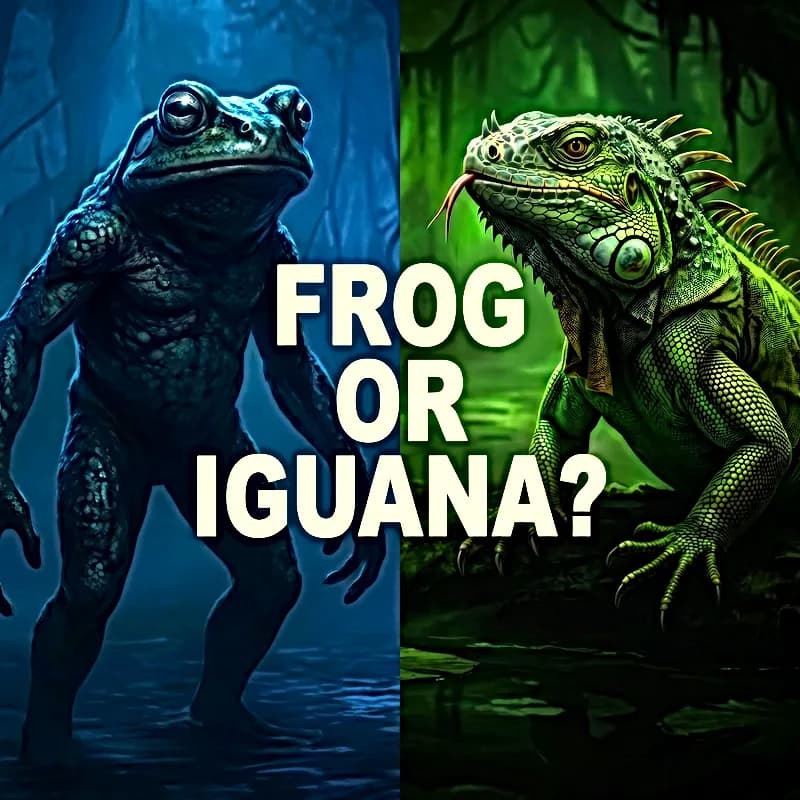
The Loveland Frogman legend centered on Loveland is best understood as a layered folklore complex rather than a single clean case file: the surviving record contains two different Loveland-area 1955 "little men" narratives, a 1972 newspaper account of two police sightings near the Little Miami River, and a 2016 interview in which officer Mark Matthews said the "monster" had really been a tailless iguana. [2]Source 2 https://tetzoo.com/blog/2020/1/12/lore-of-the-loveland-frog, [8]Source 8 https://skeptoid.com/episodes/473
The most defensible conclusion is that the familiar modern image of a roughly four-foot, upright frog-creature is a later synthesis built from sources that originally varied in important ways: the 1955 material described "strange little men" and a humanoid roadside encounter, while the 1972 reporting described an unidentified animal with a frog- or lizard-like face and heights ranging from two to four feet. [1]Source 1 https://strangeanimalspodcast.blubrry.net/2022/10/, [2]Source 2 https://tetzoo.com/blog/2020/1/12/lore-of-the-loveland-frog
Legend Metrics
Primary Encounters
3
Creature Height
3-4 feet
Years Spanned
1955-2016
Odors Noted
Alfalfa & Almonds
Explanatory Pathways
Cryptid Amphibian
1
Misidentified Iguana
2
Civic Mascot / Folklore
3
The Source Record
| Layer in the story | Best-supported details::What makes it tricky |
|---|---|
| 1955 bridge case | A source chain preserved in later ufology literature says a witness identified only as C.F. saw four small figures beneath a bridge in the Loveland area, noticed a terrible smell, and reported the incident to police.::The account survives most accessibly through later quotation and summary rather than through an easily verifiable, contemporary police file. |
| 1955 Branch Hill case | In the separate Branch Hill narrative, Robert Hunnicutt reported seeing three short gray humanoids, one handling a rod or chain with blue-white sparks, plus a strong odor later described as 'fresh-cut alfalfa' with almonds.::This is the clearest source for the later spark-emitting wand motif, but it also reaches us through later interviews and compilations rather than a simple 1955 newspaper or police artifact. |
| 1972 police sightings | A March 27, 1972 article in the Cincinnati Post reported that Ray Shockey saw an animal two to three feet tall with dark green or blackish scaly skin, and that Mark Matthews later saw the same type of creature, estimated it at two to four feet, and said it showed a forked tongue.::This is the best contemporary media evidence for the police sightings, but it is still a newspaper account rather than a preserved evidence file. |
| 2016 retraction | In a 2016 interview with WCPO, Matthews said the creature was not walking upright, that he shot it, and that it turned out to be a large iguana about 3 to 3.5 feet long that was missing its tail.::That account is important, but it surfaced 44 years after the 1972 episode and depends primarily on Matthews's later recollection. |
The 1955 record
The 1955 origin story is not one story. The material preserved by later writers says the earliest documentary trail ran through a September 1955 CRIFO Orbit item that described a "prominent businessman" seeing four "strange little men about three feet tall" under a bridge, but Leonard Stringfield later said that description had to be corrected and that the witness was actually a 19-year-old Civil Defense volunteer, C.F.. [1]Source 1 https://strangeanimalspodcast.blubrry.net/2022/10/, [2]Source 2 https://tetzoo.com/blog/2020/1/12/lore-of-the-loveland-frog
That bridge case is notably brief and vague. C.F. reportedly saw four small figures on the riverbank beneath the bridge, noticed a terrible smell, drove to police headquarters, and later said he had seen the figures for only about ten seconds. [2]Source 2 https://tetzoo.com/blog/2020/1/12/lore-of-the-loveland-frog
The far more elaborate 1955 story is the Branch Hill / Hunnicutt encounter, and this is the version that most clearly fed the later Frogman legend. Hunnicutt said that at about 3:30 a.m. he saw three figures in the grass by the roadside, each about three and a half feet high, arranged in a rough triangle. [8]Source 8 https://skeptoid.com/episodes/473
The celebrated "wand" detail comes from this Branch Hill account, but the original wording is stranger and more specific than the modern shorthand suggests. Hunnicutt said the front figure held its arms above its head as though holding a rod or chain, and he saw blue-white sparks jump from one hand to the other just above or below that object. [2]Source 2 https://tetzoo.com/blog/2020/1/12/lore-of-the-loveland-frog
The physical description was also more humanoid and more grotesque than many later retellings imply. Hunnicutt described the beings as gray, with a large straight mouth crossing much of the lower face in a way that reminded him of a frog, bald heads with horizontal folds, lopsided chests, and uneven arm lengths. [1]Source 1 https://strangeanimalspodcast.blubrry.net/2022/10/, [8]Source 8 https://skeptoid.com/episodes/473
The odor report is one of the most distinctive recurring details in the 1955 material. Hunnicutt said he noticed a strong smell as he left that he compared to "fresh-cut alfalfa, with a slight trace of almonds," and he later said he and his girlfriend encountered the same smell in the area again months afterward. [2]Source 2 https://tetzoo.com/blog/2020/1/12/lore-of-the-loveland-frog
The police response in the Hunnicutt case was cautious rather than credulous. The local chief of police went to the site, believed Hunnicutt had been genuinely frightened, checked that he did not seem intoxicated, and found nothing when he searched the area. [8]Source 8 https://skeptoid.com/episodes/473
The important analytical point is that the 1955 record already contains internal contradiction. The bridge case concerns four briefly seen figures and a smell, while the Branch Hill case concerns three roadside humanoids, sparks, and a detailed body description, so the documentary record itself suggests that later retellings collapsed at least two different 1955 narratives into one "Frogman" origin story. [2]Source 2 https://tetzoo.com/blog/2020/1/12/lore-of-the-loveland-frog
The 1972 police sightings
The 1972 episode is the part of the legend that most clearly shifted the story from "little men" folklore into a cryptid-animal framework. According to the March 27, 1972 report in the Cincinnati Post, Ray Shockey saw an animal two to three feet tall with dark green or blackish scaly skin near the river late at night. [1]Source 1 https://strangeanimalspodcast.blubrry.net/2022/10/, [2]Source 2 https://tetzoo.com/blog/2020/1/12/lore-of-the-loveland-frog
The same article said that ten days earlier than publication, Mark Matthews was driving home near the same stretch of road when he saw "the same type of creature," partially illuminated it with his headlights, said it stuck out a forked tongue, fired three shots, and estimated the animal at two to four feet high. [2]Source 2 https://tetzoo.com/blog/2020/1/12/lore-of-the-loveland-frog
This article matters because it is the closest thing to a contemporary public source for the police story that surfaced in the materials I reviewed. It also shows that the now-standard image of a four-foot bipedal amphibian slightly overstates how fixed the 1972 descriptions really were, because the contemporaneous heights and features were still somewhat variable and included lizard-like details as well as frog-like ones. [8]Source 8 https://skeptoid.com/episodes/473
The 1972 material is therefore stronger than the 1955 material in one sense and weaker in another. It is stronger because it appears in a dated newspaper report, but weaker because the report still documents only what the officers said they saw and does not supply a preserved specimen, a police evidence file, or an undisputed photograph. [2]Source 2 https://tetzoo.com/blog/2020/1/12/lore-of-the-loveland-frog, [8]Source 8 https://skeptoid.com/episodes/473
The iguana retraction assessed
Matthews's later explanation is straightforward in its essentials. In 2016, after new local publicity around a claimed sighting, Matthews told WCPO that the creature "wasn't walking upright" and "didn't climb over the guardrail," that he shot it because he thought nobody would believe him, and that the body was a large iguana missing its tail. [2]Source 2 https://tetzoo.com/blog/2020/1/12/lore-of-the-loveland-frog
On its face, the iguana explanation has some plausibility. Matthews said the animal was about 3 to 3.5 feet long, thought it had likely been an escaped or released pet, and speculated that it may have stayed warm near industrial cooling-water outflow by the boot factory. [2]Source 2 https://tetzoo.com/blog/2020/1/12/lore-of-the-loveland-frog
The trouble is that the retraction does not cleanly harmonize with the earlier record. The 1972 newspaper version attributed to Matthews included a forked-tongue detail and a height of two to four feet, while the 2016 version said the animal was not upright at all and went under the guardrail rather than over it. [8]Source 8 https://skeptoid.com/episodes/473
The biology also makes the iguana explanation awkward enough that it should be treated as possible but not decisive. Historical weather data for Cincinnati show a low of 20°F on March 3, 1972, the night of Shockey's sighting, and a low of 37°F on March 17, 1972, around the time Matthews's sighting was later dated in reconstruction. [3]Source 3 https://www.extremeweatherwatch.com/cities/cincinnati/year-1972
That matters because green iguanas are ectotherms, PetMD says their habitat's warm end should be 100–120°F, the cool end 80°F, and temperatures should not drop below the low- to mid-70s°F at night, while National Geographic notes that iguanas are active during the day. [4]Source 4 https://www.petmd.com/reptile/green-iguana-care-sheet
Those facts do not make Matthews's explanation impossible, especially if warm industrial runoff really existed where he said it did, but they do mean the tailless-pet-iguana theory is a qualified explanation rather than a slam-dunk resolution. [2]Source 2 https://tetzoo.com/blog/2020/1/12/lore-of-the-loveland-frog
A further complication is the provenance of earlier "confession" stories. Darren Naish's review of Ryan Haupt's investigation says that supposed pre-2016 quotations from Matthews traced to a 2001 X-Project Paranormal Magazine item with uncertain authenticity, and Haupt likewise wrote that he was not able to find the primary source for a supposed 2001 e-mail interview. [2]Source 2 https://tetzoo.com/blog/2020/1/12/lore-of-the-loveland-frog, [8]Source 8 https://skeptoid.com/episodes/473
My own assessment is therefore narrow and evidence-based: Matthews probably offered a sincere later explanation, and an escaped iguana could account for some aspects of the sighting, but the explanation remains under-documented, late, and not fully consistent with the best-known 1972 newspaper account. [8]Source 8 https://skeptoid.com/episodes/473
How the legend became civic folklore
Whatever happened in 1955 or 1972, the story has plainly crossed from uncertain encounter report into institutionalized local folklore. The City of Loveland now says the Loveland Frogman is the city's mascot, says the sightings have made it a legend in Ohio folklore since 1955, and ties it directly to local identity and tourism. [5]Source 5 https://lovelandoh.gov/491/City-Mascot
That embrace is not merely rhetorical. A city manager's weekly report said the new city mascot debuted during Hearts Afire Weekend in 2023, and the city's official event page says it launched a leap-year "Return of the Frogman" celebration in 2024. [6]Source 6 https://www.lovelandoh.gov/DocumentCenter/View/2708/2-17-2023
The legislative recognition effort is now official too. The Ohio House of Representatives lists House Bill 821 as legislation to designate the Loveland Frog as Ohio's official state cryptid, and the bill text itself describes the legendary creature as first reported in the 1950s, living near the Little Miami River, and contributing to festivals, artwork, merchandise, tourism, and local economy. [7]Source 7 https://ohiohouse.gov/legislation/136/hb821, [9]Source 9 https://nypost.com/2026/04/28/us-news/mysterious-loveland-frogman-creature-could-become-ohios-official-cryptid/?utm_source=chatgpt.com
That civic afterlife helps explain why the case remains so culturally resilient even though the evidentiary base is thin. In other words, the Loveland Frogman persists not because the record grows cleaner over time, but because the story has become socially useful as a regional emblem, a festival brand, and a piece of shared southwest Ohio weirdness. [5]Source 5 https://lovelandoh.gov/491/City-Mascot
Open questions and limitations
Some important pieces of the record remain hard to verify directly. The 1955 material is most accessible through later reproductions and summaries, and even the skeptical review by Ryan Haupt said he found nothing in the Cincinnati Enquirer online archives and nothing in the Loveland Police Department's report archives that clarified the case. [8]Source 8 https://skeptoid.com/episodes/473
That means several famous details should be treated with caution. The sparking rod, the alfalfa-and-almonds odor, and the highly specific 1955 body description are traceable in the sources I reviewed, but they are traceable mainly through later publications and indexed excerpts rather than through an unbroken run of simple, contemporary primary records. [2]Source 2 https://tetzoo.com/blog/2020/1/12/lore-of-the-loveland-frog
So the historical bottom line is this: the best-supported reality is an evolving legend built from contradictory 1955 humanoid reports, a 1972 police-animal story, and a much later iguana explanation from one of the officers. That is enough to explain why the Loveland Frogman became famous, but not enough to prove that a single four-foot bipedal amphibian was ever objectively present in one stable, consistent form. [8]Source 8 https://skeptoid.com/episodes/473
Sources
- https://strangeanimalspodcast.blubrry.net/2022/10/
- https://tetzoo.com/blog/2020/1/12/lore-of-the-loveland-frog
- https://www.extremeweatherwatch.com/cities/cincinnati/year-1972
- https://www.petmd.com/reptile/green-iguana-care-sheet
- https://lovelandoh.gov/491/City-Mascot
- https://www.lovelandoh.gov/DocumentCenter/View/2708/2-17-2023
- https://ohiohouse.gov/legislation/136/hb821
- https://skeptoid.com/episodes/473
- https://nypost.com/2026/04/28/us-news/mysterious-loveland-frogman-creature-could-become-ohios-official-cryptid/?utm_source=chatgpt.com