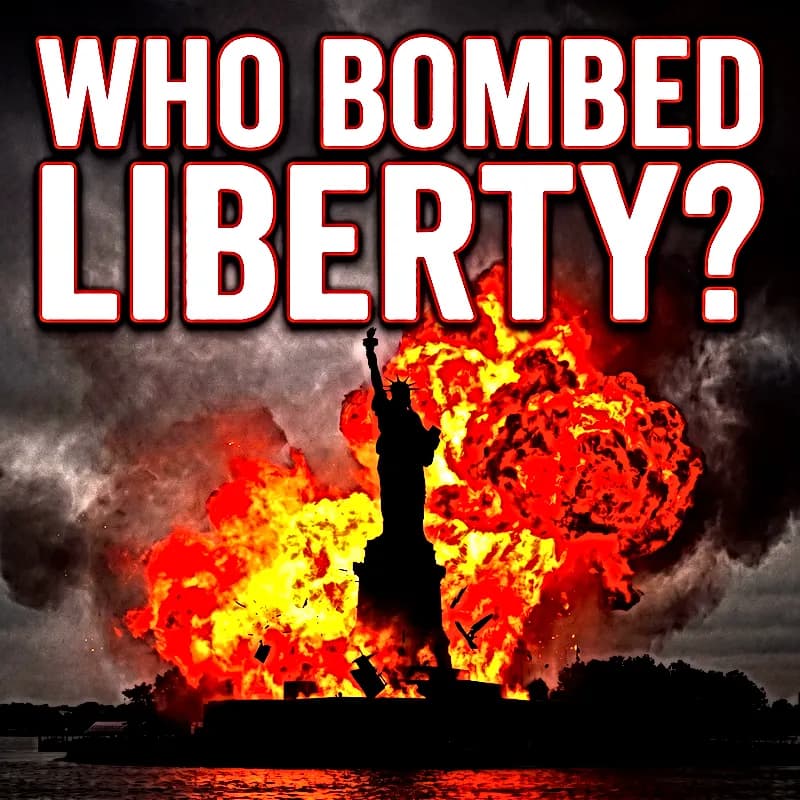
The Black Tom Explosion of 1916: A Geopolitical Analysis of German Sabotage in New York Harbor
Black Tom Explosion Profile
Explosives Detonated
2 Million lbs
Equivalent Earthquake
5.0 - 5.5 Richter
Radius of Broken Windows
Lower Manhattan & Jersey City
Final Reparations Paid
$95 Million (Principal + Interest)
Factors Driving the Tragedy
Lax Harbor Security
5
German Sabotage Network & Spies
5
Chemical Pencil Bombs
4
Domestic Political Denial (Wilson)
3
Analyst Note
The absolute ease with which a foreign power executed a lethal, highly damaging military strike in the nation's premier harbor exposed the critical vulnerability of American domestic security. This single event served as the catalyst for the modern US intelligence state, leading directly to the Espionage Act of 1917, the Sabotage Act of 1918, and the transformation of the Bureau of Investigation.
During the opening years of World War I, the United States maintained an official diplomatic posture of neutrality, which permitted American manufacturers to sell military equipment to any belligerent nation. In practice, the British Royal Navy's blockade of the North Sea cut off the Central Powers from Atlantic shipping lanes. Consequently, the vast manufacturing capacity of the United States was directed almost exclusively toward supplying the Entente Powers.
To disrupt this supply chain, the German Empire recognized that the Greater New York region was the primary logistical bottleneck, with approximately 75 percent of all munitions shipped from the United States departing from Lower Manhattan. The most critical infrastructure asset in this network was Black Tom Island, a shipping terminal in New York Harbor off the coast of New Jersey.
Despite being the single most important assembly and shipping center for munitions in America, the security of the Black Tom complex was remarkably lax. The terminal possessed no perimeter fence, no entrance gates, and was entirely unlit during the night hours. The physical security force was minimal, consisting of only six watchmen and four guards paid by the British and Russian empires.
Operational Vulnerabilities
| Operational Metric | Value / Description::Geopolitical Impact |
|---|---|
| Total Munitions Volume Departed from NY Area | ~75% of all American munitions shipped to the Entente Powers.::Made New York Harbor the primary counterintelligence target for the Central Powers. |
| Black Tom Island Physical Footprint | 25-acre artificial peninsula with a mile-long pier and 13 warehouses.::Formed the single most critical shipping bottleneck in the United States. |
| Ammunition on Site (July 29, 1916) | 2,000,000 pounds of small arms and artillery ammunition.::Provided a highly concentrated target for incendiary attack. |
| High Explosives on Johnson Barge No. 17 | 100,000 pounds of bulk TNT and 417 cases of detonating fuses.::Allowed a localized fire to rapidly escalate into a massive concussive explosion. |
| Active Peacetime Security Force | 6 railroad watchmen and 4 allied empire guards.::Allowed saboteurs to easily infiltrate the facility without detection. |
The Sabotage Network: Command, Operatives, and Pencil Bomb Technology
The orchestration of the Black Tom explosion relied on a multi-tiered command structure that bridged high-level diplomatic assets with local field agents. The primary technical innovation utilized by this spy ring was the chemical-delay incendiary device known colloquially as the "pencil bomb" or "cigar bomb". Developed by a German chemist, Dr. Walter Scheele, these devices were constructed with a copper shell divided into two chambers by a thin disk—one filled with sulfuric acid, the other with a potassium chlorate and sugar mixture. Once the acid corroded through the copper disk, the chemicals mingled, producing an intense, silent flame.
The Sabotage Network Operatives
| Saboteur / Operative | Organizational Affiliation::Core Role in Sabotage Campaign |
|---|---|
| Ambassador Count Johann von Bernstorff | German Foreign Office / Embassy::Supervised covert network and channeled operational funding under diplomatic cover. |
| Captain Franz von Rintelen | German Imperial Navy Intelligence::Directed funds, established technical sabotage cells, and coordinated bribes. |
| Paul Hilken | Baltimore Shipping Executive / Spy Ring::Served as the paymaster for the East Coast sabotage cells, handling direct disbursements. |
| Kurt Jahnke | German Naval Intelligence Field Agent::Planned and co-executed the physical planting of explosives on the Black Tom pier. |
| Lothar Witzke | German Naval Intelligence Field Agent::Handled waterborne infiltration of the pier to plant chemical incendiary devices. |
| Michael Kristoff | Slovak Immigrant / Tidewater Oil Employee::Planted landside incendiaries on railroad cars and received bribes. |
The Detonation: Concussive Dynamics and Regional Destruction
Shortly after midnight on July 30, 1916, the saboteurs launched their synchronized attack. Kristoff walked onto the pier through the landside causeway, while Jahnke and Witzke silently rowed a small boat across the Hudson River. They planted Scheele's chemical "pencil bombs" and other delayed-fuse incendiary devices across loaded freight cars and onto the deck of the Johnson Barge No. 17.
The chemical fuses initiated small fires on the pier. Some guards fled while others sounded the alarm. The Jersey City Fire Department arrived at 1:20 a.m. but could not approach due to the uncontrollable inferno.
At exactly 2:08 a.m., the fire penetrated the cargo hold of the Johnson Barge No. 17, triggering a massive detonation of its 100,000-pound load of TNT. This was followed at 2:40 a.m. by a second explosion as the fire consumed the adjacent railroad cars containing two million pounds of artillery ammunition. The energy released was historically unprecedented for a non-nuclear explosion, with a shockwave equivalent to an earthquake measuring between 5.0 and 5.5 on the Richter scale.
The Statue of Liberty sustained shrapnel damage and the concussive shockwave pushed the torch arm against the crown, damaging the internal framework. The torch has remained permanently closed to the public since that day. The Ellis Island Main Building's roof collapsed and windows were shattered.
The Mixed Claims Commission: Judicial Unraveling of the Conspiracy
The definitive proof of German state-sponsored culpability was established through a monumental, seventeen-year international legal battle. The German-American Mixed Claims Commission was established in 1922 to adjudicate billions of dollars in war-related claims.
The initial Hamburg decision in 1930 dismissed the American claims, ruling that the evidence was insufficient to prove the Black Tom explosion was an authorized state act. However, the judicial turning point occurred on Christmas Day, 1930, when Paul Hilken discovered a secret message written by fellow German operative Fred Herrmann hidden in a copy of Blue Book magazine.
Written in a combination of coded pinpricks and invisible ink, Herrmann explicitly referenced their successful past attack on the "Jersey City Terminal" and requested an additional $25,000 from Hilken to finance further sabotage. Armed with this "smoking gun," the American legal team launched aggressive petitions for a rehearing, demonstrating that key witnesses proffered by Germany had committed widespread perjury and fraud.
On June 15, 1939, Umpire Owen J. Roberts issued a landmark decision officially revoking the 1930 Hamburg decision on the grounds of state-sponsored fraud. Roberts ruled that the complete historical record proved beyond doubt that Imperial German agents were responsible for the destruction.
Financial Settlement, Institutional Legacies, and National Security Doctrine
Under the terms of the 1953 London Debt Agreement, West Germany officially agreed to assume and reconcile all outstanding pre-war liabilities. Germany ultimately paid a total negotiated sum of $95 million to the surviving insurance underwriters and corporate claimants, with the final installment received by the US Treasury in 1979.
The Black Tom explosion catalyzed a profound institutional transformation within the United States government. The security crisis led directly to fundamental legislative and institutional reforms, including the Espionage Act of 1917, the Sabotage Act of 1918, and the aggressive expansion of the Bureau of Investigation into a modern counterintelligence organization.