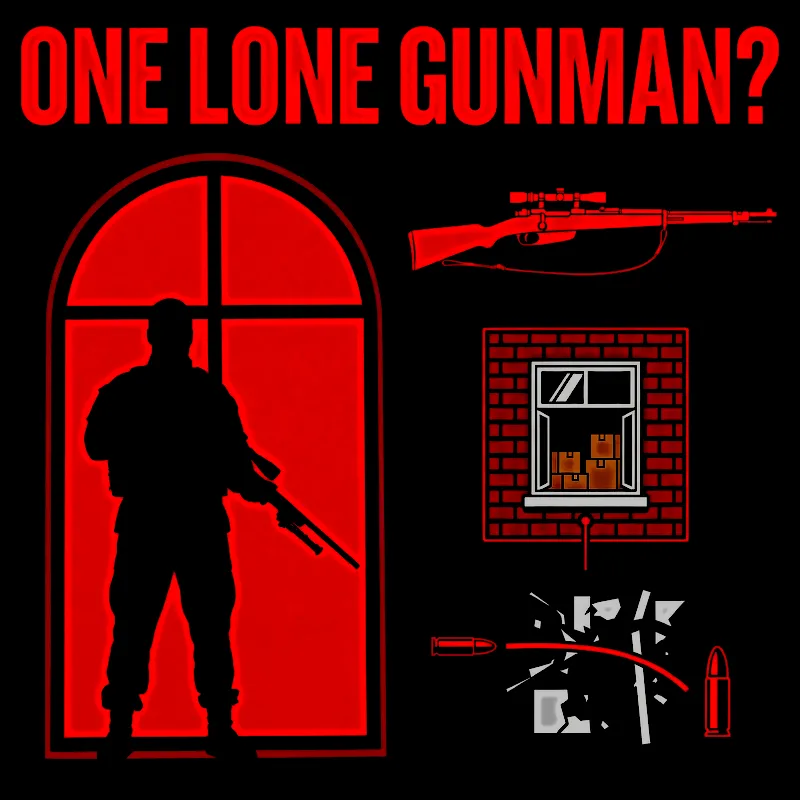
The assassination of President John F. Kennedy on November 22, 1963, in Dallas, Texas, occupies a singular position in American jurisprudence and political history. The President's Commission on the Assassination of President Kennedy, commonly known as the Warren Commission, was established by Executive Order 11130 on November 29, 1963, and was chaired by Chief Justice Earl Warren. [1], [2] Over a ten-month investigation, the Commission compiled 26 volumes of hearings and exhibits, producing a final report that concluded Lee Harvey Oswald was the sole gunman responsible for President Kennedy's death. [1], [3] This report provides a detailed technical and historical analysis of the Warren Commission's core findings, including the marksmanship capabilities of Lee Harvey Oswald, the mechanical logistics of the sixth-floor sniper's nest, the ballistic performance of the Mannlicher-Carcano rifle, and the forensic evidence supporting the controversial single-bullet theory (SBT). Additionally, the document contextualizes these forensic elements within the broader landscape of Cold War defense research, specifically examining the concurrent development of Project PANDORA, a classified program investigating the biological and behavioral effects of microwave radiation on human subjects.
Case Snapshot
Date
November 22, 1963
Source Entries
32
Key Evidence
CE 399, Carcano C2766
Commission Verdict
Lone Assassin
Evidence Distribution
Section Headings
14
Markdown Tables
10
Unique Citations
32
Inline References
92
Core Timeline Anchors
| Time/Date | Milestone |
|---|---|
| 12:30 PM | Three shots fired in Dealey Plaza |
| 12:31 PM | Baker-Oswald encounter on 2nd floor |
| 1:00 PM | Kennedy pronounced dead at Parkland Hospital |
| 1:15 PM | Officer J.D. Tippit murdered |
| Sept 1964 | Warren Commission Report released |
| 1979 | HSCA concludes 'probable conspiracy' |
Behavioral Profile and Radicalization of Lee Harvey Oswald
The Warren Commission's conclusion that Oswald acted alone was rooted in a comprehensive biographical analysis. His life was characterized by a pattern of social alienation, ideological volatility, and a persistent need for recognition. [4], [5]
Military Service and Marksmanship Qualification
Oswald enlisted in the United States Marine Corps in October 1956 at the age of seventeen. [5], [6] He underwent standard marksmanship training and was qualified as a "Sharpshooter" in December 1956, the middle tier of the three-tiered Marine rating system (Marksman, Sharpshooter, Expert). [6], [7]
| Qualification Event | Score | Rating | Forensic Implication | Source |
|---|---|---|---|---|
| December 1956 | 212/250 | Sharpshooter | Demonstrated consistent accuracy at 200–500 yards. | [7] |
| May 1959 | 191/250 | Marksman | Minimum passing; reduced practice but retained core skills. | [6] |
| Marine Average | ~190 | Marksman (Baseline) | Oswald's 1956 score exceeded the average qualifying Marine. | [7], [12] |
The assassination range was approximately 88 yards. Through the 4x telescopic sight mounted on the Carcano, this effectively presented the target at the visual equivalent of 22 yards—a distance at which even a "Marksman"-rated shooter could achieve consistent hits. [7], [12]
Defection to the Soviet Union and Ideological Radicalization
In October 1959, shortly after his discharge from the Marines, Oswald defected to the Soviet Union. [5], [6] Having taught himself basic Russian and saved approximately $1,500, he traveled to Moscow via Helsinki. [6] His defection was not merely a physical relocation but an ideological renunciation of his American citizenship. [6] At the U.S. Embassy in Moscow, he informed officer Richard Edward Snyder that he intended to provide the Soviets with classified information he had acquired as a radar operator in the Marines. [6]
Oswald's experience in the USSR was defined by the same patterns of dissatisfaction that marked his life in the United States. [4] Initially distraught when his application for citizenship was refused, he attempted suicide in his hotel bathtub to manipulate Soviet officials into allowing him to stay. [6] He was eventually permitted to reside in Minsk, where he worked at a radio factory and married Marina Prusakova. [5], [9] However, he soon grew disillusioned with the Soviet system, which he viewed as a bureaucratic betrayal of Marxist ideals. [4] He returned to the United States in June 1962, settling in the Dallas-Fort Worth area and eventually involving himself in the Fair Play for Cuba Committee. [5], [9]
Logistical Analysis of the 6th Floor Sniper's Nest
The Texas School Book Depository (TSBD), located at 411 Elm Street, served as the primary site for the assassination. [10] Official investigations concluded that Oswald utilized a window on the southeastern corner of the sixth floor to fire upon the presidential motorcade. [10], [11]
Architectural Context and Internal Disarray
In November 1963, the TSBD was a regional distribution hub for school textbooks. [10] At the time of the assassination, the sixth floor was undergoing floor renovations. [10] Workers were installing plywood to protect the books from oil damage, which had resulted in a massive reorganization of the inventory. [10] Large stacks of cardboard boxes were shifted toward the eastern wall, creating an environment that provided natural concealment for an individual located at the southeast corner. [10], [11]
Configuration of the Sniper's Perch
| Logistical Variable | Specification / Description | Strategic Function | Source |
|---|---|---|---|
| Primary Location | Southeast corner window, 6th Floor | Provided unobstructed view of the Elm Street turn. | [10], [11] |
| Standard Box Dimensions | 18" x 12" x 14" | Used to construct a visual shield from the rest of the floor. | [11] |
| "Rolling Readers" Boxes | 12" x 9" x 8" | Stacked on the window ledge as a primary rifle rest. | [11] |
| Average Box Weight | 55 lbs (Standard) / Light (Readers) | Stability for concealment; adjustability for aiming. | [11] |
| Floor Condition | Plywood-covered; oil-damaged | Allowed for relatively quiet movement within the area. | [10] |
The "Rolling Readers" boxes were of particular importance. [11] Unlike most of the boxes on the floor, which were filled with heavy textbooks, these cartons contained light plastic linguistic blocks. [11] The Warren Commission noted that these boxes were "solid enough to serve as a gun rest" but remained "easily adjusted," allowing the assassin to track the motorcade as it descended Elm Street. [11], [12]
Ballistic Profile of the Mannlicher-Carcano Rifle
The weapon identified as the assassination rifle was an Italian Mannlicher-Carcano Model 91/38 short infantry rifle, serial number C2766. [13] This rifle, manufactured in 1940 at the Royal Arms Factory in Terni, Italy, was a bolt-action weapon chambered for the 6.5×52mm cartridge. [13], [14]
Technical Specifications
The Carcano was often dismissed by critics as a "cheap" or "inaccurate" weapon, but the Commission's technical analysis suggested otherwise. [15], [16], [17]
| Feature | Specification | Source |
|---|---|---|
| Model | Fucile di Fanteria Modello 91/38 | [13] |
| Caliber | 6.5×52mm Rimless | [13], [17] |
| Overall Length | 40.2 inches | [13] |
| Barrel Length | 20.9 inches | [13] |
| Rifling | Gain-twist (Progressive rate of twist) | [17] |
| Magazine Capacity | 6 rounds (fed by en bloc clip) | [13] |
| Sight System | 4x18 Ordnance Optics Telescopic Sight | [13] |
The 6.5×52mm cartridge was noted for its relatively flat trajectory and mild recoil, which enhanced the shooter's ability to cycle the bolt and re-acquire the target quickly. [12], [17] The use of "gain-twist" rifling—where the rate of twist increases toward the muzzle—was designed to reduce torque on the bullet and minimize wear in the barrel, theoretically maintaining accuracy over longer periods. [17]
Firing Intervals and Accuracy Tests
The timing of the assassination was one of the most contentious aspects of the investigation. [12], [13] The Commission concluded that three shots were fired within approximately 8.4 to 8.6 seconds. [12]
- FBI Mechanical Tests: Firearms expert Robert Frazier determined that the minimum time required to operate the bolt and fire two shots was 2.3 seconds. [13]
- Army Accuracy Tests: Using the C2766 rifle, marksmen fired at targets placed at distances of 175, 240, and 265 feet (matching the motorcade's path). In one series, a marksman fired three shots in 4.6 seconds, hitting all three targets. [13]
- The Telescopic Sight Defect: FBI testing revealed that the scope was slightly misaligned, causing the rifle to fire high and to the right. However, the marksmen were able to compensate for this during testing, and the Commission noted that at the relatively short ranges involved (under 100 yards), the use of iron sights or the scope was equally viable for a trained shooter. [13], [18]
Forensic Viability of the Single-Bullet Theory (CE 399)
The Single-Bullet Theory, primarily developed by Commission staffer Arlen Specter, is the cornerstone of the lone-assassin conclusion. [19] It posits that a single bullet, designated Commission Exhibit 399 (CE 399), caused seven entry and exit wounds in both President Kennedy and Governor Connally. [19]
Trajectory and Path through Targets
The viability of this theory depends on a specific alignment of the two men in the limousine at the moment of impact. [19] According to the Commission, the bullet followed this path:
- Entry (Kennedy): The bullet entered the back of the President's neck/upper back at a downward angle of approximately 21 degrees. [19]
- Passage (Kennedy): It passed through the neck, bruising the apex of the right lung and exiting the throat through the midline below the Adam's apple. [19]
- Entry (Connally): Impacting the Governor's back just below the right armpit, creating an elliptical wound indicating the bullet had begun to tumble. [19]
- Chest Damage: It smashed through five inches of Connally's fifth right rib before exiting below his right nipple. [19]
- Wrist/Thigh Impact: The bullet shattered the radius bone of Connally's right wrist and finally embedded itself in his left thigh. [19], [20]
Medical and Ballistic Consistency
| Impact Point | Estimated Velocity | Resulting Damage | Source |
|---|---|---|---|
| Entry (Kennedy Back) | ~2,000 fps | Soft tissue penetration. | [19], [27] |
| Exit (Kennedy Throat) | ~1,500 fps | Tumble initiation. | [19] |
| Entry (Connally Back) | ~1,200 fps | Elliptical wound; bullet yawing. | [21] |
| Connally Rib | ~900 fps | 10 cm shatter of 5th rib. | [21] |
| Connally Wrist | ~400 fps | Perforating fracture of radius. | [21], [22] |
| Connally Thigh | ~200 fps | Shallow puncture; fragment retained. | [21] |
The "pristine" condition of CE 399, found on a stretcher at Parkland Memorial Hospital, is often cited by skeptics as proof of its impossibility. However, the Commission's ballistics experts argued that the bullet's full-metal jacket and the specific velocities at which it struck the bones allowed it to remain remarkably intact. [21], [22] The bullet had lost approximately 1.4 to 2.4 grains of its original weight, matching the mass of fragments recovered from Connally's wrist and thigh. [21]
Technological Context: Project PANDORA and Microwave Research
While the Warren Commission focused on ballistics and behavior, the 1960s were also characterized by intensive Department of Defense research into electromagnetic phenomena and their biological effects.
The Moscow Signal and PANDORA Research
In the mid-1960s, ARPA initiated Project PANDORA to investigate reports of microwave radiation directed at the U.S. Embassy in Moscow, codenamed the Technically Unidentified Moscow Signal (TUMS). [29], [30]
- The Moscow Signal was a reported microwave transmission varying between 2.5 and 4 GHz, directed at the U.S. Embassy from 1953 to 1976. [29]
- PANDORA experiments evaluated power density levels initially thought to be as high as 1 mW/cm², although actual levels in Moscow were later found to be no greater than 0.05 mW/cm². [30]
- The total cost of Project PANDORA, terminated in March 1970, was recorded at $4,615,000. [32]
DoD and Institutional Contracts for PANDORA Research
| Contracting Entity | Study / Project Name | Research Objective | Source |
|---|---|---|---|
| George Washington University | Moscow Viral Study | Statistical analysis of health data from embassy employees. | [30] |
| Johns Hopkins University | Foreign Service Health Status Study | Investigation into long-term health outcomes for exposed personnel. | [30] |
| RAND Corporation | Behavioral Peer Review | Evaluation of primate data for behavioral modification theories. | [30] |
| U.S. Navy | Project Big Boy | Comparative medical evaluation of sailors exposed to radar-generated microwaves. | [30] |
Despite these efforts, a RAND Corporation review concluded that the data did not present any "evidence of a behavioral change due to the presence of the special signal within the limits of any reasonable scientific criteria." [30]
Historical Verdict and Institutional Significance
The Warren Commission's conclusion that Lee Harvey Oswald acted alone was founded on a synthesis of physical evidence and biographical analysis. [1], [2] The Commission established that Oswald possessed the requisite skill set, a consistent psychological motive of alienation, and a unique opportunity facilitated by the logistics of the TSBD. [4], [8], [10] The ballistics of the Mannlicher-Carcano, while seemingly improbable to a layperson, were validated through repeated military and forensic testing that matched the timing and damage patterns observed in the assassination. [13], [21]
The forensic viability of the single-bullet theory, though continually challenged by alternative medical interpretations, remains the most parsimonious explanation for the injuries sustained by the motorcade's occupants. [19] While the Cold War context of projects like PANDORA highlights the era's pervasive concern with unconventional warfare and surveillance, no credible evidence has linked such programs to the events in Dallas. [5], [30]
The primary legacy of the Warren Commission has been a paradox: while it produced one of the most exhaustive criminal investigations in history, its findings simultaneously catalyzed a profound distrust of official narratives. [1] Subsequent historical events, including the Vietnam War and the Watergate scandal, amplified this skepticism, leading many to view the Commission's report not as a final truth, but as a starting point for decades of debate.
Sources
- Warren Commission - EBSCO Research Starters, https://www.ebsco.com/research-starters/history/warren-commission
- Warren Commission Report on Assassination - CQ Almanac Online Edition, https://library.cqpress.com/cqalmanac//document.php?id=cqal64-1302859
- The Warren Commission Report: How the Kennedy Assassination Changed the US Secret Service - NLEOMF, https://nleomf.org/2997-autosave-v1/
- Chapter 7 - National Archives, https://www.archives.gov/research/jfk/warren-commission-report/chapter-7.html
- Chapter 6 - National Archives, https://www.archives.gov/research/jfk/warren-commission-report/chapter-6.html
- Lee Harvey Oswald - Wikipedia, https://en.wikipedia.org/wiki/Lee_Harvey_Oswald
- Lee Harvey Oswald's US Marine Corps Rifle Score Book - RR Auction, https://www.rrauction.com/auctions/lot-detail/345171706200220-lee-harvey-oswalds-us-marine-corps-rifle-score-book-warren-commission-exhibit-no-239/
- Chapter 4 - National Archives, https://www.archives.gov/research/jfk/warren-commission-report/chapter-4.html
- Timeline of the John F. Kennedy assassination - Wikipedia, https://en.wikipedia.org/wiki/Timeline_of_the_John_F._Kennedy_assassination
- Texas School Book Depository - Wikipedia, https://en.wikipedia.org/wiki/Texas_School_Book_Depository
- Photograph of the Sniper's Perch - The Sixth Floor Museum at Dealey Plaza, https://www.jfk.org/collections-archive/photograph-of-the-snipers-perch-on-the-sixth-floor-of-the-texas-school-book-depository/
- Army Veteran Analyzes the Infamous Rifle That Ended JFK's Life - SOFREP, https://sofrep.com/gear/army-veteran-analyzes-the-infamous-rifle-that-ended-jfks-life/
- John F. Kennedy assassination rifle - Wikipedia, https://en.wikipedia.org/wiki/John_F._Kennedy_assassination_rifle
- A Forensic Scientist Specializing in Forensic Ballistics Evaluates the Ballistic Evidence, https://static1.squarespace.com/static/63c2d1976699b1595ac1ac93/t/67dcf54c8077496c1647ccff/1742533967760/A+FORENSIC+SCIENTIST+SPECIALIZING+in+FORENSIC+BALLISTICS0.pdf
- Quality Control - Carcano Compendium, https://www.carcanorifle.com/quality-control
- General Information on the Carcano, https://personal.stevens.edu/~gliberat/carcano/general.html
- 6.5×52mm Carcano - Wikipedia, https://en.wikipedia.org/wiki/6.5%C3%9752mm_Carcano
- Did Oswald purchase his Carcano rifle with the intent to murder people? - Quora, https://www.quora.com/Did-Oswald-purchase-his-Carcano-rifle-with-the-intent-to-murder-people
- Single-bullet theory - Wikipedia, https://en.wikipedia.org/wiki/Single-bullet_theory
- Findings - National Archives, https://www.archives.gov/research/jfk/select-committee-report/part-1a.html
- Breakability: CE-399 and the Diminishing Velocity Theory - History Matters, https://www.history-matters.com/essays/jfkmed/Breakability/Breakability.htm
- HSCA Volume I: Testimony of Dr. Cyril H. Wecht, https://aarclibrary.org/publib/jfk/hsca/reportvols/vol1/pdf/HSCA_Vol1_0907_8_Wecht.pdf
- The Assassination of John F. Kennedy Timeline - Inside Book Publishing, https://routledgetextbooks.com/textbooks/criticalmoments/titles/9780415895576/timeline.php
- Chapter 1 - National Archives, https://www.archives.gov/research/jfk/warren-commission-report/chapter-1.html
- Assassination of John F. Kennedy - Wikipedia, https://en.wikipedia.org/wiki/Assassination_of_John_F._Kennedy
- Assassination of John F. Kennedy - Britannica, https://www.britannica.com/event/assassination-of-John-F-Kennedy
- Gunshot-wound dynamics model for John F. Kennedy assassination - PMC, https://pmc.ncbi.nlm.nih.gov/articles/PMC5934694/
- Warren Commission Report Chapter 3 - National Archives, https://www.archives.gov/research/jfk/warren-commission-report/chapter-3.html
- MICROWAVES-I - CIA Reading Room, https://www.cia.gov/readingroom/docs/CIA-RDP88B01125R000300120112-7.pdf
- The Moscow Signals Declassified Microwave Mysteries: Projects PANDORA and BIZARRE, https://nsarchive.gwu.edu/briefing-book/intelligence-russia-programs/2022-09-13/moscow-signals-declassified-microwave
- ARPA, Richard S. Cesaro, Memorandum, "Justification Memorandum for Project PANDORA," Top Secret, https://nsarchive.gwu.edu/document/28787-document-3-arpa-richard-s-cesaro-memorandum-justification-memorandum-project-pandora
- DARPA Project PANDORA Final Budget Report, https://nsarchive.gwu.edu/sites/default/files/documents/rhwvuj-tzy4b/14.pdf