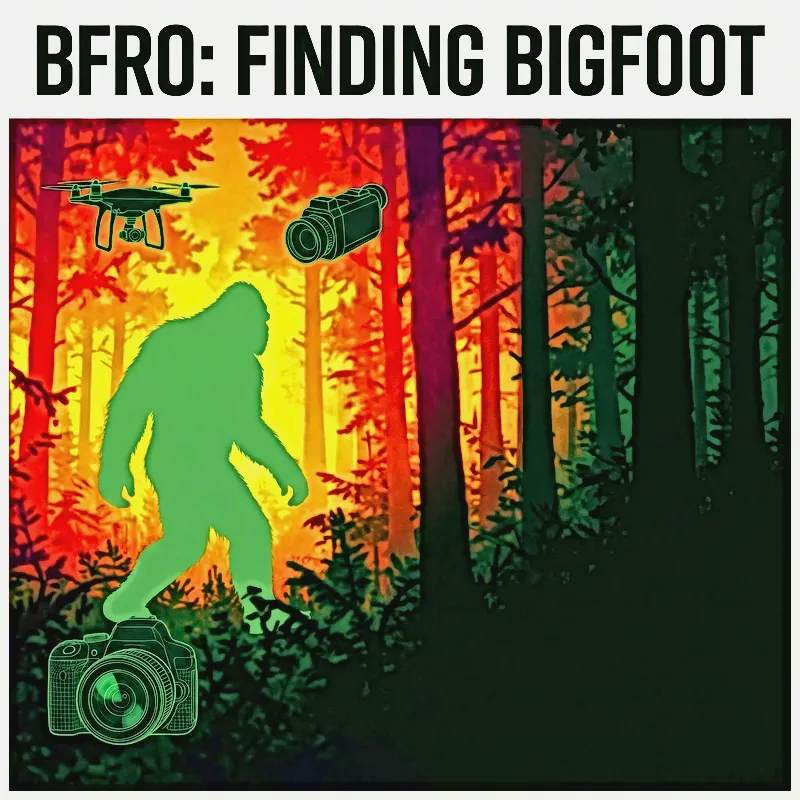
The provided text offers an in-depth review of the Bigfoot Field Researchers Organization (BFRO), detailing its 1995 inception by Matthew Moneymaker and its transformation into the premier authority for North American cryptozoology. The organization is defined by its standardized investigative protocols, which include a three-tiered classification system for sightings and the use of high-tech tools like thermal imaging and acoustic signaling to gather evidence. While the BFRO has achieved massive cultural visibility through media like the television series "Finding Bigfoot," the source also addresses significant academic pushback regarding scientific accuracy, confirmation bias, and the lack of genetic proof. Ultimately, the text illustrates how the group bridges the gap between indigenous folklore and modern citizen science, maintaining a vast digital archive that remains the world's most significant repository of Sasquatch reports.
Case Snapshot
Subject
BFRO Institutional Analysis
Source Entries
55
Founded
1995
Founder
Matthew Moneymaker
Database Scale
5,000+ Reports
Evidence Distribution
Section Headings
22
Markdown Tables
6
Unique Citations
54
Inline References
160
Core Timeline Anchors
| Year | Milestone |
|---|---|
| 1980s | Early Moneymaker collaborations and UCLA expeditions |
| 1994 | Moneymaker's Ohio wildlife refuge encounter |
| 1995 | Formal founding of the BFRO |
| 2001 | Co-production of 'Sasquatch: Legend Meets Science' |
| 2011 | Finding Bigfoot premieres on Animal Planet |
| 2014 | Sykes genetic study finds no unknown primate DNA |
| 2018 | Finding Bigfoot ends after 100 episodes |
The Historical Foundations and Academic Influence of Matthew Moneymaker
The study of the North American Sasquatch, or Bigfoot, has evolved from localized indigenous folklore into a complex subculture of citizen science and investigative journalism, primarily driven by the institutional presence of the Bigfoot Field Researchers Organization (BFRO). Established in 1995, the BFRO has functioned as the primary architect of modern cryptozoological standards in the United States and Canada.[1], [2] Under the leadership of founder Matthew Moneymaker, the organization has pioneered the use of digital databases for sighting reports, standardized field research methodologies involving acoustic signaling and thermal imaging, and achieved mainstream visibility through long-running media productions.[3], [4] This report examines the historical trajectory of the BFRO, evaluates its evidentiary frameworks, and investigates the significant controversies—ranging from allegations of confirmation bias to the impacts of commercialization—that have defined its tenure as the world's largest and oldest Bigfoot research body.[1]
The genesis of the BFRO is inextricably linked to the intellectual biography of Matthew Moneymaker, a Los Angeles native whose interest in the Sasquatch phenomenon was ignited at the age of 11.[3], [5] Moneymaker's approach to the subject was shaped by his academic pursuits, including a Bachelor of Arts in English Literature from the University of California, Los Angeles (UCLA) and a Juris Doctorate from the University of Akron School of Law.[5] His time at UCLA in the 1980s served as a formative period during which he began collaborating with other Bigfoot enthusiasts and conducting initial field expeditions.[3]
A pivotal moment in the organization's pre-history occurred in 1994, when Moneymaker claimed to have personally encountered a Sasquatch in an Ohio wildlife refuge.[3] This event solidified his conviction in the creature's existence and catalyzed the formalization of the BFRO in 1995.[1], [3] The organizational structure of the BFRO reflects Moneymaker's legal training, utilizing investigative techniques derived from the legal profession, law enforcement, and investigative journalism to analyze anecdotal evidence.[6]
The BFRO was conceived as an all-volunteer organization, a model it maintains to this day, bringing together scientists, journalists, and technical specialists united by the mission to resolve the enigma of Bigfoot through empirical research.[2] The organization's philosophy is anchored by a strict no-kill policy, emphasizing the protection of the purported species while utilizing technology to gather evidence.[2]
| Year | Key Milestone |
|---|---|
| 1980s | Early collaborations and expeditions while at UCLA [3] |
| 1994 | Moneymaker's reported encounter in an Ohio wildlife refuge [3] |
| 1994 (Nov) | Recording of the "Ohio Howl" in Columbiana County [7], [8] |
| 1995 | Formal founding of the BFRO [1], [5] |
| 2001 | Co-production of "Sasquatch: Legend Meets Science" documentary [5] |
| 2010–2017 | Co-hosting of "Finding Bigfoot" on Animal Planet [5] |
| 2025 | Continued operation of the largest online database of Bigfoot sightings [1] |
The Global Database: Structure and Vetting of Sighting Reports
The core of the BFRO's research is its comprehensive sightings database, which the organization claims is the only collection of North American reports investigated by researchers to determine credibility.[6] The database is publicly accessible and serves as a tool for researchers to identify geographic "hot zones" and behavioral patterns.[9], [2]
The Three-Tiered Classification System
Reports are assigned a classification—Class A, Class B, or Class C—based on the circumstantial potential for misinterpretation rather than the inherent credibility of the witness.[6]
- Class A Reports: These involve clear visual sightings where misidentification of common animals can be ruled out with high confidence.[10], [6] Examples include close-range daylight encounters or well-documented trackways with anatomical details.[10], [6]
- Class B Reports: These comprise incidents where a possible Sasquatch was observed at a distance, in poor lighting, or through sound alone.[10], [6] While considered potentially credible, these reports have a higher probability of misinterpretation of common animals or natural sounds.[10], [6]
- Class C Reports: Most second-hand or third-hand accounts with untraceable sources are categorized as Class C.[10], [6] These are rarely made public unless they involve historical documentation from before 1958 or credible media reports.[10], [6]
Vetting Protocols and Investigation Standards
The BFRO employs a rigorous vetting process that prioritizes personal contact with witnesses.[11], [6] No modern report is published without a BFRO investigator first making contact via phone or in person to verify the details.[11], [6] The investigative team includes individuals with backgrounds in biology, law enforcement, and wildlife tracking, who apply standards like "more likely than not" to determine a report's legitimacy.[6], [11]
The organization maintains a high rejection rate; when researchers conclude an incident was likely caused by a known animal, such as a bear or owl, the report is retained in a private database but not posted publicly.[11] This cautious approach is intended to ensure that the public-facing data is as credible as possible.[11]
Sighting Statistics by State (Partial Data 2024–2026)
| State | Total Listings | Most Recent Report |
|---|---|---|
| Washington | 731 | 12-2025 [12] |
| California | 470 | 01-2026 [12] |
| Florida | 347 | 01-2026 [12] |
| Ohio | 331 | 09-2025 [12] |
| Illinois | 305 | 06-2025 [12] |
| Oregon | 262 | 11-2025 [12] |
| Texas | 260 | 11-2025 [12] |
| Michigan | 226 | 05-2025 [12] |
| Missouri | 168 | 08-2025 [12] |
| Georgia | 146 | 10-2025 [12] |
| Pennsylvania | 132 | 02-2026 [12] |
| Colorado | 131 | 03-2025 [12] |
| Oklahoma | 113 | 02-2026 [12] |
Field Methodology: Investigative Techniques and Technological Adoption
The BFRO's field research methodology is characterized by a blend of traditional outdoorsmanship and the application of modern surveillance technologies.[4], [2] Their primary objective during expeditions is to document evidence of presence through auditory, visual, and physical markers.[2]
Acoustic Signaling: Wood Knocking and Vocalizations
One of the most widely recognized BFRO techniques is wood knocking—striking a tree with a thick branch to produce a sharp, resonant "pop."[13], [14] Investigators hypothesize that Sasquatches utilize this method for long-range communication and to signal their presence.[13], [14] Expeditions often involve a pattern of knocks followed by periods of silent listening to detect responses from the surrounding forest.[14]
Similarly, vocalization exchanges are common.[14] Investigators may attempt to elicit responses by mimicking reported Sasquatch sounds, such as moaning howls, whoops, or screams.[13], [14], [7] The BFRO maintains that these moaning howls, such as the 1994 "Ohio Howl" recorded by Moneymaker, have consistently stumped animal sound experts and do not match any known mechanical or biological sources.[7], [8]
Advanced Surveillance and Detection Systems
The adoption of thermal imaging (FLIR) has transformed BFRO night investigations.[4], [15] By detecting heat signatures in the darkness, researchers claim they can observe figures that remain invisible to the naked eye.[4], [15] Thermal cameras are particularly useful for detecting creatures that may be surveilling research camps from deep cover.[4], [15]
In recent years, the organization has integrated drone videography and high-zoom daylight cameras into their protocols.[16] Drones equipped with high-resolution cameras allow researchers to survey large areas of inaccessible terrain and monitor wildlife patterns from above.[16]
The "Base Camp Baiting" Strategy
The BFRO often employs a strategy where the base camp itself serves as the attractant.[4] By creating the sounds and smells associated with human activity (campfires, cooking, conversation), researchers hope to attract curious Sasquatches into the vicinity.[4] Investigators use thermal imagers to monitor the perimeter, looking for figures peeking from behind trees or boulders—a behavior frequently reported by witnesses.[4], [15]
| Equipment and Technology | Estimated Cost | Research Application |
|---|---|---|
| Thermal Camera (BFRO Brand/Taiwanese) | ~$1,000 [17], [16] | Detection of heat signatures at night [4] |
| Daylight Video Camera (50x Optical Zoom) | ~$400 [16] | Long-distance visual observation and recording [16] |
| Daylight Drone (e.g., DJI Air 3) | ~$1,550 [16] | Aerial surveillance of vast wilderness [16] |
| Audio Recorder / Parabolic Dish | Variable | Capture of vocalizations, wood knocks, and environmental sounds [18], [19] |
Commercialization and Media Influence: The Impact of "Finding Bigfoot"
The BFRO reached its cultural zenith through its collaboration with Animal Planet on the documentary series Finding Bigfoot, which aired 100 episodes over nine seasons from 2011 to 2018.[3], [5] The show featured Moneymaker alongside researchers Cliff Barackman and James "Bobo" Fay, with research biologist Ranae Holland serving as the voice of scientific skepticism.[20], [21]
Media Sensationalism vs. Investigative Accuracy
The success of Finding Bigfoot has been a double-edged sword for the BFRO's credibility.[21] Critics argue that the program prioritized entertainment over rigorous investigation, utilizing dramatic editing techniques and CGI to heighten tension.[21], [22] The show's premise—that Bigfoot is real and "out there" to be found—often led to the uncritical acceptance of anecdotal sightings as definitive proof.[21]
However, the show also had a significant sociological impact, normalizing the pursuit of Bigfoot and encouraging thousands of witnesses to share their accounts.[9], [21] Moneymaker noted that filming episodes often caused local authorities to be "inundated" with sighting reports, indicating the show's role in stimulating public awareness.[21]
The Commercialization of Field Research
The BFRO operates a commercial expedition program that allows the general public to join researchers in the field for a fee, typically ranging from $300 to $500.[23], [24] These trips, which often sell out months in advance, have been criticized as "pay-to-play" research.[24], [25]
Skeptics argue that these fees incentivize the reporting of "activity" to satisfy paying customers, potentially leading to the misinterpretation of common forest sounds or events.[24]
Conversely, the BFRO maintains that these fees are necessary to cover the costs of organizational efforts, permits, and scouting, while ensuring that participants are seriously interested in the subject.[23]
Evidentiary Standards and Scientific Scrutiny
Despite the BFRO's internal vetting processes, its evidentiary standards have faced significant criticism from the mainstream scientific community.[22], [26], [27]
The Genetic Challenge: The Sykes 2014 Study
In 2014, a genetic survey led by Bryan Sykes of Oxford University analyzed 30 hair samples attributed to "anomalous primates," including several provided by BFRO enthusiasts and historical expeditions.[28], [29] The results failed to identify any undiscovered primate species, instead revealing that the samples came from a range of known animals.[28], [29]
| Sample Origin | Identified Species | Notable Context |
|---|---|---|
| American Samples | Bears (Black/Brown), Raccoon, Porcupine, Cow, Horse, Human [28], [29], [30] | Most samples came from common North American fauna [29], [30] |
| Himalayan Samples | Ancient Polar Bear (Pleistocene) [28], [29] | Matched 40,000-year-old fossil DNA; suggests hybrid or unknown bear [28], [29] |
| Sumatran Samples | Tapir [28], [29], [31] | Blinded sample testing confirmed high methodology reliability [28], [31] |
| European Samples | Cow, Sheep, Horse [28], [29] | Samples identified as common domesticates [28], [29] |
Sykes acknowledged that the study did not disprove the existence of Bigfoot but demonstrated that the physical evidence collected thus far by enthusiasts had consistently been misidentified.[28], [30]
Confirmation Bias and the Bear-Mange Controversy
A recurring critique of BFRO investigators is their alleged susceptibility to confirmation bias—the tendency to interpret ambiguous stimuli as proof of their existing beliefs.[32], [33]
One of the most notable instances of documented misidentification occurred in 2007 with the "Rick Jacobs" photos.[34] Jacobs captured images of a quadrupedal, furry creature in Pennsylvania's Allegheny National Forest.[34] While a BFRO investigator initially labeled the figure a "juvenile Sasquatch," the Pennsylvania Game Commission concluded it was clearly a bear suffering from a severe case of mange.[34]
Skeptics point to this case as a primary example of how the desire to see Bigfoot can cloud objective judgment.[33], [35]
Data scientists have also noted a strong correlation between Bigfoot sightings and black bear populations, suggesting that a significant portion of sightings are misidentifications of upright-walking bears or bears in poor lighting.[36], [37], [38]
| Correlation Metric | Data Finding | Interpretation |
|---|---|---|
| Bear Population Overlap | 96–98% of sightings occur within black bear range [38] | Strong spatial relationship between bear presence and sighting reports [37], [38] |
| Population Growth Rate | Every 1,000 bear increase yields a 4% increase in sightings [37] | Statistical association suggests many sightings are misidentified bears [37] |
| Seasonal Variation | Sightings peak in summer and decline in winter [38] | Matches black bear activity cycles and human outdoor recreation patterns [38] |
| Mange Similarity | Bears with mange exhibit hair loss and unnatural postures [34], [39] | Sarcoptic mange can make a bear appear primate-like to untrained eyes [34], [39] |
Major Controversies: Hoaxes and the Ethics of Cryptozoology
The BFRO has navigated several high-profile hoaxes that have threatened the credibility of the entire field. While the organization often prides itself on debunking these events, the proximity of its members and methods to such controversies has remained a point of contention.[25]
The 2008 Georgia Body Hoax
One of the most damaging events in cryptozoological history was the 2008 hoax perpetrated by Matthew Whitton and Rick Dyer.[40], [41] The pair claimed to possess a frozen Bigfoot corpse, which was later revealed to be a rubber gorilla suit stuffed with roadkill.[41], [42]
The BFRO found itself tangentially linked to the event when some media outlets initially confused them with the promoting group, Searching for Bigfoot, Inc.[25] Moneymaker later detailed that Whitton, a sheriff's deputy, had attempted to mirror the BFRO's expedition model before turning to the hoax as a "get rich quick" scheme.[25] The incident underscored the vulnerability of the field to bad actors and the challenges of verifying physical remains.[43], [44]
Internal Critiques and the Problem of Evasion
Skeptics and even some within the Bigfoot community have criticized the BFRO's tendency to explain away the lack of definitive proof as a result of the creature's "evasive intelligence."[45] Critics note an inherent contradiction: Sasquatches are simultaneously described as masters of evasion that can detect trail cameras from miles away, yet they are also reported to harass campers, throw rocks at cabins, and walk across highways in full view of motorists.[45]
Furthermore, the BFRO's public expeditions—often involving groups of ten or more people making significant noise—have been criticized as counterproductive to finding an intelligent, elusive primate.[45] Some researchers argue that smaller, more disciplined teams focusing on long-term habitat study, such as the Olympic Project or NAWAC, are more likely to achieve results.[46], [47], [48]
Comparative Analysis of Organizational Philosophies
The BFRO is one of several organizations dedicated to Sasquatch research, each with distinct methodologies and goals.
| Organization | Primary Focus | Methodology Highlights | Stance on Specimen Collection |
|---|---|---|---|
| BFRO | Public reporting and outreach [2] | All-volunteer investigative network; public expeditions [1], [23] | Strict no-kill policy [2] |
| NAWAC | Biological proof through data [46] | Long-term field deployments; camera traps and audio monitoring [46] | Pro-specimen if required for scientific verification [46], [49] |
| Olympic Project | Habitat study and DNA analysis [47] | Focused study on core "hot spots"; nest analysis and eDNA [47], [50] | Non-invasive and respectful study [47] |
The BFRO's "citizen science" approach, which emphasizes witness accounts and public participation, contrasts with the more reclusive and technical approach of groups like NAWAC.[49], [48] While the BFRO provides the largest volume of data, groups like the Olympic Project emphasize the quality and scientific rigor of their environmental samples.[50], [47]
The Behavioral Ethology of Bigfoot as Defined by BFRO Data
Through three decades of report analysis, the BFRO has constructed a behavioral profile of Sasquatch that informs their research priorities.[1], [2]
Diet and Foraging Patterns
Investigators often focus on areas with high concentrations of prey species, particularly elk and deer.[51], [47] The BFRO database contains numerous reports of supposed "deer kills" where the animal was found with injuries inconsistent with typical predators like mountain lions or wolves.[51] In regions like the Olympic Peninsula, Sasquatch tracks are frequently reported near elk calving areas during the calving season.[47]
Intimidation and Territorial Behaviors
Many BFRO Class B reports describe behaviors interpreted as attempts to intimidate humans into leaving an area.[13] These include:
- Rock Throwing: Witnesses often report being pelted with small stones or hearing large rocks splashed into water nearby.[52], [53]
- Paralleling: Hikers sometimes report being "followed" by an unseen creature that stays just out of sight in the brush, mimicking their pace.[14], [15]
- Vocal Intimidation: "Roaring screams" or aggressive vocalizations are sometimes reported when humans approach purported nesting sites.[13]
The BFRO investigators argue that these behaviors are consistent with other large primates, like gorillas or chimpanzees, protecting their territory or young.[13], [2]
Conclusions: The Institutional Legacy of the BFRO
The Bigfoot Field Researchers Organization has transitioned from a small collective of enthusiasts into a significant cultural and semi-scientific institution.[18], [19] While the biological existence of Bigfoot remains unproven, the BFRO's influence on the methodology of cryptozoological research is undeniable.[19], [2]
The organization's legacy is defined by:
- Digital Archiving: The creation of a standardized, searchable database that has preserved thousands of historical and contemporary accounts.[9], [2]
- Technological Integration: Popularizing the use of thermal imaging and acoustic signaling as standard tools for field research.[4], [16]
- Public Engagement: Facilitating a form of citizen science that allows the public to actively participate in the search for an elusive phenomenon.[18], [19]
However, the BFRO's future credibility rests on its ability to address persistent scientific critiques regarding confirmation bias and the reliance on anecdotal data.[22], [27] As DNA technologies like eDNA become more sophisticated, the gap between the BFRO's "investigative journalism" model and the "scientific method" may either close or widen further, depending on whether biological evidence eventually emerges to support the thousands of sightings preserved in their database.[2], [47] Regardless of the eventual outcome, the BFRO remains the primary repository of an enduring American mystery, bridging the gap between folklore and field research.[18], [54]
Sources
- Matt Moneymaker - Gather Up Events, https://gatherupevents.com/member/matt-moneymaker/
- What is the BFRO Field Researchers Organization? - Hangar 1 Publishing, https://hangar1publishing.com/blogs/cryptids/what-is-the-bfro-bigfoot-field-researchers-organization
- Matt Moneymaker - MN2S Booking Agency, https://mn2s.com/booking-agency/talent-roster/matt-moneymaker/
- First Thermal Footage from a BFRO Expedition, http://www.bfro.net/news/los_alamos_footage.asp
- BFRO Report 79845: Family spots sasquatch near Durant, https://www.bfro.net/GDB/show_report.asp?id=79845
- BFRO Database History and Report Classification System, https://www.bfro.net/gdb/classify.asp
- Howls recorded in Cuyahoga Valley National Park (2015) - BFRO, http://www.bfro.net/avevid/sounds/cvnp_ohio_howls.asp
- 1994 Ohio Moaning Howl - BFRO, https://www.bfro.net/avevid/mjm/ohrec.asp
- Matt Moneymaker - r/bigfoot, https://www.reddit.com/r/bigfoot/comments/1qq7hd3/matt_moneymaker/
- BigFoot Sightings - POI Factory, http://www.poi-factory.com/node/26394
- Aren't some of the reports hoaxes? - BFRO, https://www.bfro.net/gdb/show_FAQ.asp?id=849
- BFRO Geographical Database of Bigfoot Sightings & Reports, https://www.bfro.net/gdb/
- BFRO Report 31749: Wood knocking and vocalizations near Packwood, https://www.bfro.net/GDB/show_report.asp?ID=31749&PrinterFriendly=True
- BFRO Report 45347: Vocalizations and taps near Estacada, http://www.bfro.net/gdb/show_report.asp?id=45347
- BFRO Report 26065: Thermal sighting in Wenatchee National Forest, https://www.bfro.net/GDB/show_report.asp?id=26065
- 2024 North Carolina Bigfoot Expedition - BFRO, https://www.bfro.net/news/roundup/ncarolina.asp
- 2026 Colorado Bigfoot Expedition - BFRO, https://www.bfro.net/news/roundup/colorado.asp
- What Bigfoot hunters get right (and very wrong) - Popular Science, https://www.popsci.com/science/bigfoot-hunters-science/
- Hunting for Bigfoot Relies More on Science Than Skeptics Think - Discover Magazine, https://www.discovermagazine.com/hunting-for-bigfoot-relies-more-on-science-than-skeptics-think-48289
- Finding Bigfoot believer and skeptic sound off - Paranormal Pop Culture, https://www.paranormalpopculture.com/2012/01/moneymaker-holland-courtesy-animal.html
- An Episode of Finding Bigfoot: A Semi-Meta Study - Medium, https://medium.com/algo-contar/an-episode-of-finding-bigfoot-a-semi-meta-study-on-how-the-search-for-the-squatch-reflects-self-a44dcaea35b2
- Animal Planet Finding Bigfoot Rejected Evidence, https://www.yic.edu.et/index_htm_files/browse/DD1PUj/Animal-Planet-Finding-Bigfoot-Rejected-Evidence.pdf
- Expeditions FAQ - BFRO, https://www.bfro.net/news/roundup/exped_faq.asp
- BFRO Expeditions - anyone here attend one? - r/bigfoot, https://www.reddit.com/r/bigfoot/comments/eui1n0/bfro_expeditions_anyone_here_attend_one/
- The 2008 Dead Bigfoot Hoax from Georgia - BFRO, https://www.bfro.net/hoax.asp
- Bigfoot: The Pacific Northwest's Claim to Cryptid Fame - HowStuffWorks, https://science.howstuffworks.com/science-vs-myth/strange-creatures/bigfoot.htm
- The Nonsense and Non-science of Sasquatch - SMU Physics, https://www.physics.smu.edu/~pseudo/bigfootreview.pdf
- Finally, some solid science on Bigfoot - Science News, https://www.sciencenews.org/blog/gory-details/finally-some-solid-science-bigfoot
- Genetic analysis of hair samples attributed to anomalous primates - Royal Society, https://royalsocietypublishing.org/rspb/article/281/1789/20140161/77194/Genetic-analysis-of-hair-samples-attributed-to
- What's the true origin of most Bigfoot samples? - CBS News, https://www.cbsnews.com/news/bigfoot-hair-samples-mostly-from-bears-wolves/
- A reasoned case for bigfoot - r/slatestarcodex, https://www.reddit.com/r/slatestarcodex/comments/mbww69/a_reasoned_case_for_bigfoot/
- Could confirmation bias in the Bigfoot community be hurting real research? - r/bigfoot, https://www.reddit.com/r/bigfoot/comments/1kt7fub/could_confirmation_bias_in_the_bigfoot_community/
- Scientific ignorance and bias in bigfoot judgment - r/bigfoot, https://www.reddit.com/r/bigfoot/comments/pcw8fr/an_example_of_how_scientific_ignorance_and_bias/
- Is It Bigfoot Or Just A Mangy Bear? - CBS News, https://www.cbsnews.com/news/is-it-bigfoot-or-just-a-mangy-bear/
- Bear cubs mistaken as Bigfoot - r/Cryptozoology, https://www.reddit.com/r/Cryptozoology/comments/10xdt6i/bear_cubs_mistaken_as_bigfoot/
- Bigfoot - Wikipedia, https://en.wikipedia.org/wiki/Bigfoot
- Bigfoot: If it's there, could it be a bear? - ResearchGate, https://www.researchgate.net/publication/377389781_Bigfoot_If_it's_there_could_it_be_a_bear
- An alternative explanation to Bigfoot reports - Humboldt GSP, http://gsp.humboldt.edu/Projects/GSP270_Samples/An%20alternative%20explanation%20to%20Bigfoot%20reports.pdf
- Bear with mange identification - Reddit, https://www.reddit.com/r/animalid/comments/1egszf1/bear_with_mange_or_completely_fake_and/
- Claim of 'Bigfoot' dead body is a hoax - Wikinews, https://en.wikinews.org/wiki/Claim_of_%27Bigfoot%27_dead_body_is_a_hoax
- Rick Dyer (hoaxer) - Wikipedia, https://en.wikipedia.org/wiki/Rick_Dyer_(hoaxer)
- Bigfoot 'discovery' confirmed as fake - The Guardian, https://www.theguardian.com/world/2008/aug/20/usa3
- Bigfoot: The True Believers Vs The Hoaxers - CHAT News Today, https://chatnewstoday.ca/2019/06/18/bigfoot-the-true-believers-vs-the-hoaxers/
- Bigfoot Lives! - TIME Top 10, https://content.time.com/time/specials/packages/article/0,28804,1855948_1862262_1862264,00.html
- Bigfoot's described behavior is inconsistent with evasion - r/Cryptozoology, https://www.reddit.com/r/Cryptozoology/comments/1j1ihfa/bigfoots_described_behavior_by_eyewitnesses_is/
- Methodology - North American Wood Ape Conservancy, https://www.woodape.org/index.php/methodology/
- Olympic Project: West End is a hub of Bigfoot research - Peninsula Daily News, https://www.peninsuladailynews.com/news/olympic-project-west-end-is-a-hub-of-bigfoot-research-2/
- BFRO? What are your thoughts? - r/bigfoot, https://www.reddit.com/r/bigfoot/comments/zmlobt/bfro_what_are_your_thoughts/
- NAWAC recordings - r/bigfoot, https://www.reddit.com/r/bigfoot/comments/ycunee/have_you_guys_listened_to_the_nawac_recordings/
- The Discovery: On the Trail of Bigfoot - r/bigfoot, https://www.reddit.com/r/bigfoot/comments/17znaqo/a_great_doc_i_watched_last_night_the_discovery_on/
- Bigfoot Articles by Matt Moneymaker - BFRO, http://www.bfro.net/REF/THEORIES/MJM/mattarts.htm
- Le Flore County, Oklahoma Reports - BFRO, https://www.bfro.net/GDB/show_county_reports.asp?state=OK&county=Le%20Flore
- Sighting Reports Recently Added - BFRO, https://www.bfro.net/gdb/newadd.asp?Show=AB
- Bigfoot Field Researchers Organization, https://www.bfro.net/
- Bigfoot Lives! (Archived) - Time Magazine, https://content.time.com/time/specials/packages/article/0,28804,1855948_1862262_1862264,00.html