The Morphological and Cultural Genesis of the Bigfoot Phenomenon: A Comprehensive Analysis of the 1958 Bluff Creek Discoveries
This historical analysis explores the 1958 Bluff Creek discoveries, a series of events in Northern California that transformed regional folklore into the modern Bigfoot phenomenon. The text details how physical evidence found by logging workers and subsequent media coverage by the Humboldt Times established the creature's linguistic and cultural framework. While the 2002 revelation of a hoax by Ray Wallace challenged the legitimacy of these tracks, the source examines scientific counter-arguments regarding the anatomical complexity and weight distribution found in the original plaster casts. Ultimately, the document synthesizes industrial history, indigenous lore, and cryptozoological debate to explain how this specific moment created an enduring American myth.
Case Snapshot
Subject
1958 Bluff Creek Bigfoot Discovery
Source Entries
20
Location
Six Rivers National Forest, CA
Key Witness
Jerry Crew (bulldozer operator)
Track Size
16 inches long
Alleged Hoaxer
Ray L. Wallace
Evidence Distribution
Section Headings
11
Markdown Tables
4
Unique Citations
20
Inline References
82
Core Timeline Anchors
| Date | Milestone |
|---|---|
| Aug 27, 1958 | Jerry Crew discovers tracks at Bluff Creek Road |
| Sep 21, 1958 | Andrew Genzoli publishes Jess Bemis letter in Humboldt Times |
| Oct 6, 1958 | Crew appears on front page with plaster cast — 'Bigfoot' coined |
| Oct 12, 1958 | Ray Kerr visual sighting of creature crossing road |
| Nov 1, 1959 | Bob Titmus finds 15-inch tracks in hard-packed sand |
| Dec 2002 | Wallace family reveals wooden 'stomper' hoax |
Introduction
The modern history of cryptozoology in North America underwent a foundational shift in August 1958, transitioning from disparate regional folklore into a globally recognized media phenomenon centered in the rugged terrain of the Six Rivers National Forest in Northern California.[1]Bigfoot - Wikipedia https://en.wikipedia.org/wiki/Bigfoot This transformation was precipitated by a series of physical discoveries on a remote logging road that not only provided the first widely publicized tangible evidence in the form of plaster casts but also established the linguistic framework for the creature now known as Bigfoot.[2]The Hoax That Led to the Word 'Bigfoot' - Mental Floss https://www.mentalfloss.com/crime/bigfoot-word-origin-hoax The events surrounding the discovery by bulldozer operator Jerry Crew, the subsequent journalistic curation by Andrew Genzoli of the Humboldt Times, and the posthumous 2002 confession by the family of Ray L. Wallace create a complex tapestry of industrial history, media evolution, and scientific debate.[2]The Hoax That Led to the Word 'Bigfoot' - Mental Floss https://www.mentalfloss.com/crime/bigfoot-word-origin-hoax To understand the 1958 Bluff Creek paradigm, one must examine the intersection of post-war industrial expansion, the psychological climate of the rural Pacific Northwest, and the anatomical specifics that continue to challenge the narrative of a simple hoax.[3]Samantha Pate Hist 490 Bigfoot: From Folk Legend to Cultural Phenomenon - Humboldt State University https://digitalcommons.humboldt.edu/cgi/viewcontent.cgi?article=1029&context=barnum
The August 1958 Discovery: Industrial Context and Initial Contact
The epicenter of the 1958 sightings was a timber access route under construction near the confluence of Bluff Creek and the Klamath River.[4]Bigfoot: The Life and Times of a Legend by Joshua Blu Buhs - The University of Chicago Press https://press.uchicago.edu/Misc/Chicago/079790.html This region, characterized by dense stands of Douglas fir and treacherous mountain topography, was undergoing significant change due to the post-World War II housing boom, which had seen lumber production in Humboldt County nearly double since 1949.[4]Bigfoot: The Life and Times of a Legend by Joshua Blu Buhs - The University of Chicago Press https://press.uchicago.edu/Misc/Chicago/079790.html In this high-stakes economic environment, the Wallace Brothers Logging Company held a government subcontract to carve roads into previously inaccessible wilderness.[4]Bigfoot: The Life and Times of a Legend by Joshua Blu Buhs - The University of Chicago Press https://press.uchicago.edu/Misc/Chicago/079790.html
The Experience of Jerry Crew
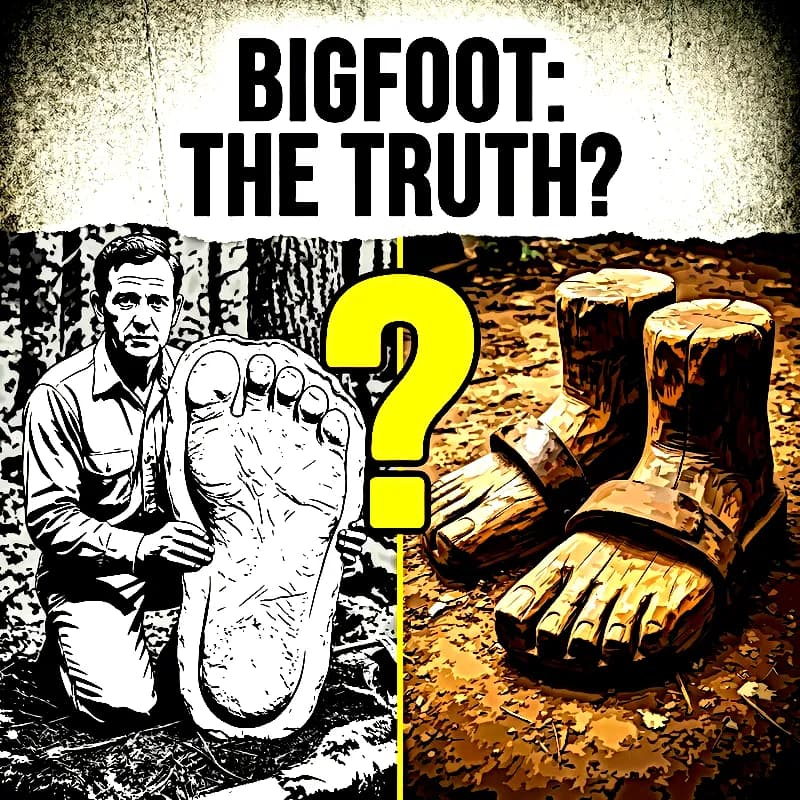
Jerry Crew was a "catskinner"—a bulldozer operator—known among his peers for being a sober, earnest, and deeply religious man who resided in the small hamlet of Salyer.[4]Bigfoot: The Life and Times of a Legend by Joshua Blu Buhs - The University of Chicago Press https://press.uchicago.edu/Misc/Chicago/079790.html Unlike many of his coworkers who lived in trailers at the worksite, Crew commuted each week, a journey that involved navigating California State Highway 299 and Highway 96.[4]Bigfoot: The Life and Times of a Legend by Joshua Blu Buhs - The University of Chicago Press https://press.uchicago.edu/Misc/Chicago/079790.html On the morning of August 27, 1958, Crew arrived at his Caterpillar D8 bulldozer and prepared for his shift.[2]The Hoax That Led to the Word 'Bigfoot' - Mental Floss https://www.mentalfloss.com/crime/bigfoot-word-origin-hoax After changing from his moccasins into work boots and donning his aluminum hardhat, he noticed large, manlike footprints impressed into the fresh, leveled earth around his machine.[4]Bigfoot: The Life and Times of a Legend by Joshua Blu Buhs - The University of Chicago Press https://press.uchicago.edu/Misc/Chicago/079790.html
The tracks were approximately 16 inches long and 7 to 8 inches wide, sunk deep into the soil in a manner that suggested significant weight.[1]Bigfoot - Wikipedia https://en.wikipedia.org/wiki/Bigfoot Crew initially suspected a prank but became unsettled by the scale and the apparent strength required to leave such deep impressions in the graded dirt.[4]Bigfoot: The Life and Times of a Legend by Joshua Blu Buhs - The University of Chicago Press https://press.uchicago.edu/Misc/Chicago/079790.html He reported the find to his foreman, Wilbur "Shorty" Wallace, who had already been hearing rumors of similar tracks at other worksites, including one along the Mad River and another near Trinidad.[4]Bigfoot: The Life and Times of a Legend by Joshua Blu Buhs - The University of Chicago Press https://press.uchicago.edu/Misc/Chicago/079790.html
Secondary Anomalies and Worker Reactions
The appearance of the footprints was accompanied by a series of logistical disturbances that the logging crew could not readily explain. These incidents contributed to an atmosphere of unease and led the men to personify the culprit.[2]The Hoax That Led to the Word 'Bigfoot' - Mental Floss https://www.mentalfloss.com/crime/bigfoot-word-origin-hoax
| Reported Incident | Estimated Weight/Scale | Source |
|---|---|---|
| Disappearance of a diesel fuel drum | 450 lbs (200 kg) | [1]Bigfoot - Wikipedia https://en.wikipedia.org/wiki/Bigfoot |
| Movement of a spare heavy equipment tire | 700 lbs | [2]The Hoax That Led to the Word 'Bigfoot' - Mental Floss https://www.mentalfloss.com/crime/bigfoot-word-origin-hoax |
| Relocation of steel cables uphill | 100 lbs | [2]The Hoax That Led to the Word 'Bigfoot' - Mental Floss https://www.mentalfloss.com/crime/bigfoot-word-origin-hoax |
| Large, five-toed footprints | 16 inches long | [2]The Hoax That Led to the Word 'Bigfoot' - Mental Floss https://www.mentalfloss.com/crime/bigfoot-word-origin-hoax |
Shorty Wallace initially attempted to diffuse the tension with humor, advising the men to "let him know if they saw any apes skedaddling through the timber."[4]Bigfoot: The Life and Times of a Legend by Joshua Blu Buhs - The University of Chicago Press https://press.uchicago.edu/Misc/Chicago/079790.html However, the persistent appearance of the tracks—sometimes appearing overnight on fresh construction—convinced several workers to carry firearms or, in some cases, to quit their jobs entirely.[5]The Search for Bigfoot - Storyworks - Scholastic https://storyworks.scholastic.com/issues/2020-21/020121/the-search-for-bigfoot.html Indigenous workers, including Hoopa Indians from the nearby reservation, were among those who recognized the tracks as potentially belonging to the "Oh-Mah" or "Creek Devil" of their ancestral lore.[3]Samantha Pate Hist 490 Bigfoot: From Folk Legend to Cultural Phenomenon - Humboldt State University https://digitalcommons.humboldt.edu/cgi/viewcontent.cgi?article=1029&context=barnum
The Journalistic Genesis: Andrew Genzoli and the "Bigfoot" Moniker
The transition of the Bluff Creek tracks from a local camp curiosity to a national sensation was largely the result of the editorial decisions made by Andrew Genzoli at the Humboldt Times.[1]Bigfoot - Wikipedia https://en.wikipedia.org/wiki/Bigfoot Genzoli did not immediately realize the impact the story would have; his first foray into the subject was prompted by a need for "filler" material for his regular column.[3]Samantha Pate Hist 490 Bigfoot: From Folk Legend to Cultural Phenomenon - Humboldt State University https://digitalcommons.humboldt.edu/cgi/viewcontent.cgi?article=1029&context=barnum
The RFD Column and the Letter from Jess Bemis
On September 21, 1958, Genzoli published a letter from a reader named Jess Bemis, who detailed the "giant footprints" puzzling residents along the Trinity River.[6]When California introduced Bigfoot to the world https://www.californiasun.co/when-california-introduced-bigfoot-to-the-world/ Genzoli's response to the letter was playfully skeptical, asking if the county had its own "Wandering Willie of Weitchpec" and inviting readers to share their theories.[3]Samantha Pate Hist 490 Bigfoot: From Folk Legend to Cultural Phenomenon - Humboldt State University https://digitalcommons.humboldt.edu/cgi/viewcontent.cgi?article=1029&context=barnum The response from the public was immediate and overwhelming, signaling a deep-seated fascination with the "wild man" archetype that had been present in European and indigenous folklore for centuries.[3]Samantha Pate Hist 490 Bigfoot: From Folk Legend to Cultural Phenomenon - Humboldt State University https://digitalcommons.humboldt.edu/cgi/viewcontent.cgi?article=1029&context=barnum
The October 6, 1958 Front Page
The definitive moment occurred on October 6, 1958, when Jerry Crew appeared on the front page of the Humboldt Times holding a plaster cast of a 16-inch footprint.[1]Bigfoot - Wikipedia https://en.wikipedia.org/wiki/Bigfoot Crew had been advised by taxidermist Bob Titmus on how to use plaster of Paris to capture the impression.[7]The Willow Creek - China Flat Museum - BFRO https://www.bfro.net/NEWS/wcmuseum.htm Genzoli's article, titled "Giant footprints puzzle residents along Trinity River," shortened the crew's nickname for the creature from "Big Foot" to the single-word Bigfoot.[2]The Hoax That Led to the Word 'Bigfoot' - Mental Floss https://www.mentalfloss.com/crime/bigfoot-word-origin-hoax
The story was rapidly picked up by the Associated Press and distributed to major outlets like The New York Times and The Los Angeles Times.[1]Bigfoot - Wikipedia https://en.wikipedia.org/wiki/Bigfoot Within weeks, the NBC quiz show Truth or Consequences offered $1,000 for proof of the creature's existence, further cementing the name in the American consciousness.[2]The Hoax That Led to the Word 'Bigfoot' - Mental Floss https://www.mentalfloss.com/crime/bigfoot-word-origin-hoax
Media Timeline
The 2002 Wallace Confession: Prank or Paralleled Truth?
For decades, the 1958 Bluff Creek tracks were considered the "gold standard" of Bigfoot evidence.[9]John Green's Commentary of the 'Birth of Bigfoot' Story - BFRO https://www.bfro.net/news/jgreen_bluff_creek_tracks.asp This status was fundamentally challenged in December 2002 when the family of Ray L. Wallace, who had passed away at age 84, went public with a claim that Ray had faked the tracks using carved wooden feet.[10]Raymond L. Wallace - Wikipedia https://en.wikipedia.org/wiki/Raymond_L._Wallace
The Mechanics of the Ray Wallace Hoax
According to Michael Wallace (Ray's son), the motive was initially to deter vandals from sabotaging construction equipment at the Bluff Creek site.[11]The True Legend of Toledo's Bigfoot - Lewis County News https://lewiscountytribune.com/the-true-legend-of-toledos-bigfoot.html Ray reportedly asked a neighbor in Toledo, Rant Mullins, to carve a set of 16-inch feet from alder wood.[11]The True Legend of Toledo's Bigfoot - Lewis County News https://lewiscountytribune.com/the-true-legend-of-toledos-bigfoot.html These "stompers" were equipped with leather straps to fit over standard work boots.[11]The True Legend of Toledo's Bigfoot - Lewis County News https://lewiscountytribune.com/the-true-legend-of-toledos-bigfoot.html
The family narrative details a sophisticated operational pattern:
- Ray would wait for Jerry Crew to leave the site.[11]The True Legend of Toledo's Bigfoot - Lewis County News https://lewiscountytribune.com/the-true-legend-of-toledos-bigfoot.html
- He would use heavy machinery to perform acts of "superhuman" strength, such as throwing oil drums.[11]The True Legend of Toledo's Bigfoot - Lewis County News https://lewiscountytribune.com/the-true-legend-of-toledos-bigfoot.html
- He would then strap on the wooden feet and walk around the site, leaving a trail of giant footprints.[11]The True Legend of Toledo's Bigfoot - Lewis County News https://lewiscountytribune.com/the-true-legend-of-toledos-bigfoot.html
- Ray also reportedly used the feet to scare workers' families living in trailers by peeking into windows at night.[11]The True Legend of Toledo's Bigfoot - Lewis County News https://lewiscountytribune.com/the-true-legend-of-toledos-bigfoot.html
Comparative Morphological Analysis: The Case Against a Total Hoax
While the media widely embraced the Wallace family's story as a definitive debunking, professional Bigfoot researchers and scientists raised significant objections based on the physical evidence from 1958.[12]Wallace Hoax Behind Bigfoot? - BFRO https://www.bfro.net/news/wallace.asp Dr. Jeff Meldrum, a professor of anatomy and anthropology at Idaho State University, argued that the crude wooden feet produced by the Wallace family in 2002 did not match the sophisticated anatomical features seen in the 1958 plaster casts.[2]The Hoax That Led to the Word 'Bigfoot' - Mental Floss https://www.mentalfloss.com/crime/bigfoot-word-origin-hoax
The Midtarsal Break and Weight Distribution
One of the most compelling arguments for a biological trackmaker is the presence of a midtarsal break—a joint across the mid-foot that allows for flexibility during bipedal locomotion, typical of great apes but absent in modern humans.[13]Bigfoot vs. Bear Tracks: The Footprint Evidence - Southern Style Sweet Tees https://www.southernstylesweettees.com/blog/october-20 Many Bluff Creek tracks displayed a "pressure ridge" in the middle of the foot, which occurs when a heavy, flat-footed creature pushes off with the mid-foot.[13]Bigfoot vs. Bear Tracks: The Footprint Evidence - Southern Style Sweet Tees https://www.southernstylesweettees.com/blog/october-20 Flat wooden stompers, by their nature, cannot replicate this dynamic flexion; they act as rigid plates that distribute weight evenly, often resulting in a "snowshoe effect" rather than the deep, localized compression observed in the mud at Bluff Creek.[12]Wallace Hoax Behind Bigfoot? - BFRO https://www.bfro.net/news/wallace.asp
The Problem of Stride and Terrain
The tracks recorded by Jerry Crew and others often showed consistent strides of 40 to 60 inches.[13]Bigfoot vs. Bear Tracks: The Footprint Evidence - Southern Style Sweet Tees https://www.southernstylesweettees.com/blog/october-20 Experts argue that a human wearing heavy wooden blocks would find it physically impossible to maintain such a stride, especially when navigating the steep, brush-covered inclines of the Bluff Creek drainage.[14]Tribute JOHN GREEN: A LIFETIME OF SASQUATCH RESEARCH https://www.isu.edu/media/libraries/rhi/essays/Green_Tribute_revised.pdf Furthermore, John Green offered a $100,000 reward for anyone who could replicate the depth and stride of the 1958 tracks using the methods described by the Wallace family; to date, the challenge remains unmet.[12]Wallace Hoax Behind Bigfoot? - BFRO https://www.bfro.net/news/wallace.asp
Comparative Track Morphology
| Feature | Wallace Wooden Feet (2002) | 1958 Bluff Creek Casts |
|---|---|---|
| Material | Alder wood with leather straps | Plaster of Paris from soil impressions |
| Shape | Crude, uniform carving | Anatomically complex; visible toe alignment |
| Flexibility | Rigid / Non-articulating | Evidence of midtarsal break and flexion |
| Stride | Limited by human gait | 40–60 inch linear stride |
| Fine Detail | None | Reported dermal ridges (fingerprint-like) [2]The Hoax That Led to the Word 'Bigfoot' - Mental Floss https://www.mentalfloss.com/crime/bigfoot-word-origin-hoax, [12]Wallace Hoax Behind Bigfoot? - BFRO https://www.bfro.net/news/wallace.asp, [13]Bigfoot vs. Bear Tracks: The Footprint Evidence - Southern Style Sweet Tees https://www.southernstylesweettees.com/blog/october-20, [15]Sasquatch Tracks: Unraveling the History of Bigfoot in America - Lake&Lure https://lakeandlure.co/blogs/news/sasquatch-tracks-unraveling-the-history-of-bigfoot-in-america |
Historical Timeline of Track Finds: 1958–1959
The events of August 1958 were part of a larger cluster of activity in the Bluff Creek region that spanned nearly two years.[16]Collated reports of Bigfoot activity in the Willow Creek / Bluff Creek area - Reddit https://www.reddit.com/r/bigfoot/comments/1aurosy/collated_reports_of_bigfoot_activity_in_the/ This cluster included various observers and distinct sets of tracks that researchers believe suggest the presence of multiple individuals.[9]John Green's Commentary of the 'Birth of Bigfoot' Story - BFRO https://www.bfro.net/news/jgreen_bluff_creek_tracks.asp
The 1958 Track Log
The year 1958 saw a concentration of activity that coincided with the most intensive period of road construction.[4]Bigfoot: The Life and Times of a Legend by Joshua Blu Buhs - The University of Chicago Press https://press.uchicago.edu/Misc/Chicago/079790.html
| Date | Location | Primary Observer | Details |
|---|---|---|---|
| January 1958 | Martin's Ferry Hill | Mrs. Bud Ryerson | Tracks found near Weitchpec before the main summer flurry |
| August 27, 1958 | Bluff Creek Road | Jerry Crew | Discovery of tracks circling the D8 bulldozer |
| September 1958 | Bluff Creek Road | Jess Bemis | Inspection of fresh tracks; prompted letter to Genzoli |
| October 1, 1958 | Bluff Creek Road | Jerry Crew | Crew finds a quarter-mile of tracks and makes first cast |
| October 12, 1958 | Bluff Creek Road | Ray Kerr / L. Breazeale | Visual sighting of a creature crossing the road in two strides |
| Late 1958 | Bluff Creek Sandbar | Bob Titmus | Discovery of a distinct 15-inch track set in hard sand [9]John Green's Commentary of the 'Birth of Bigfoot' Story - BFRO https://www.bfro.net/news/jgreen_bluff_creek_tracks.asp, [16]Collated reports of Bigfoot activity in the Willow Creek / Bluff Creek area - Reddit https://www.reddit.com/r/bigfoot/comments/1aurosy/collated_reports_of_bigfoot_activity_in_the/ |
The 1959 Observations
Following the initial media storm, activity continued as independent researchers and locals began monitoring the area more closely.[7]The Willow Creek - China Flat Museum - BFRO https://www.bfro.net/NEWS/wcmuseum.htm
- Aerial Sighting (1959): A couple flying a private aircraft over the Bluff Creek drainage reported seeing a giant figure making tracks through the terrain, which they followed from the air.[16]Collated reports of Bigfoot activity in the Willow Creek / Bluff Creek area - Reddit https://www.reddit.com/r/bigfoot/comments/1aurosy/collated_reports_of_bigfoot_activity_in_the/
- Bob Titmus Expedition (November 1, 1959): Bob Titmus found additional tracks at the Bluff Creek Sandbar.[16]Collated reports of Bigfoot activity in the Willow Creek / Bluff Creek area - Reddit https://www.reddit.com/r/bigfoot/comments/1aurosy/collated_reports_of_bigfoot_activity_in_the/ These tracks were approximately 15 inches long and impressed an inch deep in hard-packed, damp sand—a location where heavy machinery could not have been used to create fake impressions.[9]John Green's Commentary of the 'Birth of Bigfoot' Story - BFRO https://www.bfro.net/news/jgreen_bluff_creek_tracks.asp
- Expansion of Search (Late 1959): Texas oilman Tom Slick began financing search operations in the region, bringing in researchers like René Dahinden and John Green.[9]John Green's Commentary of the 'Birth of Bigfoot' Story - BFRO https://www.bfro.net/news/jgreen_bluff_creek_tracks.asp
Broader Implications and Cultural Synthesis
The 1958 Bluff Creek discovery did not merely launch a monster hunt; it reflected the psychological and sociological anxieties of mid-century America.[3]Samantha Pate Hist 490 Bigfoot: From Folk Legend to Cultural Phenomenon - Humboldt State University https://digitalcommons.humboldt.edu/cgi/viewcontent.cgi?article=1029&context=barnum The "Bigfoot" legend offered a way for modern society to reconnect with a lost sense of wilderness and masculinity in the face of rapid urbanization and consumer culture.[3]Samantha Pate Hist 490 Bigfoot: From Folk Legend to Cultural Phenomenon - Humboldt State University https://digitalcommons.humboldt.edu/cgi/viewcontent.cgi?article=1029&context=barnum
Scientific Skepticism vs. Cryptid Resilience
The primary scientific explanation for Bigfoot sightings remains the misidentification of known animals, specifically the American black bear.[1]Bigfoot - Wikipedia https://en.wikipedia.org/wiki/Bigfoot Data shows a strong correlation between Bigfoot reports and areas with high black bear populations.[1]Bigfoot - Wikipedia https://en.wikipedia.org/wiki/Bigfoot Bears are known to walk bipedally for short distances, especially if injured or attempting to gain a better vantage point, and their tracks can appear human-like under certain conditions.[1]Bigfoot - Wikipedia https://en.wikipedia.org/wiki/Bigfoot
However, proponents argue that the Bluff Creek tracks are part of a larger, global pattern involving the Yeti of the Himalayas and the Sasquatch of British Columbia.[1]Bigfoot - Wikipedia https://en.wikipedia.org/wiki/Bigfoot The theory that a relict population of Gigantopithecus—an extinct giant ape from Southeast Asia—could have crossed the Bering land bridge to inhabit North America remains a popular, albeit unproven, hypothesis among enthusiasts.[17]Bigfoot History, Sightings & Explanations - Study.com https://study.com/academy/lesson/bigfoot-overview-history-sightings-sasquatch.html
Legislative and Economic Legacy
The impact of the 1958 discovery is codified in California law. Assembly Bill 666 recognized Bigfoot as a legendary cryptid with origins in Humboldt County, noting that the etymological birth of the name occurred in the Humboldt Times in 1958.[18]AB 666 - Arts, Entertainment, Sports, and Tourism https://aart.assembly.ca.gov/media/978 This recognition underscores the economic importance of Bigfoot tourism to rural regions like Willow Creek, where the "Gateway to Bigfoot Country" branding drives robust local business.[18]AB 666 - Arts, Entertainment, Sports, and Tourism https://aart.assembly.ca.gov/media/978
Furthermore, the 1958 events paved the way for the 1967 Patterson-Gimlin film, which was shot at Bluff Creek specifically because of the area's reputation established by Jerry Crew and the Wallace brothers.[19]Tracking the Legend of Bigfoot | Arizona State Museum https://statemuseum.arizona.edu/online-exhibit/curators-choice/tracking-legend-bigfoot Whether the tracks were the result of a "canny bullshitter" like Ray Wallace or an undocumented primate, the Bluff Creek discovery stands as the defining moment when a regional mystery became a permanent fixture of global folklore.[2]The Hoax That Led to the Word 'Bigfoot' - Mental Floss https://www.mentalfloss.com/crime/bigfoot-word-origin-hoax
Conclusions: Reconciling the Bluff Creek Paradigm
The investigation into the August 1958 discovery reveals a fundamental tension between the documentation of anomalous physical artifacts and the documented history of human fabrication.[1]Bigfoot - Wikipedia https://en.wikipedia.org/wiki/Bigfoot While the Wallace family's 2002 confession provided a plausible motive and a set of tools for a hoax, it failed to reconcile the anatomical sophistication of the Jerry Crew casts with the crude nature of the wooden stompers.[12]Wallace Hoax Behind Bigfoot? - BFRO https://www.bfro.net/news/wallace.asp The presence of thousands of tracks recorded by multiple independent observers throughout 1958 and 1959 suggests that if Ray Wallace was the architect of the legend, he was remarkably prolific, physically resilient, and anatomically knowledgeable beyond his social standing.[12]Wallace Hoax Behind Bigfoot? - BFRO https://www.bfro.net/news/wallace.asp
Ultimately, the 1958 Bluff Creek discovery remains the most significant event in the history of the Bigfoot phenomenon not because it proved the creature's existence, but because it established the parameters of the debate.[9]John Green's Commentary of the 'Birth of Bigfoot' Story - BFRO https://www.bfro.net/news/jgreen_bluff_creek_tracks.asp It created a tangible link between indigenous lore and modern science, provided a universal name for the "wild man" of the woods, and ensured that the dense forests of Northern California would forever be viewed through a lens of enchantment and mystery.[3]Samantha Pate Hist 490 Bigfoot: From Folk Legend to Cultural Phenomenon - Humboldt State University https://digitalcommons.humboldt.edu/cgi/viewcontent.cgi?article=1029&context=barnum The tracks in the mud of Bluff Creek Road may have been washed away by time and the 1964 floods, but their impression on the collective human psyche remains indelible.[20]Patterson-Gimlin Footage | Cryptid Wiki - Fandom https://cryptidz.fandom.com/wiki/Patterson%E2%80%93Gimlin_Footage
Sources
- Bigfoot - Wikipedia, https://en.wikipedia.org/wiki/Bigfoot
- The Hoax That Led to the Word 'Bigfoot' - Mental Floss, https://www.mentalfloss.com/crime/bigfoot-word-origin-hoax
- Samantha Pate Hist 490 Bigfoot: From Folk Legend to Cultural Phenomenon - Humboldt State University, https://digitalcommons.humboldt.edu/cgi/viewcontent.cgi?article=1029&context=barnum
- Bigfoot: The Life and Times of a Legend by Joshua Blu Buhs - The University of Chicago Press, https://press.uchicago.edu/Misc/Chicago/079790.html
- The Search for Bigfoot - Storyworks - Scholastic, https://storyworks.scholastic.com/issues/2020-21/020121/the-search-for-bigfoot.html
- When California introduced Bigfoot to the world, https://www.californiasun.co/when-california-introduced-bigfoot-to-the-world/
- The Willow Creek - China Flat Museum - BFRO, https://www.bfro.net/NEWS/wcmuseum.htm
- The Legends of Bigfoot: Or How I Regained My Manhood - Kennesaw State University, https://digitalcommons.kennesaw.edu/cgi/viewcontent.cgi?article=1002&context=mast_etd
- John Green's Commentary of the 'Birth of Bigfoot' Story - BFRO, https://www.bfro.net/news/jgreen_bluff_creek_tracks.asp
- Raymond L. Wallace - Wikipedia, https://en.wikipedia.org/wiki/Raymond_L._Wallace
- The True Legend of Toledo's Bigfoot - Lewis County News, https://lewiscountytribune.com/the-true-legend-of-toledos-bigfoot.html
- Wallace Hoax Behind Bigfoot? - BFRO, https://www.bfro.net/news/wallace.asp
- Bigfoot vs. Bear Tracks: The Footprint Evidence - Southern Style Sweet Tees, https://www.southernstylesweettees.com/blog/october-20
- Tribute JOHN GREEN: A LIFETIME OF SASQUATCH RESEARCH, https://www.isu.edu/media/libraries/rhi/essays/Green_Tribute_revised.pdf
- Sasquatch Tracks: Unraveling the History of Bigfoot in America - Lake&Lure, https://lakeandlure.co/blogs/news/sasquatch-tracks-unraveling-the-history-of-bigfoot-in-america
- Collated reports of Bigfoot activity in the Willow Creek / Bluff Creek area - Reddit, https://www.reddit.com/r/bigfoot/comments/1aurosy/collated_reports_of_bigfoot_activity_in_the/
- Bigfoot History, Sightings & Explanations - Study.com, https://study.com/academy/lesson/bigfoot-overview-history-sightings-sasquatch.html
- AB 666 - Arts, Entertainment, Sports, and Tourism, https://aart.assembly.ca.gov/media/978
- Tracking the Legend of Bigfoot | Arizona State Museum, https://statemuseum.arizona.edu/online-exhibit/curators-choice/tracking-legend-bigfoot
- Patterson-Gimlin Footage | Cryptid Wiki - Fandom, https://cryptidz.fandom.com/wiki/Patterson%E2%80%93Gimlin_Footage