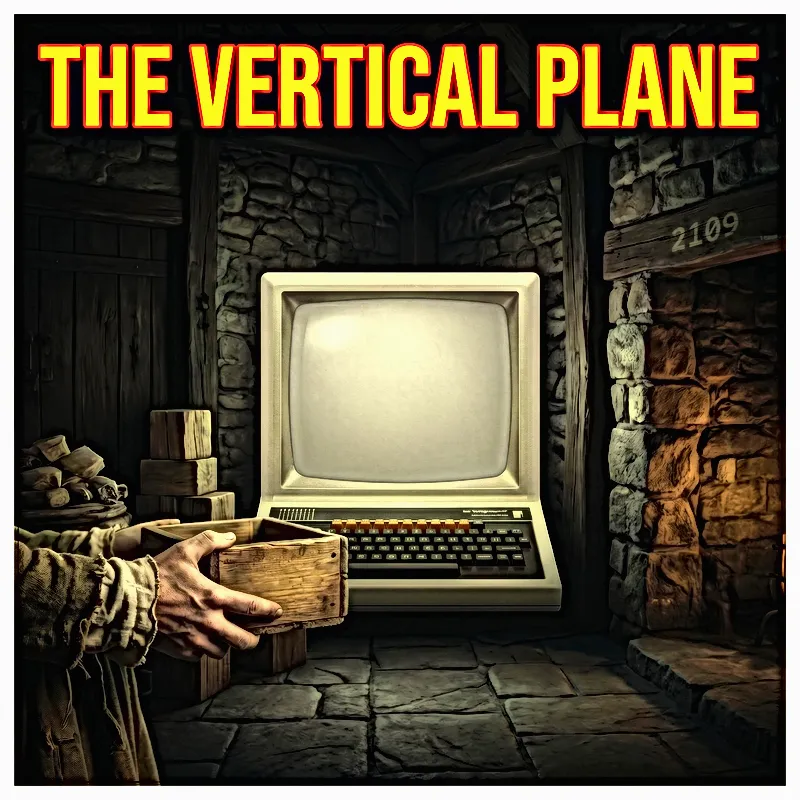
The source is a comprehensive investigative report detailing the Dodleston messages, a series of mysterious communications appearing on an 8-bit BBC Microcomputer in the mid-1980s. It explores the interaction between Ken Webster and two separate entities: Tomas Harden, a 16th-century clergyman whose identity was later confirmed through university archives, and a futuristic intelligence known as 2109. The text rigorously evaluates the case through the lenses of forensic linguistics, historical documentation, and the technical constraints of early computing to determine if the phenomenon was a trans-temporal "time slip" or an elaborate hoax. Ultimately, the analysis highlights the convergence of digital anomalies and poltergeist activity, presenting a scholarly look at one of the most enduring mysteries in the study of anomalous informatics.
Case Snapshot
Subject
The Dodleston Messages
Source Entries
12
Primary Witness
Ken Webster
Location
Meadow Cottage, Dodleston, Cheshire
Time Period
1984–1986
Device
BBC Microcomputer (8-bit)
Entities
Tomas Harden (1546) / 2109 (Future)
Key Verifier
Peter Trinder (Forensic Linguist)
Evidence Distribution
Section Headings
16
Markdown Tables
4
Unique Citations
12
Inline References
94
Core Timeline Anchors
| Date | Milestone |
|---|---|
| 1546 | Tomas Harden allegedly resides at Meadow Cottage site — expelled from Brasenose College in 1538 |
| 1984 | Ken Webster receives first cryptic message ('KDN' file) on BBC Microcomputer |
| 1984–1986 | Over 250 messages exchanged between Webster, Harden, and 2109 |
| 1985 | Peter Trinder identifies Bristol dialect and archaic linguistic markers |
| 1985 | Robin Peedell at Brasenose College confirms Harden/Hawarden in archives |
| 1986 | SPR investigators visit Meadow Cottage three times — no phenomena observed |
| 1989 | Ken Webster publishes The Vertical Plane |
Introduction
The series of events that transpired in the village of Dodleston, Cheshire, between 1984 and 1986, constitutes one of the most intellectually challenging enigmas in the history of anomalous informatics and parapsychological research.[1] At the center of this case is Ken Webster, a teacher who, along with his partner Debbie and friend Nicola, became the primary witnesses to a sustained sequence of alleged trans-temporal communications facilitated by a BBC Microcomputer.[1] This report provides a comprehensive examination of the linguistic, technical, and historical dimensions of these communications, evaluating the claims of a 16th-century entity named Tomas Harden and a futuristic intelligence designated as 2109.[2]
Technical Architecture and the 1980s Computing Context
To understand the evidentiary weight of the Dodleston messages, one must first analyze the technical environment of 1984.[1] The primary device, a BBC Microcomputer, was an 8-bit system that served as a staple of British education during the 1980s.[1] Unlike modern machines, the BBC Micro possessed no internal hard drive, no internet connectivity, and operated on 32KB of RAM in its standard Model B configuration.[1]
| Component | Specification (1984) | Contextual Limitation for the Case |
|---|---|---|
| Processor | MOS Technology 6502 (2 MHz) | Limited processing power inhibited complex automated scripts [1]. |
| RAM | 32 KB | Volatility ensured that data not explicitly saved to disk was lost upon power cycles [1]. |
| Storage | 5.25-inch Floppy Disk | Required manual insertion; messages were found within the EDWORD word processor environment [3]. |
| Networking | None (No Modem) | Remote hacking via external telephone lines was technologically impossible in this specific setup [4]. |
| OS | Acorn MOS | A proprietary, non-multitasking environment that made background processes difficult to hide [1]. |
The messages were discovered as text files within the EDWORD software, often appearing on disks that had been left in the drive or manifesting on the screen while the computer was left unattended.[3] Proponents of the case emphasize that Ken Webster frequently swapped the computer for different units from a school pool, yet the phenomenon persisted regardless of the physical hardware in use.[3], [4] This suggests the "interface" was not localized to a single machine but was perhaps tethered to the geographic location of Meadow Cottage itself.[1]
The Linguistic Evolution of the Lukas/Harden Communications
The initial correspondence was characterized by a mysterious entity calling himself "Lukas Wainman," who claimed to be a resident of the cottage in the year 1546.[1] Forensic linguistic analysis conducted by Peter Trinder, a respected English teacher and academic consultant, revealed a depth of archaic accuracy that challenged contemporary skeptical interpretations.[5]
Orthographic and Morphological Analysis
The messages utilized a form of Early Modern English that was remarkably consistent with the mid-16th century.[6] Trinder noted that the author correctly applied the usage of "v" and "u," where "v" was employed at the beginning of words and "u" was used internally (e.g., "vnto" vs "haue").[7] This specific orthographic nuance was not widely known outside of specialized academic circles in 1984.[7]
Furthermore, the entity's vocabulary included terms such as "leems boyste" (box of lights) to describe the computer and "scrit devise" (writing machine) for the word processor.[5] The term "leems" stems from the Old English "leoma," meaning ray of light or gleam, which remained in vestigial use in certain regional dialects during the 16th century.[5]
Regional Dialect and the Bristol Connection
A significant breakthrough in the linguistic investigation occurred when Peter Trinder identified a specific regional dialect within the messages.[5] The phonetic patterns and choice of idioms suggested an author originating from the Bristol area.[5] This observation was made before the entity disclosed his personal history; later, the scribe revealed that his family was indeed from Bristol and that he had only recently moved to Dodleston.[5]
| Linguistic Marker | Archaic Usage in Messages | Modern English Equivalent | Implication |
|---|---|---|---|
| Orthography | "Lytes" / "Devyll" | Lights / Devil | Standard 16th-century spelling variability [5]. |
| Pronouns | "Thou" / "Thy" | You / Your | Correct social hierarchy application for the era [7]. |
| Terminology | "Barful" | Obstructive / Full of bars | Authentic but rare Early Modern English adjective [5]. |
| Negation | "I hath no want to affrey" | I do not want to frighten | Consistent with pre-auxiliary "do" negation patterns [5]. |
The "Jesus College" Trap
In a sophisticated attempt to verify the identity of his 20th-century correspondents, the 16th-century entity—who eventually identified himself as Tomas Harden—employed a "trap."[2] Harden claimed to have studied at Jesus College, Oxford.[2] Because Jesus College was not founded until 1571, Harden reasoned that someone from the future would recognize this as an anachronism if they were truly educated as they claimed.[2] When Webster pointed out the historical impossibility of attending a college not yet built, Harden expressed a significant increase in trust, believing he was indeed communicating with legitimate future-dwellers.[2]
Historical Verification of Tomas Harden
The transition of the entity's identity from the pseudonym "Lukas Wainman" to the historically grounded "Tomas Harden" (or Hawarden) provided the case with a verifiable anchor.[8] Harden provided details regarding his academic and ecclesiastical career that were later substantiated by external researchers.[2]
Brasenose College and the Expulsion of 1538
Harden alleged that he was a graduate of Brasenose College, Oxford, and had served as the Dean of the Chapel.[2] He claimed his career was derailed in 1538 when he was expelled for refusing to comply with the King's mandate to expunge the Pope's name from chapel books—a direct consequence of the English Reformation and the Break with Rome.[8]
Robin Peedell, an assistant librarian at Brasenose College during the 1980s, conducted an archival search and successfully identified a "Harden" whose biography mirrored these claims.[2] The records confirmed that a Thomas Hawarden was a fellow at the college and had been involved in religious non-compliance during the 1530s.[8]
The Presence of Sir Thomas Fowleshurst
The entity expressed profound fear regarding the local sheriff, Sir Thomas Fowleshurst, who had reportedly arrested him on suspicion of witchcraft or heresy due to his possession of the "leems boyste."[2] Historical records from 1546 confirm that Sir Thomas Fowleshurst was indeed the Sheriff of Cheshire.[6] This alignment of local administrative history with the timeline of the messages added significant weight to the evidentiary merits of the case.[6]
The 2109 Entity: Tachyon-Based Intelligence
As the correspondence with Tomas Harden deepened, a third party began to intervene.[3] This entity, known simply as "2109," claimed to be communicating from a future time or a different reality altogether.[4]
Scientific Foundations of the Tachyon Claim
2109 identified itself as a "tachyon-based intelligence."[4] In theoretical physics, tachyons are hypothetical particles that move at speeds exceeding the speed of light (v>c).[4] According to the principles of Special Relativity, such particles would effectively move backward through time relative to a standard observer.[4]
The mathematical framework for such a particle suggests that its energy and momentum relate to its mass through the equation: E = mc² / √(1 − v²/c²). For v>c, the denominator becomes an imaginary number, necessitating an imaginary rest mass for the particle to maintain real energy values.[4] 2109's assertion implies that their entire consciousness or technological base operates on these non-causal principles, allowing them to manipulate the "Vertical Plane"—a term they used to describe the convergence of different temporal points.[4]
Digital Artifacts and Status Codes
Messages from 2109 were often characterized by technical jargon and strings of characters that appeared to be artifacts of digital telemetry.[3] One prominent example included: 2109. 213,978,8]: IRRECOVERABLE STATE: REASON FOR YOUR PRETEXT.[3] Analysis by researchers on technical forums has suggested these strings resemble RTTY (Radio Teletype) codes or early packet-switching protocols.[3] The presence of these codes in 1985 is notable, as the layperson witnesses involved were unlikely to have possessed the expertise to fabricate convincing digital communication protocols.[3]
| Entity | Communication Tone | Stated Purpose | Interaction Style |
|---|---|---|---|
| Tomas Harden | Emotional, Archaic, Vulnerable | Seeking friendship and understanding of his situation [9]. | Personal, collaborative, often terrified [1]. |
| 2109 | Authoritative, Clinical, Cryptic | Conducting a "time-spanning experiment" for unspecified ends [6]. | Dismissive, controlling, often manipulative [4]. |
The "Purpose" of the Connection
The 2109 entity expressed a high-handed desire to control the communication between Webster and Harden.[4] They claimed to have altered some of Harden's messages to prevent "catastrophic" changes to the timeline.[2] This admission introduced a layer of uncertainty for Webster, as he could never be entirely certain whether he was reading Harden's authentic words or a 2109-filtered version.[2] 2109 famously told the witnesses that their work would "change the face of history," though they offered no specific details on how this would manifest.[5]
Evidentiary Merits: Files, Witnesses, and Phenomena
The credibility of the Dodleston case rests on the convergence of three distinct types of evidence: the digital records on the BBC Micro, the testimonies of contemporary witnesses, and the physical anomalies recorded at Meadow Cottage.[4]
The "KDN" File and Digital Forensics
The very first message received was a cryptic poem found in a file named "KDN."[5] The text exhibited irregular capitalization and unsettling imagery, such as "True are the nightmares of a person that fears" and "GET OUT YOUR BRICKS."[6] Webster's decision to print these messages at his school provided a physical paper trail that was observed by his colleague Peter Trinder.[5]
From a forensic perspective, the lack of background processes on the BBC Micro makes the spontaneous appearance of files difficult to explain via a software glitch.[1] A file could only be created through active keyboard input or by loading a pre-saved file from a disk.[3] Witnesses claimed they were often in the room when the computer began to "type" on its own, with characters appearing as if entered by an invisible user.[6]
Contemporary Witness Testimonies
While Ken Webster is the primary narrator, several other individuals provided corroborating accounts:
- Debbie: Webster's girlfriend reported experiencing physical sensations of being touched, hair-pulling, and vivid dreams of interacting with Tomas Harden. She is often viewed by researchers as the "psychic facilitator" whose presence was necessary for the connection to remain stable.[4], [10]
- Nicola: A friend living in the cottage who witnessed the "KDN" poem and various poltergeist stacking events.[2]
- Peter Trinder: The English teacher who monitored the correspondence in real-time, providing an external academic perspective and identifying the Bristol dialect.[5]
- John (Solicitor): A neighbor who helped draft a structured reply to the 1521 entity and witnessed the "vanishing" of text from the monitor after it was read.[5]
Poltergeist Manifestations
The messages were frequently accompanied by "stone-tape" or poltergeist-style phenomena.[4] These included:
- Stacking: Items like cat food tins were found stacked in neat pyramids, a phenomenon documented in other classic poltergeist cases like the Enfield Haunting.[6]
- Anomalous Footprints: Dusty, six-toed footprints appeared on the walls and floors. Efforts to paint over them resulted in the prints reappearing on top of the fresh paint the following day.[6]
- Temperature and Air Movement: Strong gusts of wind were reported inside closed rooms, specifically lifting and scattering newspapers. Sudden drops in temperature were also common occurrences.[4], [5]
The Credibility of "The Vertical Plane"
Ken Webster's book, The Vertical Plane, published in 1989, remains the definitive account of the case.[11] Evaluation of the book's credibility often centers on the tension between its narrative style and the extraordinary claims it makes.[12]
Philosophical and Psychological Depth
The book is noted for being "strangely mundane" in its descriptions of daily life alongside the paranormal.[12] Webster does not portray himself as a hero or a psychic, but as a frustrated teacher trying to renovate a cottage while dealing with an intrusive phenomenon.[6] This grounded perspective is frequently cited by readers as a reason to believe in the sincerity of the account.[10]
Critics, however, point to the "convenience" of 2109's interference as a way to hand-wave any linguistic or historical inaccuracies that might have been identified by experts.[7] Rosemary Dinnage, in her review for the Society for Psychical Research (SPR), categorized the work as a novel, arguing that the entities' behaviors were too well-structured for a genuine spontaneous occurrence.[4]
The Role of the Society for Psychical Research (SPR)
The SPR's involvement is a point of contention.[6] Although investigators visited Meadow Cottage on three separate occasions, they failed to witness any phenomena during their supervised stays.[6] Webster expressed frustration with their rigid methodological approach, which he felt was "scaring away" the entities.[4] This failure to produce empirically validated data under lab-like conditions remains the primary hurdle for the case's acceptance in mainstream parapsychology.[4]
Theoretical Models of the Dodleston Connection
Several theories have been proposed to explain the mechanism behind the Dodleston messages, ranging from technological to metaphysical.[4]
The Time Slip Phenomenon
A "time slip" suggests a localized folding of the space-time continuum, allowing two different eras to occupy the same geographic coordinates simultaneously.[1] In the Dodleston case, the site of Meadow Cottage acted as the focal point.[1] 2109's descriptions of the "Vertical Plane" align with this model, suggesting that time is not a horizontal line but a stack of planes that can sometimes "bleed" into one another.[4]
The Computer as a Psychokinetic Focus
Another possibility is that the BBC Micro served as a "sensitive" electronic medium.[1] Modern research into Electronic Voice Phenomena (EVP) and Instrumental Trans-Communication (ITC) suggests that spirits or extra-dimensional entities may be able to manipulate low-voltage electronic signals to form words or images.[1] In this theory, the "messages" were not physically traveling through time but were being constructed in the computer's memory buffer by a non-corporeal intelligence present in the 1980s.[4]
The Hoax Hypothesis: A Critical Appraisal
The most persistent skeptical explanation is that the entire case was an elaborate hoax perpetrated by Ken Webster himself, potentially to achieve literary success.[12]
- Arguments for Hoax: The linguistic accuracy could have been achieved through meticulous research at a local library; the historical figures like Thomas Fowleshurst were accessible in Cheshire archives. The "2109" messages have been criticized for sounding like a 1980s sci-fi pastiche.[6], [12]
- Arguments Against Hoax: The duration of the events (over 18 months) and the involvement of multiple high-integrity witnesses like Peter Trinder and a solicitor make a solitary hoax difficult to maintain. Furthermore, the technical aspects of manipulating multiple different computer units without leaving trace evidence or modern digital markers remains unexplained.[4], [5]
Comparative Analysis of 16th-Century Religious Context
The messages from Tomas Harden reflect the intense religious anxiety of the 1540s.[2] To understand the "why" of his communications, one must view them through the lens of a man whose world was being dismantled by the Crown.[8]
| Event/Factor | Historical Context (1546) | Impact on Harden's Messages |
|---|---|---|
| Reformation | Transition from Catholic to Anglican liturgy. | Harden's refusal to expunge the Pope's name was an act of high treason [8]. |
| Witchcraft Act | Henry VIII's 1542 Witchcraft Act made "sorcery" a capital offense. | Harden feared the "leems boyste" would be seen as a demonic familiar [2]. |
| The Plague | Periodic outbreaks devastated rural Cheshire. | Harden reported that his wife and child died of the "pestilence" in 1521 [5]. |
| Henry VIII's Age | The King was 55 in 1546. | Early messages from "1521" incorrectly stated the King was 64, a discrepancy later corrected when the entity "settled" into 1546 [5]. |
This historical backdrop provides a motivation for Harden's vulnerability.[9] He was a man out of time even in his own era, clinging to the "lights" from the future as his only source of solace during a period of state-sponsored persecution.[9]
Conclusion: The Legacy of the Dodleston Messages
The Dodleston messages represent a unique collision of pre-modern spirituality and post-modern technology.[1] While the case lacks the "smoking gun" of controlled laboratory replication, the depth of its linguistic and historical details continues to defy easy debunking.[10] The evidentiary merits of the computer files and witness testimonies suggest a phenomenon that, if not a literal trans-temporal communication, was at the very least a highly sophisticated and multi-layered psychological occurrence.[4] The role of 2109 as a "tachyon-based" mediator remains the most speculative element, yet it provides a theoretical framework that aligns with the "time slip" experiences reported by Webster and his peers.[4] The ultimate credibility of The Vertical Plane lies in its ability to present an account that is both internally consistent and externally verifiable in its historical particulars.[12] As we move further into an era of ubiquitous digital communication, the Dodleston case serves as a haunting reminder of a time when the boundaries between the living and the historical, and the digital and the supernatural, were briefly and inexplicably blurred.[1]
Sources
- The Mystery of the Dodleston Messages: A Timeless Puzzle with an Eerie Twist - Fox Technologies, https://foxtechnologies.co.uk/the-mystery-of-the-dodleston-messages-a-timeless-puzzle-with-an-eerie-twist/
- Ghost in the machine - Mercurius Politicus, https://mercuriuspoliticus.wordpress.com/2010/11/01/ghost-in-the-machine/
- The Mystery of the Dodleston Messages - Stardot Forums, https://stardot.org.uk/forums/viewtopic.php?t=23766
- The Vertical Plane, by Ken Webster - The Joy of Mere Words, https://tomruffles.wordpress.com/2020/08/14/the-vertical-plane-by-ken-webster/
- The Dodleston Messages Booklet - Basildon Heritage, https://www.basildonheritage.org.uk/media/other/4247/BOOKLET-JN-DODLESTONMESSAGES.pdf
- The Dodleston Messages: Hoax or Ghost From 1546? - HowStuffWorks, https://history.howstuffworks.com/history-vs-myth/dodleston-messages.htm
- Ken Webster's BBC Computer Messages from 1546 - r/HighStrangeness, https://www.reddit.com/r/HighStrangeness/comments/12od9s3/in_december_1984_ken_webster_received_a_strange/
- Mercurius Politicus Archive - November 2010, https://mercuriuspoliticus.wordpress.com/2010/11/01/
- The Vertical Plane Discussion Questions - Bookey, https://www.bookey.app/book/the-vertical-plane/qa
- A rambling post affirming belief in the story - r/TheVerticalPlane, https://www.reddit.com/r/TheVerticalPlane/comments/wvryo2/a_rambling_post_affirming_belief_in_the_story/
- The Vertical Plane by Ken Webster - South Dublin Reads, https://librarystaffpicks.wordpress.com/2018/06/21/the-vertical-plane-by-ken-webster/
- The Vertical Plane by Ken Webster - Goodreads, https://www.goodreads.com/en/book/show/7522356-the-vertical-plane