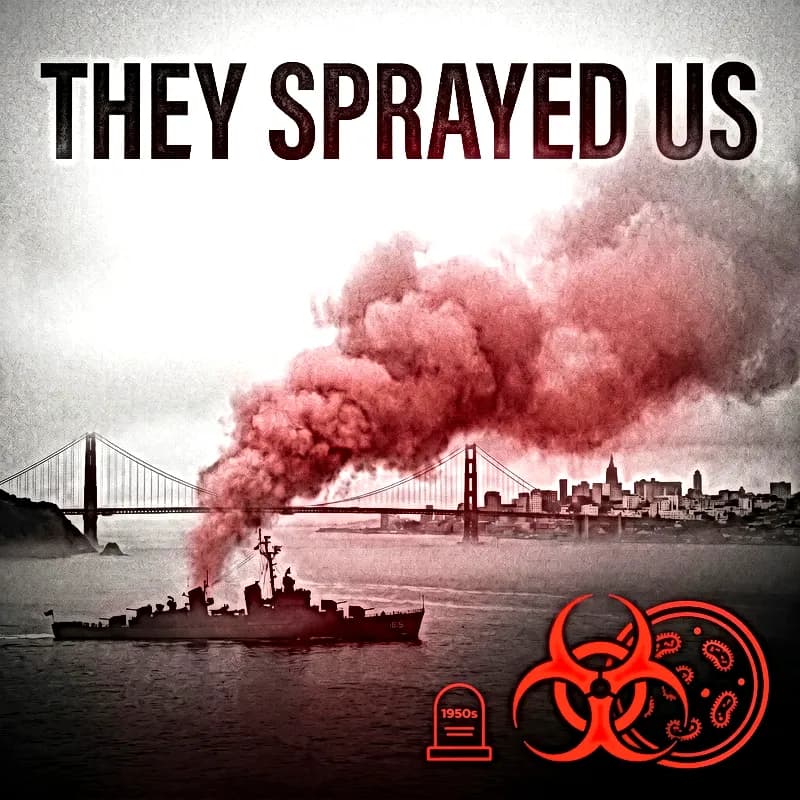
The geopolitical climate of the early 1950s was characterized by an unprecedented fusion of scientific advancement and existential dread. In this era, the United States military sought to navigate the complexities of asymmetric warfare, particularly the threat posed by biological agents. Operation Sea-Spray, conducted in September 1950, stands as one of the most significant and controversial chapters in the history of American biological defense research [1]. This secret military experiment, which involved the aerosolized dispersal of bacteria over the San Francisco Bay Area, was designed to evaluate the susceptibility of a major metropolitan center to a biological attack from the sea [2]. However, the operation’s legacy is defined less by its technical findings and more by its health consequences, specifically the resulting outbreak of rare infections at Stanford University Hospital and the subsequent legal and ethical debates that spanned three decades [1], [3].
Operation Snapshot
Exposed Population
800,000
Monitoring Sites
43
Total Infections
11
Fatalities
1
Biological Agents Tested
Serratia marcescens
2
Bacillus globigii
3
Aspergillus fumigatus
1
Zinc Cadmium Sulfide
1
Strategic Milestones
| Date | Strategic Milestone::Significance |
|---|---|
| 1948 | Establishment of Baldwin Committee::Formulated the basis for domestic biological vulnerability testing. |
| 1949 | Pentagon Air Handling Test::First test of bacterial spread within a major government building. |
| April 1950 | Norfolk Coastal Trials::Preliminary tests of seaborne aerosol dispersal. |
| Sept 1950 | Operation Sea-Spray::Large-scale urban test involving 800,000 residents of San Francisco. |
The Strategic Imperative: Biological Defense in the Atomic Age
The post-World War II period saw the rapid expansion of the United States' biological weapons program, driven by fears of Soviet technological parity and the potential for covert attacks by enemy agents [4]. In 1948, Ira Baldwin, the scientific director of Camp Detrick, issued a seminal report positing that the United States was "particularly vulnerable" to biological attacks, particularly in its large, dense coastal cities [3]. This assessment led to the creation of the Special Operations Division within the Army's Chemical Corps, tasked with conducting field tests to quantify these vulnerabilities [3].
The military's primary goal was to establish "munitions requirements," which required understanding the quantity of a biological agent needed to infect a target population under varying meteorological conditions [5]. At the time, the Joint Chiefs of Staff viewed biological warfare as a potentially decisive element in a future third world war, leading them to prioritize field testing over public disclosure [4]. Operation Sea-Spray was the first large-scale aerosol vulnerability test conducted in a major American city [6].
Technical Execution and Dispersal Mechanisms
Between September 20 and September 27, 1950, a U.S. Navy minesweeper ship patrolled approximately two miles off the coast of San Francisco [1], [2]. The vessel was equipped with giant hoses and aerosol generators designed to release high concentrations of bacteria into the air [2]. Over the course of six distinct "experimental warfare attacks," the military released clouds of Serratia marcescens and Bacillus globigii [2], [7].
The operation was meticulously timed to leverage the region's characteristic morning and evening fogs, which served both as a dispersal aid and a visual shroud for the bacterial plumes [2]. To monitor the spread, the military established 43 sampling sites across the Bay Area, ranging from downtown San Francisco to the suburbs of Albany, Berkeley, Oakland, and Sausalito [2], [9].
The technical findings of the test were documented in "Special Report No. 142: Biological Warfare Trials at San Francisco, California" [7]. The report concluded that the dispersal was highly effective, with almost all of the city's 800,000 residents receiving a dose of at least 5,000 particles—a level that the Army noted was within the range of infectivity for a lethal agent like anthrax [1], [3].
Monitoring and Dosage Estimates
The military used complex mathematical models to estimate the inhaled dosage for the civilian population. According to historical analyses of the Army's data, residents were inhaling millions of bacterial cells throughout the week of testing [7]. The concentration was measured in "particle minutes per liter," and nearly every area of the city recorded levels exceeding 500 [7].
| Parameter | Metric | Source |
|---|---|---|
| Number of Dispersal Days | 6 to 8 days | [1], [7] |
| Number of Monitoring Sites | 43 stations | [1], [2] |
| Minimum Inhaled Particles per Resident | 5,000 particles | [1], [7] |
| Estimated Exposed Population | 800,000 residents | [1], [3] |
| Dispersal Distance from Shore | 2 miles | [2], [10] |
Microbiological Agents: Selection and Characteristics
The selection of Serratia marcescens and Bacillus globigii (now Bacillus atrophaeus) was predicated on the military’s belief that these organisms were non-pathogenic [1], [11]. At the time, both were classified as "harmless saprophytes" found commonly in the environment [12], [13].
Serratia marcescens: The Red Tracer
Serratia marcescens is a Gram-negative bacillus belonging to the family Yersiniaceae [11], [14]. Its most distinctive feature is the production of a bright red pigment known as prodigiosin, which occurs most vividly at temperatures below 37°C [12], [14]. This pigment made the bacterium an ideal tracer for biological warfare experiments, as it allowed researchers to easily identify and quantify colonies on agar plates without the need for complex biochemical testing [2], [10].
Historically, S. marcescens has a long association with human experimentation. In 1906, M.H. Gordon gargled a culture of the bacteria and recited Shakespeare in the British House of Commons to track the spread of respiratory droplets [4], [15]. Prior to the 1950s, it was also used in medical classrooms and laboratories to demonstrate the ease of microbial transmission [4], [16].
Bacillus globigii: The Anthrax Simulant
Bacillus globigii was selected primarily for its ability to form resilient spores, mimicking the environmental hardiness and aerosol characteristics of Bacillus anthracis [6], [8]. Unlike S. marcescens, which is a vegetative bacterium, B. globigii spores can survive extreme conditions, making it the preferred simulant for studying the strategic dispersal of agents intended to remain viable in the atmosphere for long durations [5], [17].
| Bacterium | Family | Key Trait for BW Testing | Primary Simulant Role | Source |
|---|---|---|---|---|
| Serratia marcescens | Yersiniaceae | Red pigment (prodigiosin) | Tracer for Tularemia simulant | [6], [11], [14] |
| Bacillus globigii | Bacillaceae | Spore formation | Simulant for Anthrax | [5], [6], [17] |
The Human Cost: The Stanford University Hospital Outbreak
The military's assertion that the bacteria were harmless was challenged on October 11, 1950, when 11 patients at Stanford University Hospital developed severe urinary tract infections (UTIs) caused by Serratia marcescens [1], [2]. The outbreak was described by hospital physicians as unprecedented; the red-pigmented organism was so rare in clinical settings that its sudden appearance in 11 patients over a short period triggered an immediate epidemiological investigation [2].
The Case of Edward J. Nevin
Of the 11 infected patients, ten eventually recovered with treatment [1]. However, Edward J. Nevin, a 75-year-old retired Pacific Gas and Electric worker who had recently undergone prostate surgery, developed a lethal complication [1], [9]. The Serratia bacteria entered his bloodstream (bacteremia) and colonized his heart valves, leading to fatal endocarditis on November 1, 1950 [2], [9].
The clinical details of the outbreak were published by Wheat, Zuckerman, and Rantz in the 1951 paper "Infection due to Chromobacteria; Report of 11 Cases" in the AMA Archives of Internal Medicine [2]. The report noted that while the source of the infection could not be identified through then-available epidemiological tracing, the potential clinical importance of Serratia as an opportunistic pathogen was now undeniable [2].
Medical Perspective on Nosocomial vs. Environmental Infection
The Army’s primary defense against claims of culpability was that the infections were nosocomial—acquired within the hospital setting [1]. They pointed out that all 11 victims had undergone medical procedures (such as prostatectomies or cystoscopies), which could have introduced bacteria into the urinary tract [1], [18]. However, this argument ignored the high likelihood that the hospital’s environment or equipment became contaminated by the massive environmental release of the organism [9], [18].
| Patient Outcome | Count | Description | Source |
|---|---|---|---|
| Total Infections | 11 | Rare urinary tract infections at Stanford Hospital. | [1], [2] |
| Recoveries | 10 | Patients treated successfully with available antibiotics. | [1], [2] |
| Fatalities | 1 | Edward J. Nevin (Heart valve infection/endocarditis). | [1], [2] |
| Clinical Manifestations | Bacteremia, UTI | Red-pigmented bacteria isolated from urine and blood. | [2] |
The 1977 Senate Subcommittee Hearings
The details of Operation Sea-Spray remained classified for over 25 years. In 1977, the U.S. Senate Subcommittee on Health and Scientific Research, chaired by Senator Edward M. Kennedy, held a series of landmark hearings to investigate the Department of Defense’s use of human subjects in biological and drug research [1], [19], [20].
During these hearings, the Army was forced to disclose the full extent of its domestic testing program [1], [20]. Testimony revealed that the military had conducted 239 open-air biological tests in civilian areas across the country [1], [2]. These tests were designed to establish the feasibility of covering large areas of the country with biological agents, often utilizing simulants that the military knew could cause infections in certain populations [1], [3].
Revelations of Other Domestic Tests
The subcommittee hearings unearthed a pattern of secrecy and disregard for civilian consent. Beyond San Francisco, other significant operations were brought to light:
- New York Subway System (1966): Researchers dropped light bulbs filled with Bacillus globigii onto subway tracks in Manhattan, observing that the bacteria were carried for miles by the drafts created by moving trains [1], [3].
- National Airport (1965): Bacillus globigii was released from hidden briefcases, with tracking data showing that exposed passengers traveled to 39 cities in seven states within two weeks [1], [3].
- Aspergillus fumigatus (1951): The military conducted tests involving the fungus Aspergillus fumigatus to see if African Americans were more susceptible to infection, a test that Senator Kennedy described as particularly alarming [6].
Senator Kennedy used the hearings to advocate for federal legislation that would require independent ethical review for all human experimentation, regardless of the department involved [20]. He argued that the military had violated the "sacred trust" of the American people by conducting secret tests on an unwitting population [21].
| Experiment Site | Year | Simulant Used | Purpose | Source |
|---|---|---|---|---|
| San Francisco Bay | 1950 | S. marcescens, B. globigii | Vulnerability to seaborne attack. | [1], [2] |
| Minneapolis/St. Louis | 1953 | Zinc Cadmium Sulfide | Tracking spread through city streets. | [3], [8] |
| National Airport | 1965 | B. globigii | Tracking travelers' spread of agents. | [1], [3] |
| NYC Subways | 1966 | B. subtilis Niger | Dissemination in mass transit. | [1], [3] |
Nevin v. United States: Legal Immunity and the Discretionary Function Exception
In 1981, Edward Nevin’s grandson, Edward Nevin III, filed a lawsuit against the federal government, alleging that the 1950 test was responsible for his grandfather’s death [1], [9]. The case, Nevin v. United States, became a pivotal legal test of the Federal Tort Claims Act (FTCA) and the limits of government accountability [1], [22].
Arguments of the Plaintiff and the Defense
The Nevin family argued that the government had acted with negligence by choosing a bacterial strain that posed a risk to public health and by failing to notify health officials [1], [22]. They sought damages for medical costs, emotional harm, and wrongful death [1].
The government’s defense rested on two pillars:
- Lack of Causation: The Army argued that the Serratia found in Edward Nevin could not be definitively linked to the Serratia released by the Navy [1], [3].
- Sovereign Immunity: The government invoked the Discretionary Function Exception (DFE) of the FTCA, which provides that the government cannot be sued for actions that involve a "judgment or choice" grounded in public policy or national security [22], [23].
The Court's Ruling and Reasoning
The District Court and the Ninth Circuit Court of Appeals ruled in favor of the United States [1], [22]. The court found that the plaintiffs had failed to prove by a preponderance of the evidence that the military's bacteria caused Nevin's death [1], [22]. More significantly, the court held that the decision to conduct the test and the selection of the specific bacterial strain were discretionary functions protected from judicial review [22].
The court reasoned that high-level officials, such as General McAuliffe, who authorized the test, had to weigh political, social, and military factors in deciding how to evaluate national vulnerability [22]. The court stated that the judiciary is not equipped to second-guess these policy-level decisions, even if they were negligent or resulted in unintended harm [22].
| Legal Concept | Role in Nevin v. US | Ruling/Outcome | Source |
|---|---|---|---|
| Discretionary Function Exception | Shielded the government from liability for policy decisions. | Upheld; selection of bacteria was a "planning-level" decision. | [22], [23] |
| Causation | Required proof that the Navy's bacteria killed Nevin. | Not Proven; hospital infections were a plausible alternative. | [1], [3], [22] |
| Sovereign Immunity | Basic protection of the state against lawsuits. | Upheld; FTCA exceptions barred the claim. | [24], [25] |
Ethical Frameworks: The Nuremberg Code and the Wilson Memorandum
The ethical evaluation of Operation Sea-Spray is inextricably linked to the post-war evolution of human rights in research. The Nuremberg Code, established in 1947, set out ten principles for permissible medical experimentation, with the most fundamental being the requirement for voluntary informed consent [26], [27], [28].
Violation of Informed Consent
Operation Sea-Spray clearly violated the first principle of the Nuremberg Code, as the residents of San Francisco were never informed of their participation in a biological experiment [1], [29]. The military justified this lack of consent by arguing that the test was a "simulated attack" rather than medical research on individuals [4], [20].
However, modern bioethics rejects this distinction. The 1995 Advisory Committee on Human Radiation Experiments found that even in the 1950s, government officials should have recognized that research posing significant risk should not proceed without the person's consent, particularly when the research offered no medical benefit to the subjects [30].
The Wilson Memorandum (1953)
In 1953, Secretary of Defense Charles Wilson issued a top-secret memorandum that formally adopted the Nuremberg Code as Department of Defense policy [28], [30], [31]. This memorandum mandated that:
- Written consent be obtained from all subjects [31], [32].
- Animal experimentation must precede human tests [31].
- High-level approval be required for all biological and chemical research [31], [33].
Despite this policy, open-air testing on unwitting civilians continued until 1969 [1], [3]. The military appears to have interpreted the Wilson Memorandum as applying only to "volunteers" (such as soldiers or prisoners) and not to general urban populations exposed to aerosols during "simulated defense trials" [20], [30], [34].
| Ethical Principle | Mechanism in Sea-Spray | Modern Ethical Evaluation | Source |
|---|---|---|---|
| Informed Consent | Completely omitted; secret test. | Gross violation of subject autonomy. | [20], [29] |
| Prior Animal Testing | Partially omitted for urban scaling. | Violation of Nuremberg principle 3. | [31], [32] |
| Risk Assessment | Misidentified pathogens as harmless. | Failure of scientific due diligence. | [2], [16] |
| Proportionality | National security vs. Public health. | Ethics emphasize subject interest over science. | [27], [31] |
Long-Term Ecological and Medical Implications
Beyond the immediate outbreak in 1950, Operation Sea-Spray may have had lasting impacts on the microbial environment of San Francisco. Dr. Lee Riley of the University of California, Berkeley, has suggested that the descendants of the Army's bacteria might still be causing infections in the region today [9]. Before the 1950 experiment, Serratia marcescens was not frequently associated with hospital infections in the Bay Area [9].
The rise of multi-drug resistant strains of Serratia in the late 20th century has added a layer of complexity to this legacy [12], [16]. While it is difficult to prove a direct link without historical DNA fingerprinting, the massive environmental seeding of the Bay Area provided a significant ecological advantage to an organism that was previously rare [9].
Conclusion: The Legacy of Non-Consensual Testing
The 1950 Operation Sea-Spray experiment remains a profound case study in the tension between national security and civil liberties. The secret dispersal of bacteria over San Francisco demonstrated a remarkable technical capability but also exposed deep deficiencies in the ethical and legal frameworks governing domestic military activity. The death of Edward Nevin and the subsequent legal struggle illustrate the difficulties of achieving accountability when the government operates under the cloak of sovereign immunity.
Ultimately, the 1977 Senate hearings and the ensuing public outcry served to catalyze a fundamental shift in how the United States government approaches human experimentation. The termination of the offensive biological weapons program by President Nixon in 1969, and the eventual adoption of more robust informed consent regulations, represent essential steps toward ensuring that the rights of citizens are protected, even in the pursuit of national defense. However, the shadow of Sea-Spray persists, serving as a reminder that in a democratic society, the ends of security must never be allowed to justify the means of non-consensual sacrifice.
Sources
- Operation Sea-Spray - Wikipedia, https://en.wikipedia.org/wiki/Operation_Sea-Spray
- Blood & Fog: The Military's Germ Warfare Tests in San Francisco | Discover Magazine, https://www.discovermagazine.com/blood-and-fog-the-militarys-germ-warfare-tests-in-san-francisco-1616
- Secret Testing in the United States | American Experience - PBS, https://www.pbs.org/wgbh/americanexperience/features/weapon-secret-testing/
- In 1950, the US Navy dropped "harmless" bacteria over San Francisco in a secret biodefense experiment. At least 11 people were infected and 1 died. Today, it is well-known that even "harmless" bacteria can cause serious infections under the right circumstances. Was this really not the case in 1950? : r - Reddit, https://www.reddit.com/r/AskHistorians/comments/1i6z1aw/in_1950_the_us_navy_dropped_harmless_bacteria/
- Historical Background of the U.S. Biologic-Warfare Program - Toxicologic Assessment of the Army's Zinc Cadmium Sulfide Dispersion Tests - NCBI, https://www.ncbi.nlm.nih.gov/books/NBK233494/
- United States biological weapons program - Wikipedia, https://en.wikipedia.org/wiki/United_States_biological_weapons_program
- How the U.S. Government Tested Biological Warfare on America - Priceonomics, https://priceonomics.com/how-the-us-government-tested-biological-warfare-on/
- Open-Air Biowarfare Testing and the Evolution of Values - PMC, https://pmc.ncbi.nlm.nih.gov/articles/PMC5041545/
- Serratia has dark history in region / Army test in 1950 may have changed microbial ecology, https://www.sfgate.com/health/article/Serratia-has-dark-history-in-region-Army-test-2677623.php
- In 1950, the U.S. Released a Bioweapon in San Francisco - Smithsonian Magazine, https://www.smithsonianmag.com/smart-news/1950-us-released-bioweapon-san-francisco-180955819/
- Serratia marcescens - Wikipedia, https://en.wikipedia.org/wiki/Serratia_marcescens
- Environmental Isolate Case Files: Serratia marcescens - Microbiologics Blog, https://blog.microbiologics.com/environmental-isolate-case-files-serratia-marcescens/
- 5 Interesting Things About Serratia marcescens - IDStewardship, https://www.idstewardship.com/5-interesting-things-serratia-marcescens/
- Serratia marcescens: A Versatile Opportunistic Pathogen with Emerging Clinical and Biotechnological Significance - PMC, https://pmc.ncbi.nlm.nih.gov/articles/PMC12691863/
- A Brief History of the Miracle Bacterium - Asimov Press, https://press.asimov.com/articles/miracle-bacterium
- Serratia Infections: from Military Experiments to Current Practice - PMC, https://pmc.ncbi.nlm.nih.gov/articles/PMC3194826/
- NOVA | Transcripts | Bioterror (90-minute version) - PBS, https://www.pbs.org/wgbh/nova/transcripts/2815bioterror.html
- The Story of Serratia Marcescens: Pathologic Risk Factors in Breast Implant Surgery, https://www.researchgate.net/publication/264433699_The_Story_of_Serratia_Marcescens_Pathologic_Risk_Factors_in_Breast_Implant_Surgery
- Biological testing involving human subjects by the Department of Defense, 1977 : hearings before the Subcommittee on Health and Scientific Research of the Committee on Human Resources, United States Senate, Ninety-fifth Congress, first session ... March 8 and May 23, 1977 - Internet Archive, https://archive.org/details/biologicaltestin00unit
- Biological Testing Involving Human Subjects by ... - Government Attic, https://www.governmentattic.org/60docs/DoDBTIHS95thCong1977.pdf
- Project MKULTRA, THE CIA'S PROGRAM OF RESEARCH IN BEHAVIORAL MODIFICATION JOINT HEARING - Senate Select Committee on Intelligence |, https://www.intelligence.senate.gov/wp-content/uploads/2024/08/sites-default-files-hearings-95mkultra.pdf
- Mabel Nevin, et al., Plaintiffs-appellants, v. United States of America ..., https://law.justia.com/cases/federal/appellate-courts/F2/696/1229/328999/
- The Discretionary Function Exception to the FTCA - Gideon Asen LLC, https://www.gideonasen.com/blog/the-discretionary-function-exception-to-the-ftca
- Levin v. United States - Wikipedia, https://en.wikipedia.org/wiki/Levin_v._United_States
- Ninth Circuit Holds That “Discretionary Function” Defense Does Not Bar Claims Against the United States, https://www.mankogold.com/publications-articles-Nanouk-federal-torts-discretionary-function-PCBs-cleanup.html
- Nazi Medical Experiments | Holocaust Encyclopedia, https://encyclopedia.ushmm.org/content/en/article/nazi-medical-experiments
- 12 The ethics of - human experimentation, https://jhanley.biostat.mcgill.ca/bios601/human_experimentation/chap12_the_ethics_of_human_experimentation(153-172).pdf
- The Hastings Center Bioethics Timeline, https://www.thehastingscenter.org/bioethics-timeline/
- Unethical human experimentation in the United States - Wikipedia, https://en.wikipedia.org/wiki/Unethical_human_experimentation_in_the_United_States
- Chapter 17: Findings 8-14, https://ehss.energy.gov/ohre/roadmap/achre/chap17_2.html
- Chapter 1: The Department of Defense: Consent is Formalized, https://ehss.energy.gov/ohre/roadmap/achre/chap1_3.html
- Cold War Scientists Pushed Ethical Boundaries With Radiation Experiments - San Francisco Public Press, https://www.sfpublicpress.org/exposed-part-4-cold-war-scientists-pushed-ethical-boundaries-with-radiation-experiments/
- The Regulatory Framework for Protecting Humans in Research - NCBI - NIH, https://www.ncbi.nlm.nih.gov/books/NBK215883/
- Minutes - The National Security Archive, https://nsarchive2.gwu.edu/radiation/dir/mstreet/commeet/meet10/minute10.txt