PAISLEY CAVES - OREGON
2 Documents on file

Paisley Caves
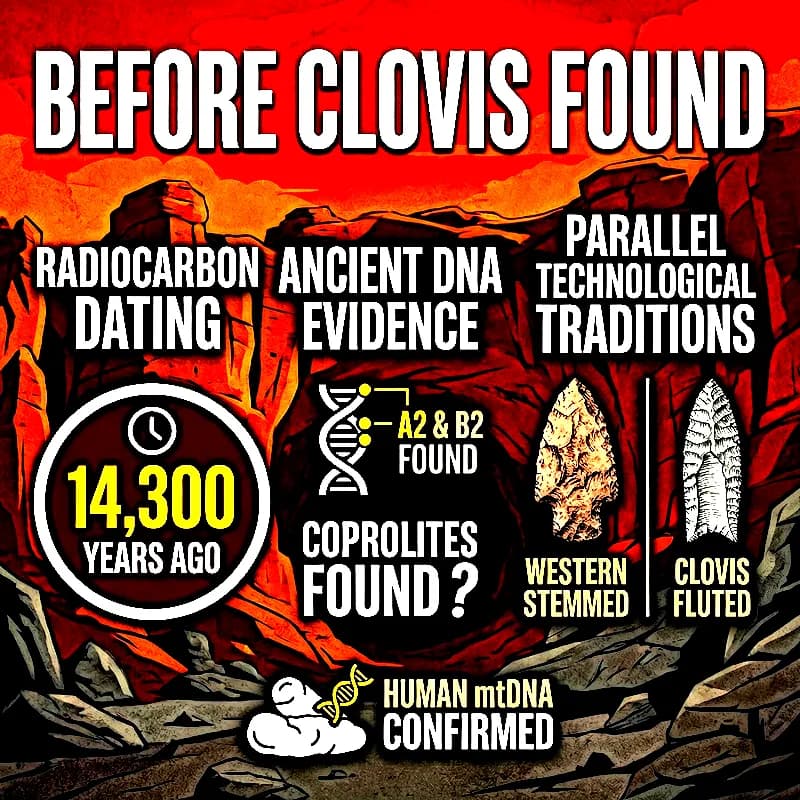
The archaeological consensus regarding the initial peopling of the Americas has, for nearly a century, been anchored to the "Clovis First" model. This paradigm posits that a single group of big-game hunters migrated from Siberia across the Bering Land Bridge into Alaska, subsequently moving southward through an ice-free corridor between the Laurentide and Cordilleran ice sheets approximately 13,000 to 13,500 years ago. However, forensic investigations conducted at the Paisley Five Mile Point Caves (Paisley Caves) in south-central Oregon have yielded empirical evidence that not only predates th
Paisley Caves - Additional Information
The archaeological record of the Paisley Five Mile Point Caves in south-central Oregon represents one of the most significant challenges to the mid-twentieth-century consensus regarding the peopling of the Americas. For decades, the "Clovis First" model served as the foundational paradigm of North American archaeology, positing that the first human inhabitants arrived approximately 13,000 years ago via a terrestrial route from Beringia through an ice-free corridor.[1][2] However, the meticulous re-excavation of the Paisley Caves beginning in 2002 has unearthed a suite of biological, technologi