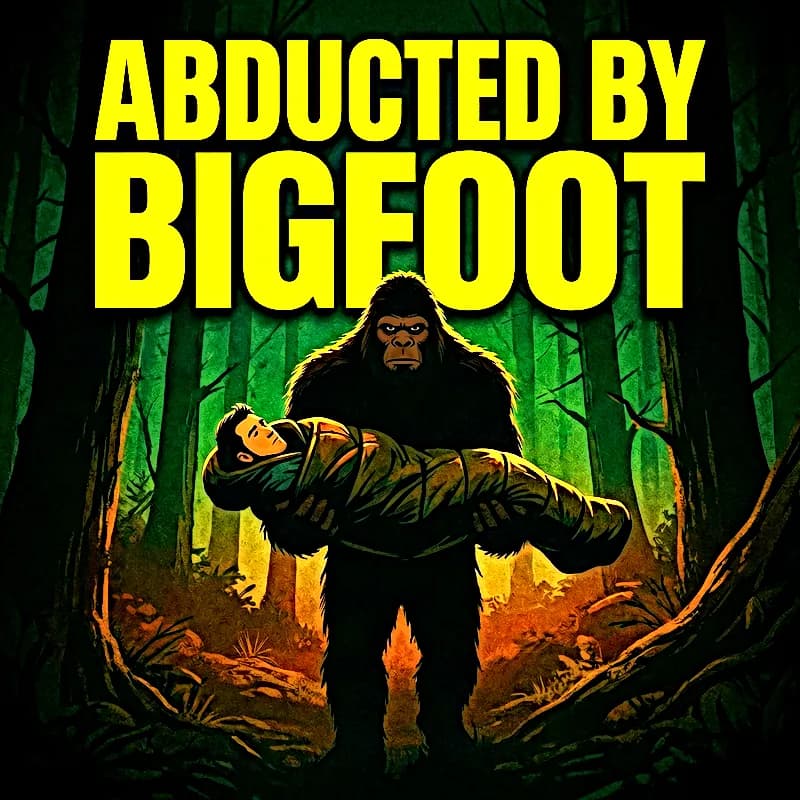
This comprehensive analysis explores the 1924 abduction claim of Albert Ostman, a foundational narrative in cryptozoology involving a week-long encounter with a Sasquatch family in British Columbia's Toba Inlet. The text meticulously details the geographic isolation of the fjord, the physical and behavioral characteristics of the four creatures, and Ostman's eventual escape by tricking his captor with chewing tobacco. Beyond the sensational events, the source evaluates the report's credibility by highlighting formal legal vetting and investigative research, while also presenting scientific skepticism regarding the ecological feasibility of such large primates. Ultimately, the document situates the case as a pivotal moment that shifted the perception of these entities from mythical monsters to relict hominids within a biological framework.
Case Snapshot
Subject
1924 Albert Ostman Abduction Claim
Source Entries
20
Location
Toba Inlet, British Columbia
Duration of Captivity
~6 days
Creatures Observed
4 (family unit)
Year Disclosed
1957
Evidence Distribution
Section Headings
10
Markdown Tables
3
Unique Citations
20
Inline References
74
Core Timeline Anchors
| Date | Milestone |
|---|---|
| 1893 | Albert Ostman born in Sweden |
| 1924 | Alleged abduction at Toba Inlet |
| 1957 | Ostman discloses story publicly |
| Aug 20, 1957 | Sworn statement before Magistrate A.M. Naismith |
| 1968 | John Green publishes On the Track of the Sasquatch |
Introduction
The account of Albert Ostman is widely regarded as one of the most significant and detailed reports in the history of North American cryptozoology.[1] Alleging a six-day abduction by a family of relict hominoids in the Toba Inlet region of British Columbia in 1924, Ostman's narrative transitioned from personal secret to public record in 1957.[2] The case is unique not only for its description of prolonged contact with the creatures commonly known as Sasquatch but also for the formal legal vetting it underwent and the exhaustive analysis performed by early researchers such as John Green.[3] This report examines the historical, geographic, and biological dimensions of the claim, evaluates the credibility of the legal documentation provided by the claimant, and situates the event within the broader framework of 20th-century hominid research.
Geographic and Historical Context of the Toba Inlet
The setting for the reported encounter is Toba Inlet, a prominent fjord located on the British Columbia Coast, approximately 160 kilometers northwest of Vancouver.[4] The inlet is the fourth in a series of major coastal fjords north of the 49th parallel and is characterized by its significant depth, steep shores, and surrounding peaks that reach elevations conducive to permanent isolation.[4] Historically, the region was inhabited by the Klahoose First Nation, with the Klahoose 1 Reserve situated at the mouth of the Toba River.[4]
In 1924, the region was largely unexplored by non-indigenous people, serving primarily as a destination for rugged prospectors seeking lost gold mines.[5] Albert Ostman, a Swedish-born Canadian immigrant born on April 21, 1893, was one such individual.[2] During his vacation and prospecting trip, Ostman sought to explore the headwaters of the inlet, an area where European influence was virtually non-existent and the terrain remained dominated by dense temperate rainforests of Douglas fir, spruce, and hemlock.[4], [6]
Geographic Profile of the Encounter Site
| Geographic Variable | Data Detail |
|---|---|
| Primary Location | Toba Inlet, British Columbia [2] |
| Coordinates | 50°24′39″N 124°36′14″W [4] |
| Topography | Fjord with steep peaks and plateaus [4] |
| Inflow | Toba River [4] |
| Nearby Settlement | Lund, British Columbia [7] |
| Historical Name | Canal de la Tabla (Spanish) [4] |
The isolation of the Toba Inlet is a critical factor in the narrative's plausibility. The rugged landscape, described by Spanish explorers as having "great depth" and "high peaks," provided a natural enclosure for any relict population.[4] Ostman's reported guide, described as an "old Indian," explicitly warned him about the "man beasts" or "mountain people" inhabiting the high elevations, noting that they were not animals but a different kind of people covered in hair.[8]
The 1924 Abduction: Sequence of Events
The encounter did not begin with a sudden sighting but rather with a series of campsite disturbances. For three consecutive nights, Ostman noted that his camp was visited by a "pesky animal" that moved his supplies.[8] To deter this intruder and protect his provisions, Ostman slept on the fourth night fully dressed with his rifle and several canned goods—including pork and beans and snuff—tucked inside his sleeping bag.[8], [9]
The Kidnapping and Transit
The abduction occurred while Ostman was in a deep sleep. He was reportedly lifted while still encased in his sleeping bag and carried through the wilderness for what he estimated to be three hours.[2], [8] During this transit, he felt himself being carried up and down hills, though he was unable to free himself from the sleeping bag to see his captor.[8] The mechanical feasibility of such a feat implies a creature of extraordinary strength, a trait corroborated by other hominid reports where sticks are broken by "wrenching or twisting" in ways no human could achieve.[7]
Arrival at the Hominid Camp
As morning light broke, the creature dropped Ostman on a high plateau. Upon exiting his bag, he found himself surrounded by four distinct individuals: an adult male, an adult female, a juvenile male, and a juvenile female.[2], [8] The adult male was described as the one who had carried him to the site.[9]
Detailed Anatomical and Behavioral Descriptions
Ostman's testimony provided some of the most comprehensive anatomical details of the Sasquatch recorded in the 20th century. He identified clear sexual dimorphism and age-related physical characteristics among the four captors.[8], [10]
The Adult Male (The "Old Man")
The patriarch of the family stood approximately eight to nine feet tall.[2], [9] Ostman described him as having a cone-shaped head and hair that was "matted and dirty, but not stringy."[11] The creature's physique was exceptionally massive, with broad shoulders and a thick chest that was described as being "as broad as he was thick."[12] The male's behavior was dominant; he gestured with his arms and made strange guttural noises, seemingly explaining his "find" to the rest of the family.[8], [9]
The Adult Female (The "Old Lady")
The female was slightly smaller than the male but possessed a similarly powerful build.[9] Ostman specifically noted that she had pendulous breasts, a detail that he later described with a sense of humor, suggesting that "brassieres and uplifts" would have improved her appearance.[12] This anatomical marker is highly significant as it matches the independent description of a female hominid provided by William Roe in 1955.[7] The female appeared to be the primary gatherer, returning to the camp with arms full of sweet grass, spruce tips, and ground nuts.[8], [9]
The Juvenile Offspring
The "boy" and "girl" were not yet fully grown. The boy was described as being curious and relatively friendly, while the girl was portrayed as mild and potentially helpless.[8] Initially, both juveniles appeared scared of Ostman.[8] Ostman observed that the family unit showed high levels of social interaction, with the mother appearing "not too pleased" with the father's decision to bring a human into their habitat.[8]
Comparative Hominid Anatomy Table
| Subject | Height | Head/Neck | Limbs/Torso | Key Feature |
|---|---|---|---|---|
| Adult Male | ~8–9 Feet | Conical; No neck | Broad shoulders; Wide chest | Dominant gesturer |
| Adult Female | Slightly under 8 Ft | Small head | Robust frame | Pendulous breasts |
| Juvenile Male | Not specified | Human-like | Hairy all over | Curious; Scared |
| Juvenile Female | Not specified | Human-like | Hairy all over | Mild; Helpless [8], [9], [11], [12] |
Life in Captivity and Subsistence
During the six days of his ordeal, Ostman remained at the plateau, largely because the creatures blocked his exit routes.[13] He was not mistreated; in fact, he observed that the creatures were vegetarians, subsisting on roots, tender tips from spruce trees, and sweet grass.[7], [9] This diet has been a focal point of criticism by scientists such as John Napier, who argued that the caloric density of such forage would be insufficient to support a group of large primates weighing a combined total of roughly 2,000 pounds.[2], [9]
Ostman survived by rationing the canned food he had stored in his sleeping bag.[8] He refrained from using his rifle during the captivity because the creatures had done him no physical harm.[2] The interaction between Ostman and the captors was primarily non-verbal, relying on gestures and observations of their daily routines.[8] He noticed that they were nocturnal to an extent, often resting during the heat of the day, a behavioral trait consistent with modern Sasquatch hypotheses.[10]
The Escape and the Snuff Box Incident
The turning point of the narrative occurred when the adult male hominid displayed an interest in Ostman's snuff box—a container of chewing tobacco.[8] Recognizing a potential opportunity for escape, Ostman fed the entire contents of the box to the creature.[2], [8]
The biological reaction of the male captor was severe. The high concentration of nicotine made the creature "violently sick," leaving it groggy, disoriented, and incapacitated.[2], [8] As the male struggled, Ostman gathered his belongings and fled the plateau.[8] The adult female attempted to give chase, but Ostman fired an airborne rifle shot to frighten her, allowing him to navigate the terrain back to a logging site.[8]
The 1957 Disclosure and Legal Vetting
For 33 years, Ostman remained silent about his ordeal, citing a fear of being thought "crazy."[2] He finally came forward in 1957 as newspaper reports of Sasquatch sightings began to increase in the Pacific Northwest.[8] His story was first published in The Agassiz-Harrison Advance.[8]
The Affidavit of A.M. Naismith
On August 20, 1957, Albert Ostman appeared before Magistrate A.M. Naismith to provide a sworn statement.[14] Naismith's subsequent evaluation of Ostman was highly favorable. The magistrate stated that he found Ostman to be sixty-four years of age, in "full possession of his mental faculties," and possessing a "good sense of humor."[14] Naismith cross-examined Ostman thoroughly, attempting to find flaws in his character or the story, but concluded that he could find none.[14] Ostman signed a Solemn Declaration indicating the story was true under the Canadian Evidence Act, a document with the legal weight of an oath in court.[8], [14]
Analysis by John Green
John Green, a prominent journalist and leading Sasquatch researcher with a master's degree from Columbia University, became deeply involved in the case.[15], [16] Green conducted the first in-depth interview with Ostman and was instrumental in bringing the story to a wider audience.[3] Green's approach was methodical; he treated the report as a journalist would, gathering facts and interviewing witnesses to cross-verify details.[3], [16]
Green found the consistency of Ostman's narrative compelling, particularly when compared with other detailed accounts such as the 1941 Ruby Creek incident.[3], [16] He noted that the anatomical details, such as the skin on the soles of the feet and the lack of a neck, appeared in multiple independent reports.[7] Green included the Ostman affidavit in his 1968 book On the Track of the Sasquatch, which sold nearly 250,000 copies and helped establish the subject as a serious field of inquiry.[3], [15]
Scientific and Skeptical Evaluation
The credibility of the Ostman case has been debated extensively within scientific and skeptical circles. While the legal vetting was strong, the biological implications remain problematic for mainstream science.
The Food Resource Objection
John Napier, a primatologist and former director of the Primate Biology Program at the Smithsonian, rejected the story primarily on ecological grounds.[2] Napier's calculation of the energy requirements for four such large beings suggests that the sparse vegetation of the B.C. interior would be insufficient.[9] If a single adult male Sasquatch weighs approximately 600 pounds, its daily caloric needs would exceed what could typically be gathered from roots and spruce tips alone in a high-elevation plateau environment.[9], [17]
Theoretical and Imaginative Critiques
Skeptic Joe Nickell characterized the narrative as a product of "imagination rather than recollection," suggesting that Ostman may have been influenced by the prevailing "Bigfoot" craze of the 1950s when he decided to tell his story.[2] Critics also point to the lack of any physical evidence—such as hair, feces, or bones—from the Toba Inlet area to support the existence of a resident family of hominids.[8], [13]
Summary of Expert Perspectives
| Expert | Role | Conclusion on Ostman Case |
|---|---|---|
| A.M. Naismith | Magistrate | Highly credible; full mental faculties [14] |
| John Green | Journalist / Researcher | Plausible; supported by affidavits [16] |
| John Napier | Primatologist | Unconvincing due to food scarcity [2] |
| Joe Nickell | Skeptic | Likely product of imagination [2] |
| Peter Byrne | Researcher | Requires more physical evidence [2] |
Legacy and Impact on Cryptozoology
The Albert Ostman story remains a cornerstone of the Sasquatch phenomenon. It provided the template for what researchers call a "Class A" encounter—prolonged, close-range observation of behavior and physiology.[18] The details he provided regarding the family structure and the non-aggressive nature of the creatures shifted the perception of the Sasquatch from a "monster" to a relict hominid with human-like traits.[8], [19]
The case also highlighted the role of indigenous knowledge in cryptozoology. Ostman's "old Indian" guide was the first to frame the creatures as "people" rather than animals, a distinction that has since been explored by anthropologists studying the relict hominoid hypothesis.[8], [20] While scientific proof remains elusive, the 1957 affidavit and the subsequent 33 years of silence from Ostman suggest a level of personal conviction that continues to challenge skeptics and inspire researchers worldwide.[2], [14]
Whether Ostman was a genuine witness to one of the most extraordinary zoological events of the 20th century or a talented storyteller who capitalized on a growing cultural fascination, his account remains an indispensable document in the canon of North American cryptozoology. The Toba Inlet narrative endures because it offers something that most Bigfoot encounters lack: sustained observation, detailed anatomy, social behavior, and a dramatic escape that reads more like field notes from a primatologist than the exaggerated claims of a hoaxer.[2], [3], [8], [14]
Sources
- Sasquatch The Albert Ostman Abduction - YouTube Music, https://music.youtube.com/podcast/e6I9ZTPwe50
- Albert Ostman - Wikipedia, https://en.wikipedia.org/wiki/Albert_Ostman
- Tribute JOHN GREEN: A LIFETIME OF SASQUATCH RESEARCH - Idaho State University, https://www.isu.edu/media/libraries/rhi/essays/Green_Tribute_revised.pdf
- Toba Inlet - Wikipedia, https://en.wikipedia.org/wiki/Toba_Inlet
- Albert Ostman's encounter in 1924 : r/bigfoot - Reddit, https://www.reddit.com/r/bigfoot/comments/bby316/albert_ostmans_encounter_in_1924/
- The Nature of the Beast: The first genetic evidence on the survival of apemen, yeti, bigfoot and other mysterious creatures into modern times - DOKUMEN.PUB, https://dokumen.pub/the-nature-of-the-beast-the-first-genetic-evidence-on-the-survival-of-apemen-yeti-bigfoot-and-other-mysterious-creatures-into-modern-times-9781444791273.html
- Sasquatch (part 1) - Unsettling Events - Northwest Room Collections, https://tacomalibrary.contentdm.oclc.org/digital/collection/p17061coll5/id/131/
- Spooky Stories Of The West: Abducted By Sasquatches!, https://www.cowboysindians.com/2024/10/spooky-stories-of-the-west-abducted-by-sasquatches/
- Albert Ostman's ordeal confirmed the existence of America's hairy Big Feet, https://www.lookandlearn.com/blog/19415/albert-ostmans-ordeal-confirmed-the-existence-of-americas-hairy-big-feet/
- Talk:Bigfoot/Archive 12 - Wikipedia, https://en.wikipedia.org/wiki/Talk%3ABigfoot%2FArchive_12
- The Secret History of Bigfoot - dokumen.pub, https://dokumen.pub/download/the-secret-history-of-bigfoot-9781464216633.html
- Wood Ape Description, https://www.woodape.org/index.php/wood-ape-description/
- Searching for Sasquatches – Adult Literacy Fundamental English – Reader 3, https://ecampusontario.pressbooks.pub/adultlitfundreader3/chapter/searching-for/
- SC EP:156 1924 Albert Ostman Encounter | Sasquatch Chronicles | Podcasts on Audible, https://www.audible.com/podcast/SC-EP-156-1924-Albert-Ostman-Encounter/B08K6GG3F4
- John Willison Green - Wikipedia, https://en.wikipedia.org/wiki/John_Willison_Green
- John Green, 'Mr. Sasquatch,' Leaves Big Shoes to Fill | The Tyee, https://thetyee.ca/Culture/2016/06/29/John-Green-Big-Shoes-To-Fill/
- Have there been any credible Bigfoot sightings in Yellowstone? - Quora, https://www.quora.com/Have-there-been-any-credible-Bigfoot-sightings-in-Yellowstone
- BFRO Report 1091: Albert Ostman account, https://www.bfro.net/GDB/show_report.asp?id=1091
- Bigfoot: The Life and Times of a Legend - Wikipedia, https://en.wikipedia.org/wiki/Bigfoot:_The_Life_and_Times_of_a_Legend
- Kidnapped by Sasquatch - Apple Podcasts, https://podcasts.apple.com/us/podcast/kidnapped-by-sasquatch/id1518903701?i=1000694165541&l=es-MX