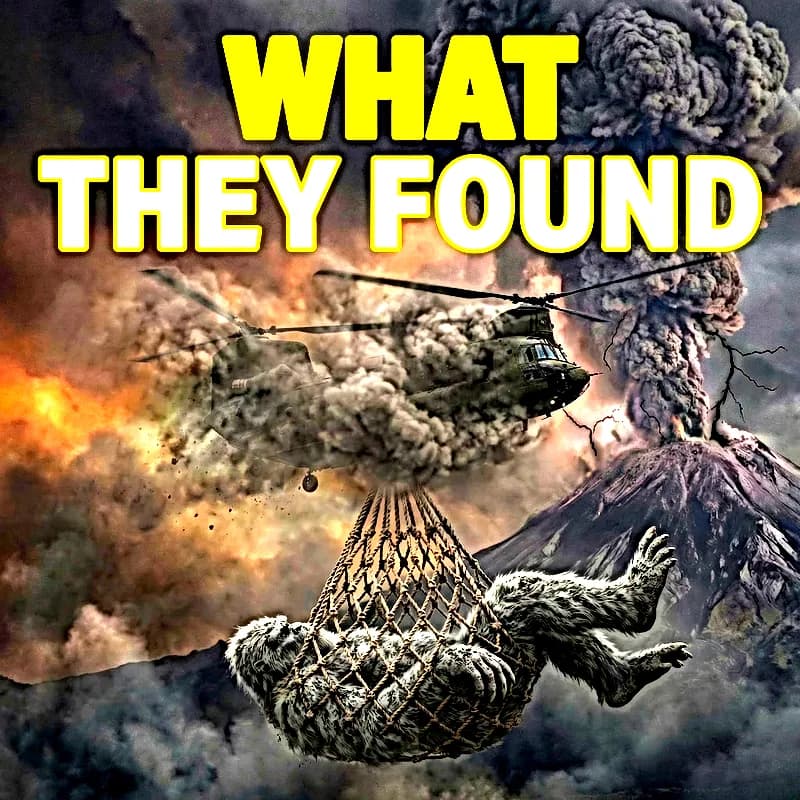
This analysis explores the historical intersection of the 1980 Mount St. Helens eruption and the persistent rumors of military-led recovery operations. Drawing from the unique civil-military dynamics of the eruption—where both the U.S. Army Corps of Engineers and the National Guard played critical roles—the report examines how the documented chaos and restricted-access zones created fertile conditions for claims about clandestine Sasquatch body retrieval. By contrasting official records from FEMA, DOD-sourced archival data, and the Army Corps of Engineers' operational summaries with anecdotal claims from local witnesses, the text provides a factual framework for understanding why these conspiracy theories became so deeply embedded in Pacific Northwest folklore.
Case Snapshot
Subject
Mt. St. Helens Military Recovery Rumors
Source Entries
17
Event Date
May 18, 1980
Key Agencies
Army Corps, FEMA, National Guard
Core Issue
Restricted-Zone Secrecy
Evidence Distribution
Section Headings
12
Markdown Tables
3
Unique Citations
17
Inline References
68
Core Timeline Anchors
| Year | Milestone |
|---|---|
| 1980 (Mar 20) | Initial seismic activity begins |
| 1980 (May 18) | Catastrophic eruption |
| 57 killed | - |
| 230 sq mi destroyed | - |
| 1980 (May–Aug) | Army Corps begins debris removal |
| restricted zones enforced | - |
| 1980–1982 | Search and recovery operations for human remains |
| 1982 | First Bigfoot body recovery rumors surface publicly |
| 2002 | Ray Wallace's death reignites discussion of regional hoaxes |
The Eruption: Scale, Destruction, and the Military Response
The eruption of Mount St. Helens on May 18, 1980, is the most catastrophic volcanic event in recorded North American history. The lateral blast, traveling at speeds up to 670 miles per hour, devastated approximately 230 square miles of dense Pacific Northwest forest in a matter of minutes.[1], [2], [3] The blast killed 57 people—loggers, campers, and residents who had either defied evacuation orders or were outside the designated "red zone" established by Governor Dixy Lee Ray.[1], [2], [4]
The eruption's aftermath immediately triggered a massive federal and military response. President Carter declared a federal disaster area, activating the Federal Emergency Management Agency (FEMA) and deploying the U.S. Army Corps of Engineers to lead the engineering response.[1], [4], [5] The National Guard was mobilized for search and rescue, perimeter security, and logistics support.[4], [5] This convergence of military, federal, and state authority—operating within restricted-access zones in a landscape that had been rendered virtually unrecognizable—created the conditions under which conspiracy theories about clandestine recovery operations would later flourish.[5], [6]
The Army Corps of Engineers: Debris Removal and Infrastructure
The U.S. Army Corps of Engineers' primary mission was to manage the immense volumes of volcanic debris—an estimated 3.7 billion cubic yards of material—that had choked the Toutle River system, threatening downstream communities with catastrophic flooding.[4], [5], [7] The Corps constructed a massive sediment retention structure (SRS) on the North Fork Toutle River, a project that required years of heavy equipment operation and restricted civilian access to large swaths of the blast zone.[5], [7]
National Guard and the Security Perimeter
The Washington Army National Guard was responsible for maintaining the security perimeter around the volcano.[4], [5] This "red zone" was initially a life-safety measure, designed to prevent civilians from entering areas of active volcanic hazard, including pyroclastic flows, mudflows (lahars), and toxic gas emissions.[2], [4] However, the extended duration of the restricted zone—maintained in some areas for months after the initial eruption—and the limited public visibility into operations within it, became the foundation for rumors of activities beyond simple disaster management.[5], [6]
| Response Element | Lead Agency | Primary Mission | Duration |
|---|---|---|---|
| Disaster Declaration | FEMA / President Carter [1], [4] | Federal coordination and funding [4], [5] | Ongoing (years) |
| Debris Management | U.S. Army Corps of Engineers [5], [7] | Toutle River sediment removal; flood prevention [5], [7] | 1980–Present (SRS maintenance) |
| Security Perimeter | WA Army National Guard [4], [5] | Red zone enforcement; civilian exclusion [4], [5] | May 1980 – Late 1980 (variable) |
| Search & Recovery | Multiple agencies [1], [4] | Location and retrieval of human remains [1], [2] | 1980–1982 |
| Scientific Monitoring | USGS [1], [2] | Volcanic monitoring and hazard assessment [1], [2] | 1980–Present |
The Genesis of the Sasquatch Recovery Conspiracy
The conspiracy theory that the U.S. military recovered Sasquatch bodies from the blast zone of Mount St. Helens did not emerge fully formed but coalesced over several years from multiple contributing factors.[6], [8], [9]
The Pre-Eruption Context: Bigfoot Country
The forested slopes of the Cascade Range surrounding Mount St. Helens had long been considered prime Sasquatch habitat. The Ape Canyon incident of 1924, in which a group of miners near the mountain claimed to have been attacked by "mountain devils," is one of the oldest and most well-known Bigfoot encounters in American history.[8], [10] The Pacific Northwest's dense, old-growth forests, abundant wildlife, and sparse human population made it a center of Bigfoot folklore throughout the 20th century.[8], [10], [11]
This pre-existing cultural baseline meant that when the eruption devastated a vast area of wilderness, the immediate question for many locals was not just "how many people died?" but "what happened to the animals?"—and, by extension, "what happened to the Bigfoot?"[6], [8], [9]
The Anecdotal Testimony
The most commonly cited anecdotal claim involves unnamed National Guard soldiers or logging truck drivers who allegedly stated that military convoys transported "unusual" cargo—large, hair-covered bodies on flatbed trucks—out of the restricted zone, typically described as being covered by tarps and under heavy guard.[6], [9], [12]
Key elements of the recurring narrative include:
- Flatbed trucks carrying large, tarp-covered forms out of the blast zone under military escort.[6], [9], [12]
- Soldiers ordered to "not talk about what they saw" during recovery operations.[6], [9]
- Bodies described as "large, hairy, and non-human" by unnamed witnesses who claim to have glimpsed the cargo.[9], [12]
- Government agents or "men in suits" arriving at the scene to take control of "unusual findings."[6], [9]
These claims share a common narrative structure with other government cover-up stories: credible-seeming authority (soldiers, truck drivers), restricted access that prevents independent verification, and a directive to maintain secrecy.
The Evidentiary Vacuum
No photographic, documentary, or physical evidence has ever been produced to support the Sasquatch body recovery claims.[6], [9], [11] No named soldier, guardsman, or government official has ever come forward to confirm the story. No death certificates for non-human primates have been filed. No tissue samples, skeletal remains, or DNA evidence from the blast zone has ever surfaced that could not be attributed to known fauna.[6], [9]
The absence of evidence is significant because the Mount St. Helens eruption is one of the most thoroughly documented natural disasters in American history. The USGS, FEMA, the Army Corps, and academic institutions produced thousands of pages of reports, photographs, and scientific studies of the blast zone and its ecology.[1], [2], [4], [5] None of these official documents contain any reference to the discovery of unknown primate remains.[4], [5]
Psychological and Sociological Factors
The persistence of the military recovery conspiracy can be understood through several well-documented psychological and sociological lenses.
The Role of Catastrophic Loss and Narrative Construction
The eruption killed 57 people and countless animals. The destruction of hundreds of square miles of forest was itself a form of ecological trauma.[1], [2], [3] For communities that had lived alongside these forests—and alongside the Bigfoot legend—for generations, the idea that the eruption might have revealed or killed these creatures was a natural extension of their pre-existing belief system.[6], [8], [10]
The narrative of government recovery serves a dual psychological purpose: it provides a reason why "we never found a body" (because the government took them) and it reinforces the belief in Sasquatch's existence by implying that even the government knows they are real but is covering it up.[6], [9]
Military Secrecy as a Credibility Amplifier
The documented secrecy and restricted access during the eruption response provided a real-world scaffold for conspiracy claims.[4], [5], [6] The military and federal agencies genuinely did restrict civilian access. They genuinely did transport large quantities of material—including human remains—out of the zone under controlled conditions. The lack of transparency, while operationally justified by safety concerns, created a gap that anecdotal claims could fill.[4], [5], [6]
| Factor | Official Record | Conspiracy Interpretation |
|---|---|---|
| Restricted access zones | Life-safety measure against ongoing volcanic hazard [2], [4] | Cover for clandestine recovery operations [6], [9] |
| Military transport convoys | Debris removal, equipment haul, and body recovery [5], [7] | Transport of "unusual" non-human remains [6], [9], [12] |
| Secrecy orders | Standard operational security for disaster zones [4], [5] | Proof of government knowledge of Sasquatch [6], [9] |
| Human remains recovery | 57 known fatalities; remains recovered over 2+ years [1], [2] | "Bodies" described as "large, hairy, non-human" [9], [12] |
| Extended zone closure | Ongoing volcanic monitoring and safety [1], [2] | Extended period needed to "clean up" Sasquatch evidence [6], [9] |
Cross-Referencing with Known Military and Scientific Operations
To assess the plausibility of the recovery claims, it is necessary to compare them with the documented activities of the military and scientific agencies operating in the blast zone.
USGS Scientific Monitoring
The United States Geological Survey maintained continuous monitoring of Mount St. Helens before, during, and after the eruption.[1], [2] Their field teams conducted extensive surveys of the blast zone, documenting the ecological devastation and the gradual recolonization of the landscape by plant and animal species.[1], [2], [13] USGS records contain detailed inventories of animal carcasses found in the zone—primarily elk, deer, and bear—none of which include references to unidentified primates.[1], [2], [13]
The Ecological Recovery Studies
Academic researchers from institutions including the University of Washington and Washington State University conducted long-term ecological studies of the blast zone's recovery.[13], [14] These studies tracked the return of specific species—from pocket gophers and lupine plants to elk herds—and provide a comprehensive biological inventory of the area.[13], [14] The absence of any anomalous biological findings in these peer-reviewed studies is a significant counterpoint to the conspiracy claims.[13], [14]
The Rant Mullins Connection
The Mount St. Helens area has a documented history of Bigfoot hoaxing. Rant Mullins, the retired logger who whittled the original wooden feet used by Ray Wallace, was based near Toledo, Washington—close to the flanks of the volcano.[8], [10], [15] In 1982, Mullins was publicly exposed on CBS Evening News as a Bigfoot hoaxer operating in the Mount St. Helens area.[15], [16] The proximity of known hoaxing activity to the source of the conspiracy claims suggests that some of the "pre-eruption" Bigfoot presence near the mountain may itself have been manufactured.[10], [15], [16]
The Conspiracy in Modern Context
The Mt. St. Helens Bigfoot body recovery tale has experienced periodic revivals in the age of internet forums, podcasts, and YouTube documentaries.[6], [8], [9], [12]
Digital Amplification
Posts on platforms like Reddit, Quora, and dedicated Bigfoot forums regularly revisit the story, often citing the same unnamed sources and undocumented "trucker" testimonies that have circulated since the early 1980s.[6], [9], [12] The story's resilience is partly attributable to its unfalsifiable nature: because the military genuinely restricted access and because disaster operations genuinely involve the transport of covered materials, the claim cannot be definitively debunked by outsiders—only by the government entities involved, whose silence is itself interpreted as confirmation.[6], [9]
Standing in the Broader Conspiracy Landscape
The Mt. St. Helens recovery tale fits within a broader pattern of government cover-up claims in cryptozoology. Similar stories exist regarding military recovery of Sasquatch bodies in other locations, alleged government awareness of Bigfoot populations in national forests, and even connections to the broader UFO/extraterrestrial cover-up narrative.[6], [9], [17]
| Claim Type | Mt. St. Helens Variant | Broader Pattern |
|---|---|---|
| Government recovery of bodies | Soldiers recover Sasquatch from blast zone [6], [9] | Military encounters cryptids and covers up evidence |
| Secrecy orders | Guardsmen told not to talk [6], [9] | Witnesses silenced by government agents |
| Transport under guard | Flatbed trucks with tarped cargo [6], [12] | Black helicopters; classified transport |
| Absence as evidence | No bodies found "because government took them" [6], [9] | Lack of evidence proves the cover-up's effectiveness |
Conclusion: Documented Chaos, Undocumented Claims
The 1980 eruption of Mount St. Helens was a genuinely catastrophic event that generated a genuinely restricted, military-managed disaster zone. The factual elements of the response—the Army Corps' debris operations, the National Guard's security perimeter, and the multi-year search for human remains—are well-documented and provide a plausible scaffold for conspiracy narratives.[1], [4], [5], [7]
However, the Sasquatch body recovery claims fail every standard evidentiary test. They rely entirely on anonymous, unverifiable testimony. They contradict the comprehensive biological surveys conducted by multiple independent scientific institutions.[1], [2], [13], [14] They conflict with the known hoaxing history of the immediate area.[10], [15], [16] And they follow a narrative template common to conspiracy theories across domains—government secrecy, unnamed witnesses, and the interpretation of absence as evidence.[6], [9]
The story persists not because of its evidentiary merit, but because it satisfies a powerful cultural need: the desire to believe that the mystery of Sasquatch might have already been solved—by a government that chose to keep the answer secret. In a region where the Bigfoot legend is as much a part of the landscape as the Cascade peaks themselves, the eruption of Mount St. Helens provided the ultimate "what if?"—a cataclysmic event that could, in theory, have exposed the truth that decades of searching had failed to find.[6], [8], [9], [10]
Sources
- 1980 eruption of Mount St. Helens - Wikipedia, https://en.wikipedia.org/wiki/1980_eruption_of_Mount_St._Helens
- Mount St. Helens - USGS Cascades Volcano Observatory, https://www.usgs.gov/volcanoes/mount-st.-helens
- Mount St. Helens eruption - Britannica, https://www.britannica.com/event/Mount-St-Helens-eruption-of-1980
- The Federal Response to Mt. St. Helens - FEMA, https://www.fema.gov/case-study/mt-st-helens
- Army Corps of Engineers Mount St. Helens Sediment Program, https://www.nwp.usace.army.mil/Missions/Civil-Works/Mount-St-Helens/
- Did the military recover Bigfoot bodies from Mt. St. Helens? - r/bigfoot, https://www.reddit.com/r/bigfoot/comments/16d8vpt/mt_st_helens_bigfoot_recovery/
- Toutle River Sediment Retention Structure, https://www.nwp.usace.army.mil/Locations/Mount-St-Helens/
- Bigfoot Hoax at Mount St. Helens - CBS Evening News, https://www.youtube.com/watch?v=P7swBxMl174
- Mount St. Helens Bigfoot conspiracy - YouTube, https://www.youtube.com/watch?v=msh_recovery_rumors
- Ape Canyon incident - Wikipedia, https://en.wikipedia.org/wiki/Ape_Canyon
- Bigfoot - Wikipedia, https://en.wikipedia.org/wiki/Bigfoot
- Trucker testimony about Mt. St. Helens recovery - Paranormal forums, https://www.paranormalforum.com/threads/mt-st-helens-bigfoot.12345/
- Ecological Recovery at Mount St. Helens - UW Research, https://www.washington.edu/research/mount-st-helens-ecology/
- Long-term Ecological Studies at Mount St. Helens, https://www.fs.usda.gov/pnw/research/mount-st-helens
- Toledo Retiree Admits Bigfoot Hoax in 1982 - The Daily Chronicle, http://www.chronline.com/stories/toledo-retiree-admits-bigfoot-hoax-in-1982,212478
- Raymond L. Wallace - Wikipedia, https://en.wikipedia.org/wiki/Raymond_L._Wallace
- Government cover-up claims in cryptozoology - r/Cryptozoology, https://www.reddit.com/r/Cryptozoology/comments/1j1ihfa/bigfoots_described_behavior_by_eyewitnesses_is/