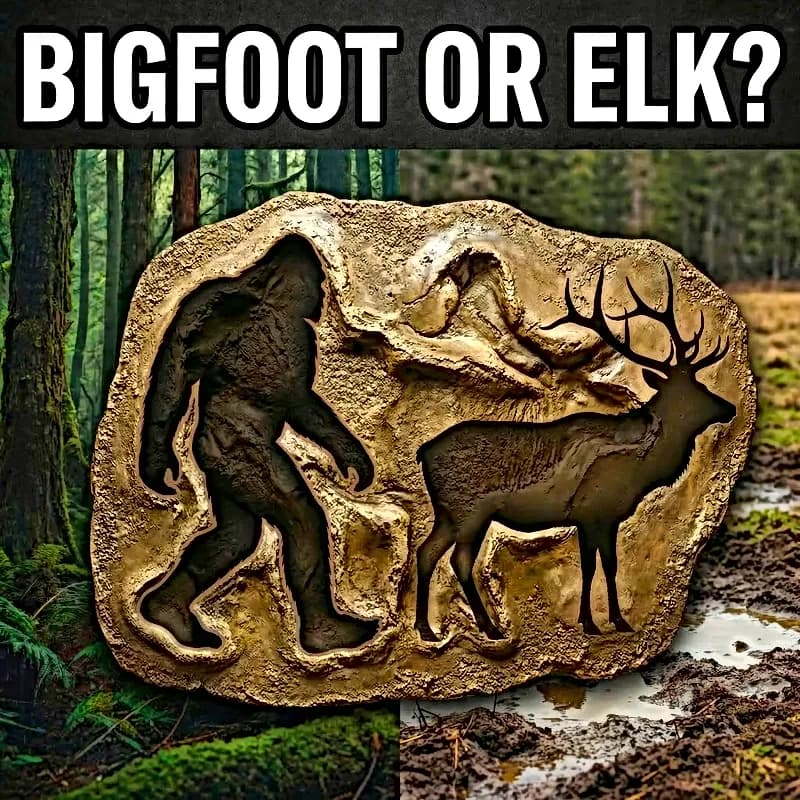
The investigative history of North American cryptozoology underwent a profound shift in methodology and evidentiary standards during the late summer and early autumn of 2000, specifically surrounding the activities of the Bigfoot Field Researchers Organization (BFRO) within the Gifford Pinchot National Forest.[1], [2] This period culminated in the production of the Skookum Cast, a 400-pound plaster record of a three-dimensional impression found in a remote mud wallow near Mount Adams, Washington.[3], [4] Unlike the vast majority of prior physical evidence, which primarily consisted of individual footprints or ambiguous dermal ridge fragments, the Skookum discovery purported to offer a holistic anatomical map of a reclining, large-bodied primate.[5], [6], [7] The subsequent conflict between traditional field biological interpretations—characterizing the find as a Roosevelt elk (Cervus canadensis roosevelti) wallow—and the anatomical assessments of primatologists identifying hominoid features remains one of the most significant forensic debates in the study of anomalous Pacific Northwestern fauna.[3], [8], [9]
Case Snapshot
Subject
Skookum Cast / BFRO 2000 Expedition
Source Entries
32
Location
Gifford Pinchot National Forest, WA
Cast Weight
~400 lbs
Core Debate
Primate vs. Elk Wallow
Evidence Distribution
Section Headings
16
Markdown Tables
4
Unique Citations
32
Inline References
90
Core Timeline Anchors
| Date | Milestone |
|---|---|
| Sep 16–23, 2000 | BFRO high-technology expedition in Gifford Pinchot NF |
| Sep 22, 2000 | Skookum impression discovered in mud wallow |
| Oct 2000 | Idaho State University press release on the cast |
| 2006 | Meldrum publishes analysis in Sasquatch: Legend Meets Science |
| 2014 | Sykes genetic survey finds no anomalous primate DNA |
The September 2000 BFRO Expedition: Objectives and Technical Framework
The expedition conducted from September 16 to September 23, 2000, was designed as a high-technology reconnaissance operation aimed at transitioning from anecdotal witness reports to the collection of reproducible physical and electronic data.[2], [10] Located in the Lewis River Drainage, within the region geographically identified as the Dark Divide, the expedition focused on an area characterized by its extreme isolation and historical significance in regional folklore.[2], [11] This territory, spanning over 100 square miles of roadless forest north of Skookum Meadow and south of the Indian Heaven Wilderness, was selected due to a high density of reported unrecognized vocalizations and prior hair sample recoveries in the summer of 2000.[2], [10]
Expedition Roster and Interdisciplinary Composition
The leadership of the expedition integrated experienced field researchers with specialists in wildlife biology, physical anthropology, and technological monitoring.[1], [2] The roster included prominent figures whose prior work in the field established the intellectual foundation for the analysis of the eventual discovery.[1], [6]
| Roster Category | Participant Names and Affiliations |
|---|---|
| Expedition Leadership | Matthew Moneymaker (San Juan Capistrano, CA), Jeff Lemley (White Salmon, WA) [2], [11] |
| Scientific and Medical Advisors | Dr. LeRoy Fish (Wildlife Biology, Triangle Lake, OR), Dr. Gregory Bambenek (Duluth, MN) [2], [12] |
| Technical and Field Operations | Richard Noll (Tooling Technician, Edmonds, WA), Thom Powell (Portland, OR), Derek Randles (Belfair, WA) [2], [8], [13] |
| Media and Documentation | John Mort, Daniel Searle, Ian Pugsley (Perth, Australia, Animal X Film Crew) [2], [3] |
| Regional Field Support | James Henick, Alan Terry, Erin Lee, Miles Lawler, Rob Johnson [2], [11] |
Operational Methodologies and Technological Deployments
The primary objective of the September 2000 phase was the testing of high-resolution thermal imaging systems to detect the infrared signatures of large mammals within the dense canopy of the Cascades.[2] The research team hypothesized that traditional visual observation was insufficient due to the nocturnal and elusive nature of the target species.[2] In conjunction with thermal monitoring, the expedition employed a sophisticated suite of auditory and olfactory attractants designed to lure a potential primate into proximity with established base camps.[2], [10]
Auditory attraction involved a high-volume call broadcasting system capable of projecting sound across a radius of approximately two miles.[2], [11] The recordings utilized for these broadcasts were sourced from earlier expeditions, including a "scream" vocalization captured near Lake Tahoe in late August 2000.[2] Olfactory methods were equally diverse, incorporating cooking scents, concentrated pheromone chips, and a specific fruit-baiting protocol.[2], [10] The pheromone experiments were influenced by prior research conducted in the USSR involving the use of ape pheromones to attract purported "Wildmen" or Snowmen.[10]
Discovery and Documentation of the Skookum Impression
The discovery of the partial body imprint occurred on the morning of September 22, 2000, following an overnight baiting operation involving the placement of fruit at the edge of a drying mud puddle.[3], [4] The location was a natural mud wallow situated near a logging road in the Skookum Meadows area, approximately 20 miles east-southeast of Mount St. Helens.[1], [2] The team had placed six apples and several melons in the center of a mud patch to entice any passing large mammal.[3]
The Stealth Hypothesis and In Situ Evidence
Upon arrival at the site, researchers observed that three of the six apples were missing and the melons had been pecked by birds.[3] The mud itself contained a massive, complex indentation that lacked the signature bipedal footprints typically associated with Bigfoot reports.[3], [9] This absence of tracks led to the formulation of the stealth hypothesis, suggesting that a large primate, intelligent enough to recognize the risk of leaving tracks in deep mud, had avoided the center of the puddle.[3], [5], [9], [14] Instead, the animal was believed to have approached the eastern edge of the mud pool and reclined on its side, reaching over the shallow water to retrieve the bait.[3], [5], [14]
Field observations identified several distinct anatomical features directly in the mud prior to casting, including what appeared to be hair patterns, a left forearm and wrist, and the muscular contours of a buttocks and thigh. While tracks of known species—including elk, deer, bear, and coyote—were found in the general vicinity, the specific central impression was deemed by the BFRO team to be inconsistent with any recognized animal.[1], [3], [4], [7], [15]
Technical Evaluation of Casting Methodology and Material Physics
The preservation of the Skookum impression necessitated an unprecedented application of field-casting techniques, overseen by Richard Noll, whose professional background in industrial tooling provided the requisite expertise for handling a 15-square-foot mold.[4], [8], [9] The technical challenges were compounded by the semi-liquid state of the mud and the scale of the feature.[4], [14]
Material Composition and Structural Engineering
The team utilized a combination of high-strength gypsum cements and standard plasters to ensure structural integrity.[4], [9] The primary agent was Hydrocal B-11, a specialized tooling cement valued for its dimensional stability and fine detail reproduction.[4], [9]
| Material Component | Quantity and Source | Function in Casting Process |
|---|---|---|
| Hydrocal B-11 (Primary) | 150 lbs (Supplied by Noll and Fish) [4] | Face coat and core structural layer for detail retention [4] |
| Plaster (Secondary) | ~50 lbs (Miscellaneous stock) [4] | Backing coat to provide bulk and final thickness [4] |
| Reinforcement (Internal) | Aluminum tent poles (Noll's spare tent) [4], [15] | Improvised rebar to prevent cracking during lifting [4] |
| Water Supply | ~20 gallons [4] | Hydration of gypsum mixture in field conditions [4] |
| Framing Material | 2X4 lumber [4] | Construction of a 42-inch by 54-inch containment frame [4] |
The Layering and Extraction Protocol
The casting was executed using a multi-coat application strategy designed to capture microscopic surface textures without deforming the underlying mud.[4] The researchers first applied a "face coat"—a high-viscosity, liquid mixture of Hydrocal B-11—intended to flow into fine fissures and hair impressions.[4] Following the setting of the initial layer, a thicker "filler coat" was added to form the core of the cast.[4] The aluminum tent poles were then embedded in a cross-sectional pattern to provide tensile strength, followed by final backing layers.[4]
Upon extraction, the cast initially weighed approximately 500 pounds, a result of the 200 pounds of plaster combined with nearly 300 pounds of adhering wet earth and volcanic ash.[4] The researchers performed a preliminary cleaning at the site, manually removing a 2-to-3-inch thick layer of dirt to reduce the weight to approximately 400 pounds for transport.[3], [4] The resulting artifact measured 3.5 by 5 feet and represents the only purported body impression ever recorded in the context of Sasquatch research.[3], [8]
Anatomical Interpretations of Primate Morphology
The Skookum Cast was subjected to rigorous laboratory examination by a team of experts including Dr. Grover Krantz (Physical Anthropology, Washington State University), Dr. Jeff Meldrum (Anatomy and Anthropology, Idaho State University), and Dr. John Bindernagel (Wildlife Biology).[1], [9] These researchers argued that the cast presented clear evidence of a large bipedal primate.[1], [6]
Primary Anatomical Landmarks
Dr. Jeff Meldrum directed a painstaking cleaning process to reveal the underlying textures and contours hidden by the remaining mud.[1], [8], [14] His analysis identified several hallmarks of primate anatomy:
- Gluteal and Thigh Impressions: The cast contains a large, rounded feature interpreted as the left buttock and a lateral thigh. Proponents noted the bifurcation and muscular density were consistent with the gluteal muscles of a hominoid.[6], [7], [16], [17], [18]
- Heel and Achilles Tendon: One of the most frequently cited features is a deep, knob-shaped indentation with a distinctive fluted groove. Dr. Meldrum identified this as a heel strike, where the calcaneus (heel bone) made a deep impression, with the groove representing the Achilles tendon.[8], [15], [18], [19]
- Forearm and Fringe Hair: A long, ham-shaped impression was identified as a left forearm, which appeared to display a fringe of longer hair along its lower edge, a trait observed in some extant great apes.[8], [15], [18]
- Limb Proportion Analysis: Based on the spacing between identified joints, researchers estimated that the creature's limb segments were 40% to 50% longer than those of a standard 6-foot human, suggesting a standing height of 8 to 9 feet.[6], [8], [15]
Dermatoglyphics and Friction Skin Evidence
A critical component of the primate hypothesis was the identification of dermatoglyphics—the microscopic friction ridges found on the hands and feet of primates.[3], [6], [8] Dr. Meldrum and retired forensic expert Jimmy Chilcutt reported finding these patterns in the area identified as the heel.[6], [8], [9] Because no other large North American mammals possess these specific ridged skin structures on their plantar surfaces, the presence of these markings was viewed by proponents as the "smoking gun" for a primate origin.[6], [20] Dr. Meldrum asserted that the ridges showed specific "flow patterns" consistent with primate foot morphology and inconsistent with artificial hoaxing.[8], [15], [20]
Comparative Skepticism: The Elk Wallow Hypothesis
Despite the anatomical findings of the BFRO researchers, skeptical analysts and traditional biologists proposed a more parsimonious explanation: the cast recorded the activity of a Roosevelt elk (Cervus canadensis roosevelti).[3], [9], [21] Skeptics argued that the interpretative framework of the BFRO was compromised by confirmation bias, leading them to misidentify common ungulate traces as primate features.[9]
Mapping to Elk Taphonomy and Behavior
The most comprehensive rebuttal was offered by Anton Wroblewski, a PhD paleontologist and geologist who utilized photographic comparisons and anatomical diagrams to map every feature of the cast to a reclining elk.[3], [21]
| Feature of the Cast | Skeptical Identification (Elk Anatomy) | Functional Context |
|---|---|---|
| Deep "Heel Strike" | Elk Carpus (Knee) or Hock [12], [19] | Points of high pressure when an elk gathers its legs to recline or stand [12], [18], [19] |
| "Buttocks" Impression | Elk Brisket and Belly [3], [22] | The broad contact area of an elk's torso in the mud [3], [22] |
| "Forearm" | Lower Elk Leg (Metatarsal/Metacarpal) [8], [12] | The extension of an ungulate limb while lying on its side [8], [12] |
| Missing Fruit | Opportunistic foraging by local elk [3], [9] | Elk are known to consume apples and inhabit the area [9] |
| Absence of Tracks | Normal biomechanics of ungulate egress [9] | Elk can bound from a reclining position without leaving deep hoof tracks in the immediate center [9] |
Skeptics emphasize that wallowing—the behavior of rolling or lying in mud—is a standard thermoregulatory and parasite-control activity for elk. Marc Hume and other critics pointed out that clear elk tracks and substantial quantities of elk hair were found within and around the wallow at the time of the discovery, suggesting that the most likely creator of the impression was already documented at the scene.[3], [5], [22]
Forensic Trace Evidence: Hair and DNA Analysis
The debate surrounding the Skookum Cast is significantly informed by the forensic analysis of hair samples retrieved from the mud adhering to the cast's face.[1], [14], [15] These samples were subjected to microscopic examination and, later, large-scale genetic surveys.[23], [24], [25]
Microscopic Analysis of Medullary Structure
Dr. Henner Fahrenbach, a biomedical research scientist, analyzed multiple hairs collected from the site.[9], [15] While Fahrenbach acknowledged that the vast majority were confirmed to be from elk, deer, bear, and coyote, he identified a single hair that he classified as "Sasquatch."[15] His identification was based on the hair's lack of a medulla (the central cellular canal) and its uniform cross-sectional shape, which he claimed matched primate characteristics and excluded common human or known animal substitution.[15], [23]
Fahrenbach's research asserted that Sasquatch hair consistently lacks a medulla or possesses only fragmented amorphous sections near the base.[23] This trait distinguished it from the medullated hairs of deer and bears found in the same wallow.[23] However, forensic critics note that the presence or absence of a medulla is not a definitive species-specific marker and can vary even within a single individual's coat.[26], [27]
Genetic Sequencing and the Sykes Study (2014)
A major challenge to the biological validity of the Skookum primate hypothesis emerged in 2014 with the publication of a peer-reviewed study led by Bryan Sykes of the University of Oxford.[24], [25], [28], [29] Sykes conducted a systematic genetic survey of 57 hair samples attributed to "anomalous primates" globally, including those from historical collections.[24], [25], [28]
Using mitochondrial DNA sequencing (specifically the 12S fragment), Sykes identified that every sample yielding DNA belonged to known mammalian species.[24], [28], [29] The findings included bears, dogs, horses, cows, and deer.[25], [28], [30] In the context of the Skookum Meadow area, skeptics highlighted that of the hairs recovered from the cast, 14 were definitively identified as elk, reinforcing the argument that the impression was an elk wallow.[22] The genetic record has consistently failed to produce an anomalous primate sequence from the Gifford Pinchot materials, a fact that has led much of the mainstream scientific community to favor the elk identity.[3], [9], [28], [31]
Technological Artifacts: The Crowley Experiments
One of the most profound forensic shifts in the evaluation of the Skookum Cast occurred when skeptical investigator Matt Crowley conducted experimental replications of the casting process.[9], [20] Crowley sought to determine if the "dermal ridges" identified by Meldrum and Chilcutt could be non-biological in origin.[9], [20]
The Physics of Dessication Ridges
Crowley discovered that as plaster and high-strength gypsum cements (like Hydrocal B-11) cure, they undergo a drying and evaporation process that can create fine, parallel wrinkles on the surface of the cast.[9], [20] These dessication ridges mimic the appearance of biological friction skin with remarkable fidelity, exhibiting regular spacing and "flow" patterns that can be mistaken for dermatoglyphics.[9], [20] Crowley's experiments demonstrated that these artifacts appeared consistently in laboratory tests using various soils and drying conditions, regardless of the presence of an animal.[9], [20]
The implications for the Skookum Cast were significant: if the supposed dermal ridges were artifacts of the material physics of the plaster, the primary forensic evidence distinguishing the cast from a known animal (like an elk) would be invalidated. Proponents like Dr. Meldrum eventually acknowledged the validity of the "dessication ridge" phenomenon in some contexts, though they maintained that other features of the Skookum Cast remained biologically diagnostic.[8], [9], [20]
Scientific Reception and Institutional Analysis
The handling of the Skookum Cast discovery has been criticized for its lack of traditional scientific rigor, particularly the reliance on press releases and popular media rather than peer-reviewed academic journals.[3], [9]
Publication and Peer Review
The discovery was first publicized through an official press release from the Idaho State University Office of University and Government Relations in October 2000.[1], [10] While Dr. Jeff Meldrum published his findings in the 2006 volume Sasquatch: Legend Meets Science, this work was aimed at a general audience and did not undergo the blinded peer-review process required for mainstream biological verification.[9], [21], [32] Skeptical investigators have consistently noted that independent researchers have been granted limited physical access to the original cast, which remains in the possession of Richard Noll.[3], [5], [9]
The Role of Credentialed Proponents
The case is unique for the level of support it received from established academics.[1], [9], [18] Dr. Daris Swindler, a retired professor of anatomy and a world-renowned expert on primate dental and gross anatomy, was initially a skeptic but reportedly changed his opinion after examining the Skookum Cast.[8], [9], [18] Swindler pointed out specific landmarks—such as the ham-sized forearm and the muscular buttocks—that he believed were more consistent with a primate than an ungulate.[17], [18] Similarly, primatologist Dr. Esteban Sarmiento suggested the cast could represent an upright descendant of Gigantopithecus.[8], [9]
Despite this high-level endorsement, the lack of a biological specimen (bone, body, or clear DNA) has prevented the Skookum Cast from being accepted as definitive proof. To most biologists, the "Occam's Razor" conclusion remains that an elk, whose hair and tracks were already present in a known elk habitat, sat in a mud puddle to eat the apples left as bait.[8], [9], [12], [18]
Synthesis of Forensic Findings and Narrative Implications
The Skookum Cast represents the intersection of high-technology field research and traditional tracking, yet its final interpretation remains a "plaster Rorschach test" where the observer's prior training dictates the conclusion.[5], [9]
Summary of Competing Interpretations
The anatomical and forensic evidence can be summarized across several primary variables, each with a divergent proponent and skeptical explanation.
| Investigative Variable | Proponent Interpretation (Primate) | Skeptical Interpretation (Elk) |
|---|---|---|
| Primary Impressor | An 8-to-9-foot unknown hominoid [6], [8] | A native Roosevelt elk (C. c. roosevelti) [3], [9] |
| Surface Texture | Primate friction skin (dermatoglyphics) [6], [8] | Plaster dessication ridges or soil cracks [9], [20] |
| Trace Evidence | Single primate hair (Fahrenbach) [9], [15] | 14 elk hairs and numerous elk tracks [5], [22] |
| Biomechanical Signal | Reclining primate posture to retrieve bait [3], [5] | Common ungulate wallowing for thermoregulation [9] |
| Institutional Verdict | Significant evidence for further research [9], [18] | Ambiguous misidentification of known fauna [3] |
The Gifford Pinchot expedition of September 2000 succeeded in gathering a massive physical record of animal activity that challenged the existing limits of field cryptozoology.[1], [2], [4] The use of Hydrocal B-11 and internal aluminum reinforcement allowed for the preservation of a three-dimensional map that continues to be scrutinized decades later.[4], [15] While the BFRO's anatomical conclusions offered a compelling vision of a North American primate, the forensic weight of the elk wallow theory—supported by mapping to elk joints, the presence of elk hair, and the replication of "dermal ridges" as casting artifacts—remains the dominant explanation within the professional scientific community.[3], [9], [20], [24] The Skookum Cast thus remains a pivotal artifact, demonstrating the necessity of interdisciplinary forensic standards in the investigation of anomalous biological reports.
Sources
- The Skookum Cast - Bigfoot Field Researchers Organization, https://www.bfro.net/news/bodycast/index.asp
- BFRO's Skookum Meadow Expedition, http://www.bfro.net/news/pnw_newsletter003/thermalexpedmain.htm
- Skookum cast - Wikipedia, https://en.wikipedia.org/wiki/Skookum_cast
- BFRO's Skookum Meadow Expedition — Day Seven, http://www.bfro.net/NEWS/pnw_newsletter003/dayseven.asp
- The Skookum Cast discussion - Reddit r/Cryptozoology, https://www.reddit.com/r/Cryptozoology/comments/1954wil/the_skookum_cast_is_a_bigfoot_cast_taken_near/
- Statement by John Green on the Skookum Cast - BFRO, https://www.bfro.net/news/bodycast/green_statement.asp
- Unraveling the Skookum Cast - Southern Style Sweet Tees, https://www.southernstylesweettees.com/blog/16riuwejkncz7yc8ujr7nhvj7knixe
- Sasquatch cast makes a big impression on anatomists - SeattlePI, https://www.seattlepi.com/news/article/Sasquatch-cast-makes-a-big-impression-on-1089458.php
- The Skookum Cast - Skeptoid Podcast, https://skeptoid.com/episodes/441
- BFRO Report 1705: Skookum Expedition, http://www.bfro.net/gdb/show_report.asp?id=1705
- BFRO's Gifford Pinchot Expedition, http://www.bfro.net/NEWS/gpnf.asp
- Contradictory claims about the Skookum cast - Reddit r/Cryptozoology, https://www.reddit.com/r/Cryptozoology/comments/1hlcilf/contradictory_claims_about_the_skookum_cast/
- From the Skookum Cast to the Edges of Science - Sasquatch the Legend, https://sasquatchthelegend.com/blogs/latest-news/from-the-skookum-cast-to-the-edges-of-science-the-work-of-thom-powell
- How the Skookum Cast was Obtained — Slide 8 - BFRO, http://www.bfro.net/news/bodycast/context_8.asp
- ISU Researcher Coordinates Analysis of Body Imprint - BFRO, https://www.bfro.net/NEWS/BODYCAST/ISU_press_rel_cast.asp
- Skookum Cast Timeline - Time.Graphics, https://time.graphics/event/1401979
- Frame 352, and all that - Tetrapod Zoology, http://darrennaish.blogspot.com/2006/11/frame-352-and-all-that.html
- Bigfoot Believers - North American Wood Ape Conservancy, https://www.woodape.org/index.php/bigfoot-believers/
- Skookum Cast In A Nut Shell - Bigfoot Forums, https://bigfootforums.com/topic/2973-skookum-cast-in-a-nut-shell/page/3/
- Bigfoot dermal ridges discussion - Reddit r/Cryptozoology, https://www.reddit.com/r/Cryptozoology/comments/1ci9of5/bigfoot_dermal_ridges_compelling_evidence_or/
- The Nonsense and Non-science of Sasquatch - SMU Physics, https://www.physics.smu.edu/~pseudo/bigfootreview.pdf
- Skookum Cast proof discussion - Reddit r/bigfoot, https://www.reddit.com/r/bigfoot/comments/hkyp86/skookum_cast_is_all_the_proof_i_need_to_know/
- Sasquatch Hair Analysis Insights - Scribd, https://www.scribd.com/document/263904690/Hair-Morphology
- Genetic analysis of hair samples attributed to yeti, bigfoot and other anomalous primates - PMC, https://pmc.ncbi.nlm.nih.gov/articles/PMC4100498/
- Bigfoot hair analysis: How to write a smart story about a stupid topic - Knight Science Journalism, https://ksj.mit.edu/tracker-archive/bigfoot-hair-analysis-how-to-write-a-smart-story-about-a-stupid-topic/
- Analysis of hair samples using microscopical and molecular techniques - PMC, https://pmc.ncbi.nlm.nih.gov/articles/PMC3329137/
- Microscopic comparison of hairs - DOJ, https://www.justice.gov/archives/dag/file/877741/dl?inline=
- DNA analysis indicates Bigfoot may be a big fake - The Guardian, https://www.theguardian.com/science/grrlscientist/2014/jul/02/genetics-evolution-dna-analysis-yeti-sasquatch-bigfoot-zoology-primates
- Molecular analysis of 'anomalous primate' hair samples - PMC, https://pmc.ncbi.nlm.nih.gov/articles/PMC4100509/
- DNA Analysis Debunks Bigfoot Myth - TIME, https://time.com/2948745/dna-analysis-debunks-bigfoot-myth-points-to-unknown-bear-species/
- Is Bigfoot a big myth? DNA testing finds most samples are bears - The World from PRX, https://theworld.org/stories/2014/07/09/bigfoot-big-myth-dna-testing-finds-most-samples-are-bears
- Sasquatch: Legend Meets Science by Jeff Meldrum - Barnes & Noble, http://www.barnesandnoble.com/w/sasquatch-jeff-meldrum/1100188846?ean=9781429913775&itm=1&usri=9781429913775