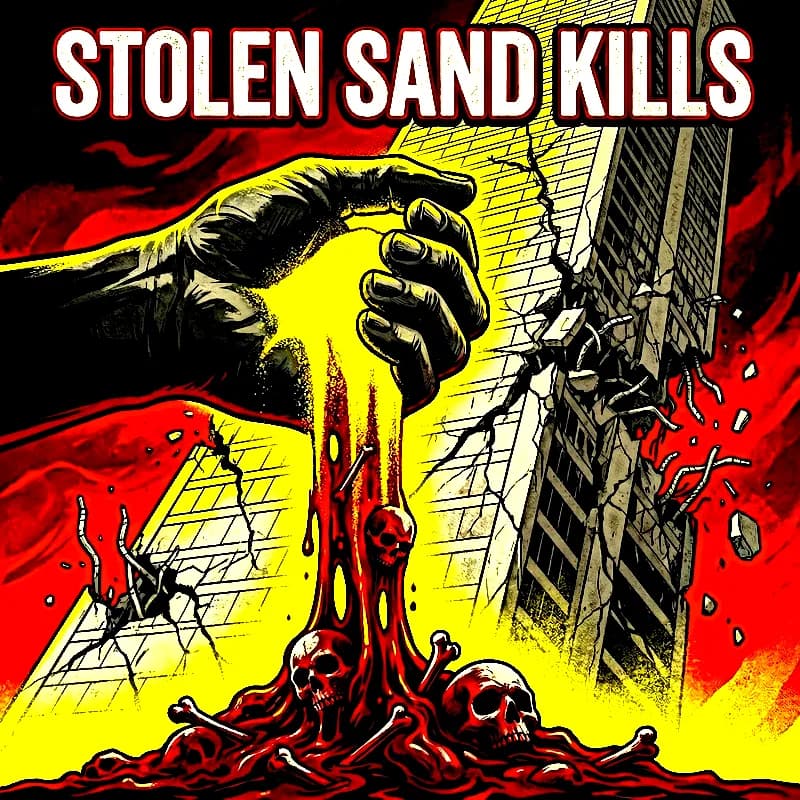
The global construction industry consumes approximately 50 billion tonnes of sand and gravel per year, making it the most consumed natural resource on Earth after fresh water. This insatiable demand has birthed the "Sand Mafia"—a decentralized but highly lethal network of criminal organizations, corrupt officials, and logistical specialists dedicated to the illicit extraction and sale of mineral resources. This criminal case file documents mafia operations spanning India, Jamaica, Morocco, and China, forensically examining assassination patterns, beach heist logistics, and the structural terrorism of buildings constructed with corrosive sea sand.
Dossier Snapshot
Year Span
1971-2040
Word Count
3,354
Source Entries
50
Citation Calls
191
Report Signal Profile
Section Headings
23
Table Lines
25
Unique Citations
50
Source Entries
50
Verification Metrics
| Metric | Value |
|---|---|
| Section Headings | 23 |
| Table Lines | 25 |
| Year Span | 1971-2040 |
| Citation Coverage | 50/50 |
The Global Political Economy of Aggregate Illicit Trade
The global construction industry represents a $126 billion annual sector that serves as the primary engine for rapid urbanization in the twenty-first century.[1] Within this massive economic framework, sand has emerged as the most consumed natural resource on Earth after fresh water, with global demand for sand and gravel reaching approximately 50 billion tonnes per year.[2], [3] This insatiable appetite for aggregate material has birthed a shadowy global underworld known as the "Sand Mafia"—a term that encompasses a decentralized but highly lethal network of criminal organizations, corrupt officials, and logistical specialists dedicated to the illicit extraction and sale of mineral resources.[2], [4] Unlike the illicit trade in narcotics or weapons, which deals in highly refined or manufactured goods, the sand trade involves the "grand theft" of entire geographical features, ranging from riverbeds in rural India to pristine white-sand beaches in the Caribbean.[5], [6]
The transformation of sand from a common geological material into a "blood commodity" is driven by a fundamental shortage of construction-grade aggregate. While the planet possesses vast quantities of sand in its deserts, these grains are geologically unsuitable for concrete production due to their rounded, wind-blown shape, which fails to provide the necessary mechanical interlocking required for structural integrity.[7], [8], [9] Consequently, the industry is forced to rely on river and marine sand, which are finite and environmentally sensitive.[6], [9] This scarcity creates a high-profit black market where organized crime syndicates can earn margins that rival the cocaine trade, often with far lower levels of law enforcement scrutiny.[6], [10]
The "Sand Mafia" operates as a form of "structural terrorism," where the theft of the environment leads directly to the loss of human life through two distinct mechanisms: direct assassination of whistleblowers and the long-term structural failure of buildings constructed with substandard materials.[4], [11], [12] In regions like India, the mafia-police-politician nexus has created a "state within a state," where law enforcement is often used as a tool to protect illegal mines rather than shut them down.[1]
Comparative Analysis of Construction Aggregate Properties
| Sand Type | Formation Process | Grain Shape | Surface Texture | Bonding Strength | Structural Suitability |
|---|---|---|---|---|---|
| River Sand | Water-worn erosion | Sub-angular | Medium | High | Excellent (Construction Gold Standard) [7], [13] |
| Desert Sand | Wind-blown erosion | Rounded/Spherical | Smooth | Low | Poor (Unsuitable for concrete) [7], [8] |
| Marine Sand | Wave action | Rounded | Smooth | Variable | Hazardous (Requires desalinization) [4], [7] |
| M-Sand | Mechanical crushing | Angular | Rough | Highest | Excellent (Consistent quality) [8], [13] |
Forensic Investigation of the Indian Sand Mafia Violence
The Indian "Sand Mafia" is perhaps the most documented and violent iteration of the aggregate black market. Their operations are characterized by a total disregard for environmental regulations and a willingness to use extreme violence to silence opposition.[2], [11] Forensic analysis of several high-profile murders reveals a consistent pattern of "discrediting through litigation" followed by "brutal elimination".[11], [14]
The Assassination of Sandeep Kothari (Madhya Pradesh)
Sandeep Kothari was an investigative journalist based in the Balaghat district of Madhya Pradesh who dedicated his career to exposing the illegal manganese and sand mining rackets in the Katangi and Tirodi areas.[11], [15] His case serves as a quintessential example of how the "Sand Mafia" utilizes the legal system to harass targets before resorting to physical violence.
Kothari was subjected to a "litigation war," where he was framed in over 19 false criminal cases, including charges of goat theft and rape.[11] He spent 16 months in jail awaiting trial for a rape charge that was eventually proven to be fraudulent.[11] This tactic of character assassination is designed to isolate the journalist and strip them of their professional credibility. Despite warnings from his family to cease his reporting, Kothari continued to use the Right to Information (RTI) Act to document the nexus between local miners and police officials.[11]
On June 19, 2015, Kothari's motorcycle was intentionally rammed by a four-wheel vehicle—a common "accident" MO used by the mafia.[11] He was abducted and subjected to brutal torture. Forensic evidence and autopsy reports later revealed that Kothari was strangled and then burned alive; his lungs showed evidence of smoke inhalation, indicating he was still breathing when he was set on fire next to a railroad track in Nagpur.[11] The three suspects arrested—Brijendra Geharwar, Vishal Tandi, and Rakesh Naraswani—were all linked to illegal mining and had previously attempted to frame Kothari in court.[11]
The Burning of Jagendra Singh (Uttar Pradesh)
The murder of Jagendra Singh in Shahjahanpur, Uttar Pradesh, illustrates the role of high-level political collusion in sand mafia operations. Singh, a freelance journalist, utilized social media—specifically his Facebook page "Shahjahanpur Samachar"—to report on illegal mining, land grabbing, and corruption linked to then-Minister Ram Murti Singh Verma.[14], [16], [17]
On June 1, 2015, a police raid led by Inspector Sri Prakash Rai targeted Singh's home.[17], [18] In his dying declaration, recorded in a video while he lay in a hospital bed with 60% of his body covered in burns, Singh explicitly stated that the police team doused him in gasoline and set him on fire at the direction of Minister Verma.[14], [16], [18] He famously asked, "Why did they have to burn me? If they wanted to arrest me, they could have done just that".[14], [16], [19]
The forensic "laundering" of Singh's death began immediately. Local police initially claimed Singh had committed suicide to avoid arrest for an alleged murder case.[16], [18] A forensic report later submitted to the court claimed the burns were self-inflicted, based on the pattern of the flammable liquid on his body.[16], [19] However, the Press Council of India criticized the investigation, noting that police failed to collect testimony for eight days and ignored Singh's mobile phone records which documented the threats he had received.[19] Under intense pressure, Singh's family eventually withdrew their complaints, and the case was closed without convictions.[14], [17]
Pale Ram Chauhan: The Noida Activist
In the National Capital Region (NCR), the sand mafia's influence extended to the murder of activist Pale Ram Chauhan in 2013.[20], [21] Chauhan had been a vocal opponent of illegal dredging in the Raipur village of Noida since 2004.[21] His activism coincided with the high-profile suspension of IAS officer Durga Shakti Nagpal, who had gained national attention for her crackdown on the sand mafia in the same region.[20], [21]
Chauhan was murdered by three armed and masked men who barged into his home in broad daylight and shot him five times.[21] Despite the family's insistence that the murder was a retaliatory act for his reporting of illegal dumpers trespassing through their fields, police initially attempted to frame the incident as a "land dispute".[21] The murder of Chauhan just days after Nagpal's transfer sent a clear message: even the most high-profile bureaucratic protection could not shield environmental activists from the "Sand Mafia".[20], [21]
Paleti and Legal Attrition in Andhra Pradesh
Forensic documentation of sand mining in Andhra Pradesh reveals a different facet of the "Sand Mafia"—the use of legal attrition. Snippets from the Andhra Pradesh High Court indicate ongoing litigation involving individuals like Paleti Hari Prasad and various mining entities.[22], [23], [24] The "Paleti" name appears in connection with the State of Andhra Pradesh regarding forest and mining violations.[22], [23]
In these regions, the mafia operates through "benami" (proxy) leases where political figures or their relatives, such as the brother of an official caught transporting sand to Telangana, control the extraction logistics.[24] The human cost in Andhra Pradesh often involves activists and villagers who are mowed down or beaten for resisting the encroachment of sand-laden heavy machinery into their farmlands.[25]
The "Accidental" Collision: A Forensic MO
One of the most insidious tactics utilized by the Indian sand mafia is the "accidental" truck collision. By using heavy mining vehicles (tippers, tractors, and dumpers) as weapons, the mafia can eliminate targets while maintaining "plausible deniability" under traffic laws.[26], [27] Between December 2020 and March 2022, an estimated 294 people died in road accidents related to mining in India.[26]
Notable Victims of Mafia Vehicle Attacks
| Victim | Date | Location | Circumstances |
|---|---|---|---|
| Narendra Kumar (IPS) | March 2012 | Morena, MP | Crushed by a tractor-trolley loaded with illegal stones.[27], [28] |
| Dharmendra Chouhan (PC) | April 2015 | Morena, MP | Mowed down by a sand truck during a night patrol.[29] |
| Surendra Singh Bishnoi (DSP) | July 2022 | Nuh, Haryana | Run over by a dumper after signaling it to stop for an inspection.[30], [31] |
| Satish Kumar (Activist) | March 2012 | Tamil Nadu | Crushed by a lorry while trying to block illegal sand transport.[32] |
The forensic challenge in these cases is the lack of specialized tracking. The National Crime Records Bureau (NCRB) registers these deaths as "normal road accidents" caused by speeding or overloading, failing to distinguish between genuine traffic mishaps and targeted assassinations.[26] This "statistical laundering" allows the mafia to operate with impunity, as the deaths are not categorized as homicides or organized crime.[26]
The Great Beach Heists: Caribbean and Global Logistics
While the Indian sand mafia is defined by its violence, the "Beach Thieves" of the Caribbean and Morocco are defined by their staggering logistical efficiency. These organizations specialize in the "Great Beach Heists"—operations where thousands of tonnes of sand vanish overnight, often without a single witness.[5], [6]
The 2008 Coral Springs Heist (Jamaica)
The most famous instance of beach theft occurred in July 2008 at Coral Springs, Trelawny, on Jamaica's north coast.[5] Developers of a planned $108 million luxury resort discovered that a 400-meter stretch of their white-sand beach had been stripped to the rock.[5], [10]
The logistics of this crime were profound. It is estimated that 500 truckloads of sand were removed over several nights.[5], [33] To move 500 truckloads in a single operation without detection would require a truck to arrive, load, and depart every few minutes, suggesting a highly coordinated military-style operation.[5], [10] The investigation by the Jamaica Constabulary Force (JCF), led by Deputy Commissioner Mark Shields, immediately suspected collusion between the movers of the sand and local police.[5]
The primary suspects were rival resorts. The illicitly acquired sand was believed to have been used to "replenish" the beaches of existing hotels that were suffering from coastal erosion—a practice known as "beach nourishment" but carried out through grand theft.[2], [5], [10] Despite the scale of the theft, no suspects were initially arrested, and the charges against two men eventually detained in 2008 (Devon Sterling and Christopher Pryce) were dropped in 2011 due to a lack of evidence.[5], [33], [34]
Forensics of the Theft: Neutron Activation Analysis
In a groundbreaking attempt to solve the Coral Springs case, Jamaican authorities utilized Instrumental Neutron Activation Analysis (INAA) to provide geochemical evidence of the sand's origin.[34]
The forensic team analyzed 43 sediment samples from the "donor" beach (Coral Springs) and various "suspect" receptor beaches.[34] By measuring 35 elements, the researchers identified nine (Al, Ca, Ce, Cr, Dy, Fe, Mn, Sc, and Sr) that could serve as a "geological fingerprint".[34] Aluminum (Al), Iron (Fe), and Scandium (Sc) were found to have the highest discriminatory power.[34] Using multivariate statistical clustering, the team was able to match the elemental profile of the stolen Coral Springs sand to specific receptor beaches on the northern coast, effectively proving the translocation of the material.[34] This case remains a landmark in geoforensic investigation, although the legal system failed to secure convictions despite the chemical certainty.
Morocco: Half the Nation's Sand is Stolen
Morocco has emerged as one of the world's most critical "hotspots" for illegal sand extraction.[4] It is estimated that 10 million cubic meters of sand—roughly half of the sand used in the country's entire construction industry—is extracted illegally every year.[3], [4]
The environmental impact is visible from space. Between Safi and Essaouira, large stretches of coastal dunes have been transformed into a jagged "rocky landscape".[3], [35] This theft creates a paradoxical cycle: sand is stolen from beaches to build the very hotels and tourism infrastructure that rely on those beaches for their economic value.[3] As the beaches vanish, the hotels become vulnerable to coastal erosion and storm surges, threatening the 6.6% of GDP that Morocco derives from tourism.[3], [4] Furthermore, a significant portion of this sand is sourced from the occupied territory of Western Sahara, where researchers documented 239 shipments totaling nearly 1 million tonnes between 2020 and 2024, fueling geopolitical conflict alongside environmental destruction.[36]
The Hungary Incident: Artificial Beach Theft
In 2007, a bizarre instance of sand theft occurred in Mindszent, Hungary.[2], [10] Thieves targeted a riverside resort on the banks of the Tisza river, stealing hundreds of tonnes of sand that had been used to create an artificial beach.[2], [5] In addition to the 6,000 cubic meters of sand, the thieves stripped the resort of its sun loungers, playground equipment, and beach huts.[2] The theft occurred during the winter off-season when the resort was closed, highlighting the opportunistic nature of aggregate theft in regions with weak security.[2]
The Forensics of the "Product": Why Specific Sand is Worth Killing For
To understand the violence of the "Sand Mafia," one must understand the geotechnical requirements of modern construction. Not all sand is equal; the value of the "product" lies in its physical and chemical properties.[8], [13]
Angularity and Mechanical Interlocking
The primary reason desert sand is unusable for concrete is its "roundness." In desert environments, sand grains are shaped by wind erosion (aeolian processes), which rounds off sharp edges and polishes the surface.[7], [8] When mixed with cement, these rounded grains act like ball bearings; they slide against each other rather than locking together.[8], [9]
In contrast, River Sand is shaped by water erosion, which leaves the grains sub-angular and rough.[13], [37] These sharp edges allow the sand to "interlock," creating a rigid matrix that gives concrete its compressive strength.[8], [13] Manufactured Sand (M-Sand), created by crushing granite or basalt, is even more angular, providing 20-30% better bonding strength than river sand.[13] However, M-Sand is more expensive to produce, which maintains the high demand for "free" river sand extracted by the mafia.[9], [13]
The Chloride Scourge: Salt and Concrete Cancer
The use of marine or beach sand without proper washing and desalinization leads to a structural disease known as "Concrete Cancer".[38], [39], [40] Marine sand is saturated with chloride ions from seawater.[4], [38] When this sand is used in reinforced concrete, the chloride ions migrate through the porous concrete to the steel reinforcement bars (rebar).[38], [39]
Chemical Process of Corrosion:
- Oxide Layer Breakdown: Steel in concrete is naturally protected by a high-alkaline environment that forms a passive oxide layer. Chloride ions break down this layer.[38], [39]
- Oxidation (Rusting): The steel begins to rust. Rust occupies a volume several times larger than the original steel.[38], [39], [40]
- Expansion Pressure: The expanding rust exerts immense internal pressure (up to several thousand PSI) on the surrounding concrete.[38], [41]
- Spalling and Delamination: The concrete begins to crack, flake (spall), and detach from the rebar, exposing the structure to even more moisture and air, which accelerates the failure.[38], [39], [42]
Case Study: The 2013 Shenzhen Scandal
In 2013, an investigation by the Shenzhen Housing and Construction Bureau revealed that at least 15 buildings under construction were using concrete made with unprocessed sea sand.[4], [12], [43] This included the Ping'an International Finance Center, which was set to be the tallest building in China (660 meters).[12], [44], [45] The scandal highlighted the economic incentive for "structural terrorism": sea sand was half the price of river sand.[12], [45] While using sea sand saved contractors millions in the short term, it created a "delayed-action bomb." Experts warned that while the buildings might appear stable today, they could face catastrophic structural failure within decades as the internal steel corrodes.[43], [45] The government ordered 31 companies to halt work, but the incident remains a cautionary tale about the invisibility of aggregate-related risks.[12], [46]
Case Study: Historical Building Collapses and Chloride Ingress
The forensics of building failure often point to a combination of design flaws and material degradation.[47], [48] While the illegal use of sea sand is a modern crisis, historical collapses provide the baseline for understanding the danger.
| Building Name | Year | Location | Primary Cause of Failure | Impact |
|---|---|---|---|---|
| 2000 Commonwealth Avenue | 1971 | Boston, MA | Inadequate concrete strength and punching shear [47], [48] | 4 Deaths |
| Harbour Cay Condominium | 1981 | Cocoa Beach, FL | Design error in shear reinforcement [48], [49] | 11 Deaths |
| Skyline Plaza | 1973 | Bailey's Crossroads, VA | Premature removal of shores/insufficient strength [48] | 14 Deaths |
| Champlain Towers South | 2021 | Surfside, FL | Long-term chloride corrosion in marine environment [42], [50] | 98 Deaths |
| The Surfside collapse, in particular, demonstrates the ultimate outcome of "Concrete Cancer." Photographs from the site showed that the reinforcing steel had mangled and failed due to years of exposure to saltwater and chloride ions.[42], [50] When mafias supply unwashed sea sand to contractors, they are essentially seeding modern skyscrapers with this exact failure mechanism.[4], [12] |
Forensic Synthesis and Policy Implications
The "Sand Mafia" represents a unique intersection of environmental destruction, organized crime, and structural engineering failure. The forensic investigation yields several critical conclusions regarding their operations and impact.
Summary of Major Forensic Anomalies and Logistics
| Case Study | Anomaly Type | Key Statistic | Primary MO |
|---|---|---|---|
| India (Jagendra Singh) | Political Nexus | 60% Body Burns | Dying declaration via video [16], [18] |
| India (Sandeep Kothari) | Litigation War | 19 False Cases | Character assassination/Abduction [11] |
| Jamaica (Coral Springs) | Mass Logistics | 500 Truckloads | State/Police collusion suspicion [5] |
| Morocco (Coastal) | Ecological Theft | 10M Cubic Meters/yr | Half of national sand is illegal [3], [4] |
| Shenzhen (Skyscraper) | Material Fraud | 15+ Buildings | Use of corrosive sea sand for profit [4], [12] |
Synthesis of Second-Order Insights
The data suggests that the "Sand Mafia" is not merely a collection of thieves, but an integral part of the global construction supply chain. The following second-order insights are inferred from the forensic patterns:
- Statistical Erasure as a Tool of Governance: By failing to categorize "sand truck collisions" as a distinct type of homicide, the Indian state effectively hides the scale of the crisis from international observers. This allows the state to maintain a facade of "accidental traffic deaths" while the mafia uses vehicles as high-mass weapons to kill with impunity.[26]
- The "Slow-Motion" Terror Attack: The use of illicit, salty sand in major infrastructure (like the Shenzhen skyscrapers) represents a form of structural terror that won't be realized for 30 years. The profit is extracted today, while the "cost" (mass casualties in building collapses) is deferred to future generations.[12], [43]
- The Failure of Geoforensics in the Courtroom: Despite high-precision tools like Neutron Activation Analysis providing "chemical fingerprints" of stolen sand, the legal systems in countries like Jamaica and India consistently fail to secure convictions.[5], [14], [34] This indicates that the "Mafia" is not just in the rivers, but within the judiciary and the police force.[1], [19] The global sand crisis is a "Cinderella issue," overshadowed by climate change and plastic pollution, yet it is currently responsible for hundreds of murders and the slow degradation of the world's structural integrity.[6] Without a radical shift in how mineral resources are governed—including the international tracking of aggregate origins and the de-normalization of "accidental" truck deaths—the "Sand Mafia" will continue to consume the planet's coastlines and riverbeds, one truckload at a time. The forensics are clear: the cost of sand is no longer just financial; it is measured in the lives of journalists, the safety of our homes, and the very existence of our coastlines.
Sources
- Faces of assassination - Global Initiative against Transnational Organized Crime (GI-TOC), https://globalinitiative.net/wp-content/uploads/2023/01/FacesOfAssassination.pdf
- Sand theft - Wikipedia, https://en.wikipedia.org/wiki/Sand_theft
- "Sand mafias" are destroying beaches and habitat, report warns ..., https://www.globalconstructionreview.com/sand-mafias-are-destroying-beaches-and-habitat-rep/
- The Sand Mafia in Morocco: Risks of Illegal Sand Mining | Global ..., https://www.globalriskintel.com/insights/sand-mafia-morocco-risks-illegal-sand-mining
- Jamaican police left stranded after thieves steal a beach | Jamaica ..., https://www.theguardian.com/world/2008/oct/21/jamaica
- Is the world running out of sand? The truth behind stolen beaches and dredged islands, https://www.theguardian.com/global/2018/jul/01/riddle-of-the-sands-the-truth-behind-stolen-beaches-and-dredged-islands
- How Many Types of Sand Used in Construction? - Headsup B2B, https://www.headsupb2b.com/blog/types-of-sand-used-in-construction
- ELI5: Beach/ River sand vs Manufactured sand vs Desert Sand : r/explainlikeimfive - Reddit, https://www.reddit.com/r/explainlikeimfive/comments/16n7hrg/eli5_beach_river_sand_vs_manufactured_sand_vs/
- Choosing the Right Sand for Construction - Eastman Rock Crusher, https://www.eastmancrushing.com/blog/choosing-the-right-sand-for-construction/
- Jamaican police left stranded after thieves steal a beach - The Mail & Guardian, https://mg.co.za/article/2008-10-21-jamaican-police-left-stranded-after-thieves-steal-a-beach/
- Murder of Sandeep Kothari - Wikipedia, https://en.wikipedia.org/wiki/Murder_of_Sandeep_Kothari
- Corrosive concrete halts construction of China's tallest building, https://www.dezeen.com/2013/03/21/corrosive-concrete-halts-construction-of-pingan-china-tallest-building/
- Types of Sand Used in Construction: River Sand vs M-Sand vs Concrete Sand Guide, https://hellogravel.com/what-types-of-sand-are-used-in-construction/
- Threats to Journalists in India: Journalism in the Age of Intolerance and Rising Nationalism | Reuters Institute, https://reutersinstitute.politics.ox.ac.uk/sites/default/files/2018-08/Threats%20to%20Journalists%20in%20India%20Journalism%20in%20the%20Age%20of%20Intolerance%20and%20Rising%20Nationalism.pdf
- India: Illegal Mining Linked to Murder of Journalist Sandeep Kothari ..., https://time.com/3929835/indian-journalist-murders-sandeep-kothari-madhya-pradesh/
- Murder of Jagendra Singh - Wikipedia, https://en.wikipedia.org/wiki/Murder_of_Jagendra_Singh
- Why did they have to burn me, asked dying scribe - The Hindu, https://www.thehindu.com/news/national/other-states/Why-did-they-have-to-burn-me-asked-dying-Uttar-Pradesh-scribe/article60326458.ece
- Journalists Killed in 2015 - Motive Confirmed: Jagendra Singh - Refworld, https://www.refworld.org/reference/annualreport/cpj/2015/en/108509
- Dangerous Pursuit - Committee to Protect Journalists, https://cpj.org/reports/2016/08/dangerous-pursuit-india-corruption-journalists-killed-impunity-chapter-1-jagendra-singh/
- Awaaz Foundation launches online petition for CBI inquiry | Mumbai News - Times of India, https://timesofindia.indiatimes.com/city/mumbai/awaaz-foundation-launches-online-petition-for-cbi-inquiry/articleshow/21534960.cms
- Pal Ram murder accused arrested | Noida News - Times of India, https://timesofindia.indiatimes.com/city/noida/pal-ram-murder-accused-arrested/articleshow/21542277.cms
- HIGH COURT OF ANDHRA PRADESH, https://aphc.gov.in/Hcdbs/upload/court10_20260107.pdf
- HIGH COURT OF ANDHRA PRADESH, https://aphc.gov.in/Hcdbs/upload/court10_20251222.pdf
- Lokesh Hardwork to Make His Mark on Education Sector - True Point News, https://epaper.truepointnews.com/media/2025-06/15th-june_point_epaper_ap-1.pdf
- DMK neta's son found dead, family blames sand mafia - Times of India, https://timesofindia.indiatimes.com/india/dmk-netas-son-found-dead-family-blames-sand-mafia/articleshow/114294120.cms
- Unaccounted deaths lay bare the dark side of sand mining, https://india.mongabay.com/2022/06/unaccounted-deaths-lay-bare-the-dark-side-of-sand-mining/
- IPS officer run over by tractor; mining mafia allegedly involved - NDTV, https://www.ndtv.com/india-news/ips-officer-run-over-by-tractor-mining-mafia-allegedly-involved-470738
- IPS officer crushed to death by mining mafia in Madhya Pradesh - Times of India, https://timesofindia.indiatimes.com/india/ips-officer-crushed-to-death-by-mining-mafia-in-madhya-pradesh/articleshow/12187697.cms
- River Sand Mining in India in 2015 - SANDRP, https://sandrp.in/2016/02/01/river-sand-mining-in-india-in-2015/
- Police Officer In Haryana Run Over By Truck During Illegal Mining Check | The News, https://www.youtube.com/watch?v=5d9GOdI5Djc
- Untitled, https://www.thehindu.com/news/national/other-states/haryana-dsp-probing-illegal-mining-mowed-down-by-truck-in-nuh/article65657805.ece
- Youth crushed to death by lorry with illegally quarried sand in Tamil Nadu - India Today, https://www.indiatoday.in/india/south/story/sand-mafia-tamil-nadu-youth-killed-95601-2012-03-10
- Jamaica Gleaner News - Sand suspects held - Three persons taken ..., http://mobile.jamaicagleaner.com/20081212/lead/lead1.php
- Instrumental neutron activation analysis in forensic science in ..., https://www.researchgate.net/publication/320400777_Instrumental_neutron_activation_analysis_in_forensic_science_in_Jamaica_The_case_of_the_Coral_Springs_beach_theft
- Mineral Resource Governance in the 21st Century - Green Policy Platform, https://www.greenpolicyplatform.org/sites/default/files/downloads/resource/irp-mineral_resource_governance-full_report-feb2020_compressed_compressed%20(1.pdf
- Morocco's exports of sand from occupied Western Sahara to the Canary Islands - AWS, https://vest-sahara.s3.amazonaws.com/wsrw/feature-images/File/2366/6847cb335dfc5_StolenBeach2025_Eng_webspread.pdf
- Different Sand Types and Their Uses - Soil Kings, https://soilkings.com/sand-types/
- The Impact of Chloride Ions on Building Structures - Waldman Engineering Consultants, Inc., https://waldmaneng.com/2024/09/09/the-impact-of-chloride-ions-on-building-structures/
- How to avoid SaltWater Corrosion Within Reinforced Concrete - Tech-Dry, https://www.techdry.com.au/how-to-avoid-salt-water-corrosion-within-reinforced-concrete/
- Concrete Corrosion in Florida Explained - Alpha Foundations, https://www.alphafoundations.com/resources/concrete-lifting/concrete-corrosion-in-florida-explained/
- The Impact of Salt Water on Concrete vs. AggreCrete PMC - AggreBind, https://aggrebind.com/the-impact-of-salt-water-on-concrete-vs-aggrecrete-pmc/
- Surfside Champlain Towers South Condominium Collapse and Condition Assessment of Nearby Aging High-Rise Buildings from a Corrosion Engineering, https://concretecondition.com/wp-content/uploads/2022/05/Matergenics-Final-Surfside-Condominium-Collapse-Paper-8-18-21.pdf
- China's Tallest Building Hit by Sea Sand Concrete Scandal - YouTube, https://www.youtube.com/watch?v=EIx5VRLQZjA
- Architecture News | ArchDaily, page 562, https://www.archdaily.com/architecture-news/page/562?c=5591806442201389214&fbclid=iwar2ifueopgva7g0fwligizgnfsg2upi-mlcf9fvrtssizlxk_yvvcfqdw5a&mkt=en-us
- Construction of China's Tallest Building On Hold Due to Concrete Scandal | ArchDaily, https://www.archdaily.com/348449/construction-of-chinas-tallest-building-on-hold-due-to-concrete-scandal
- Shenzhen's Shaky Tower Is a Cautionary Tale, https://english.aawsat.com/home/article/2997831/adam-minter/shenzhen%E2%80%99s-shaky-tower-cautionary-tale
- Building Failure Cases - William States Lee College of Engineering, https://engr.charlotte.edu/asce-failure-case-studies/building-failure-cases/
- Concrete System Collapses & Failures During Construction - Penn State College of Engineering, https://www.engr.psu.edu/ae/thesis/failures/MKP/failures/failures.wikispaces.com/Concrete_System_Collapses_and_Failures_During_Construction.html
- Collapse of Harbour Cay Condominium | Structural Engineering Licensure Coalition, https://www.selicensure.org/what-were-doing/case-study/collapse-harbour-cay-condominium
- SURFSIDE CONDO COLLAPSE | structural negligence! pt3 - YouTube, https://www.youtube.com/watch?v=WdkdIUdJLEk