GNOSTICISM
10 Documents on file
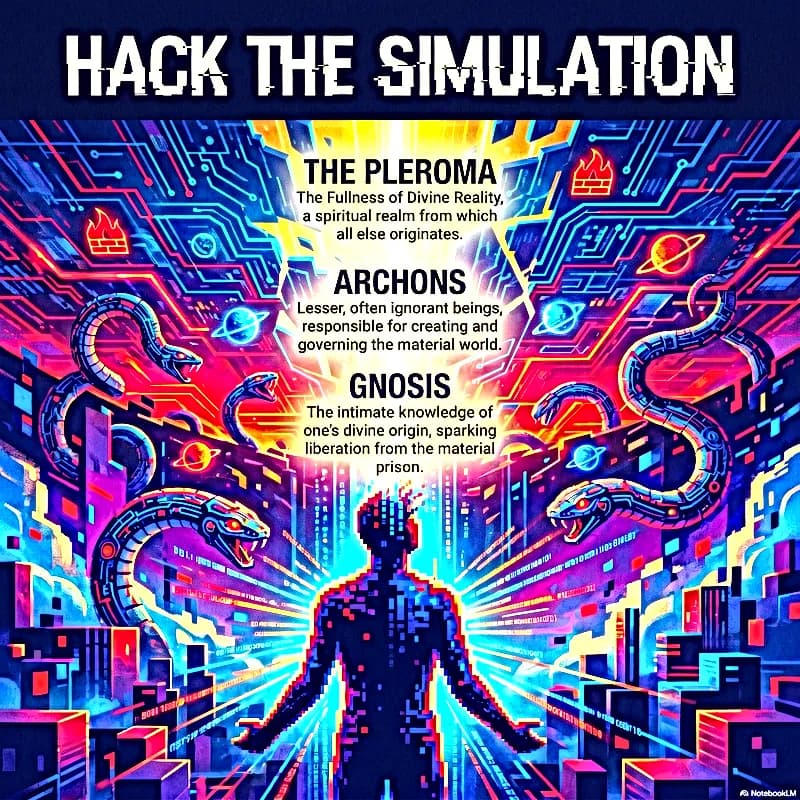
Gnostic Cosmology, the Archons, and Base Reality
**Gnosticism** is not a single uniform religion in the sources; modern reference works describe it as a loose or modern umbrella category covering several late-antique movements rather than one fixed canon. [1] [7]

The Archontic Simulation: Gnostic Cosmology as a Computational Blueprint for Material Reality
The structural framework of Gnostic cosmology represents one of the most sophisticated and early conceptualizations of a multi-layered, artificial reality. This metaphysical system posits a fundamental ontological division between the Pleroma, defined as the divine realm of light, fullness, and base reality, and the Kenoma, the entropic, flawed, and layered material universe that functions as a sophisticated prison for consciousness.[1, 2, 3, 4] Central to this narrative is the investigation of the Archons, the malevolent or ignorant planetary rulers created by the Demiurge to maintain the mat

The Demiurge as the False Architect of the Simulation
The modern label **Gnosticism** is a contested scholarly umbrella rather than a single, clearly bounded ancient religion, so the safest way to study the **Demiurge** is to focus on discrete texts and mythic families instead of treating “the Gnostics” as one uniform church. [1]; <https://news.harvard.edu/gazette/story/2003/07/student-of-early-christianities/>

The Demiurge as the False Architect of the Simulation: A Comparative Analysis of Gnostic Ontologies and Modern Computational Hypotheses
The intersection of ancient Gnostic cosmogony and contemporary simulation theory reveals a profound and enduring human intuition: the perception that the material universe is an artificial, flawed, and perhaps even malicious construct.[1, 2] Central to this thematic convergence is the figure of the Demiurge—a deity of secondary rank who, through ignorance or arrogance, fashions a physical world that functions as a restrictive enclosure for consciousness.[3, 4] Known by various names such as Yaldabaoth, Samael, and Saklas, this entity represents the ultimate archetype of the "false architect,"

Heimarmene: Physics of the Trap
In late-antique Christian and philosophical debates, **heimarmene** was the Greek term for **astrological fate**, and Nicola Denzey Lewis structures her study around disputes over "astrological fate (Gk: heimarmene)" and astral fatalism in the first and second centuries CE. [1]

Heimarmene and the Physics of the Trap: A Comparative Analysis of Gnostic Cosmology and Simulation Theory
The intersection of ancient theological pessimism and modern computational metaphysics has given rise to a rigorous intellectual framework known as the "Physics of the Trap." This discourse posits that reality is not an organic or divine emergence, but a bounded, deterministic system designed to constrain consciousness. Central to this inquiry is the Gnostic concept of Heimarmene, an unbreakable web of universal fate, and its modern counterpart, Simulation Theory, which conceptualizes the universe as a programmed environment governed by hard-coded physical laws and deterministic algorithms. [1
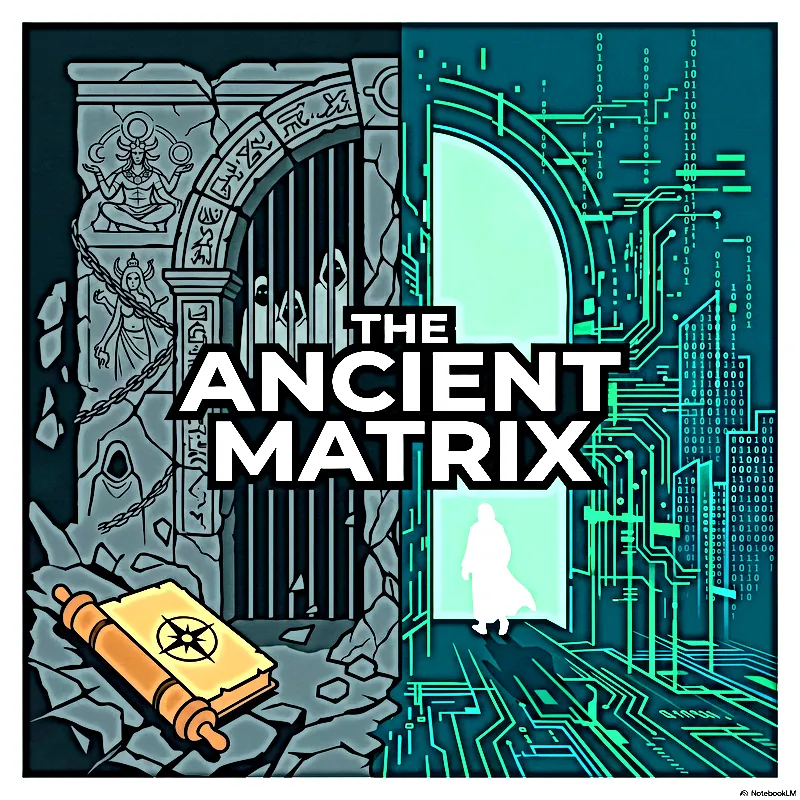
Gnosticism as the Ancient Simulation Hypothesis
This text explores the profound conceptual links between ancient Gnostic traditions and the modern simulation hypothesis, suggesting that historical myths serve as a narrative blueprint for today's digital philosophies. By examining Sethian and Valentinian cosmologies, the author illustrates how early ideas of a counterfeit world and a lesser creator mirror contemporary arguments that our reality might be an artificial construct. While acknowledging that these ancient thinkers did not literally anticipate computer science, the source highlights a shared "jailbreak myth" where salvation is achi

The Gnostic Matrix: Ancient Theology as the Precursor to the Modern Simulation Hypothesis
The contemporary fascination with the Simulation Hypothesis—the proposition that our reality is an artificial construct, likely a computer program—represents the latest iteration of a metaphysical suspicion that has haunted Western thought for nearly two millennia [1]. This modern "religion for atheists" finds its most robust historical and philosophical antecedent in Gnosticism, a diverse movement of early Christian and Hellenistic sects that flourished in the 2nd and 3rd centuries AD [2]. By examining the theological structures of the Sethian and Valentinian traditions, one discovers a sophi

Sophia's Error as the Cosmic Glitch
The Nag Hammadi codices were discovered near Nag Hammadi in Upper Egypt in 1945, and scholars describe them as fourth-century papyrus codices preserving a large body of Coptic translations of earlier works. [2, 7]
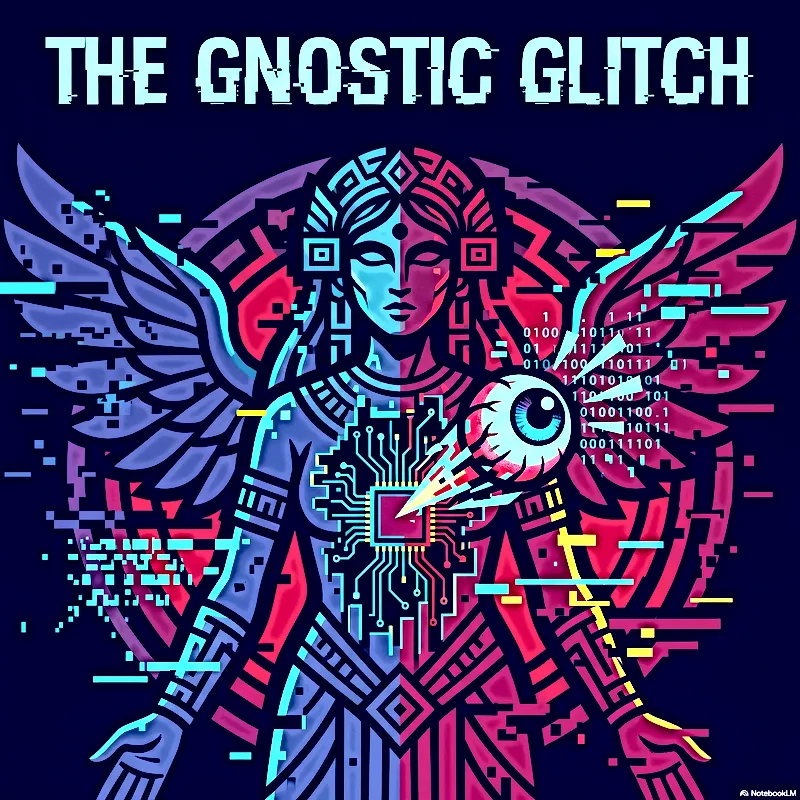
The Sophianic Anomalous Emanation and the Architecture of the Material Simulation: A Computational-Theological Analysis of the Gnostic Glitch
The investigation into Gnostic cosmogony through the lens of modern information theory reveals a profound structural parallel between the ancient myth of Sophia's fall and contemporary concepts of digital physics. Within this framework, the primordial source of all existence is identified as the Monad, an ineffable and non-dual point of origin that functions as the ultimate substrate for reality. [1] In Sethian Gnosticism, the Monad is described as the "Invisible Spirit," a singular consciousness that becomes dual only through the reflexive act of self-observation. [1] This initial act of self