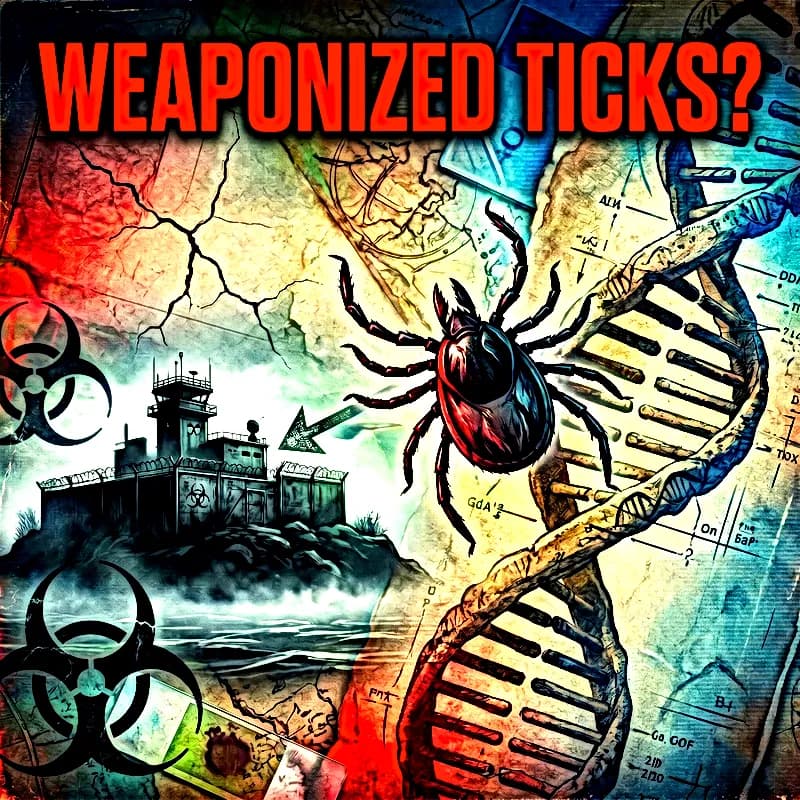
The Plum Island Animal Disease Center (PIADC), located on an 840-acre landmass off the northeastern coast of Long Island, New York, represents a unique convergence of high-stakes agricultural science, Cold War military strategy, and persistent American folklore [1]. Since its official establishment in 1954, the facility has served as the primary defensive barrier against foreign animal diseases that threaten the United States' livestock industry—an economic sector contributing over $100 billion annually to the national economy [2], [3]. However, its history as a former military outpost and its role in early biological warfare research have made it a focal point for modern conspiracy theories, particularly those involving the origins of Lyme disease and the recruitment of Nazi scientists under Operation Paperclip [4], [5].
Facility Profile
Location
Plum Island, NY
Established
1954
Biosafety Level
BSL-3Ag
Transition
NBAF (Kansas)
Pathogen Focus
Foot-and-Mouth Disease
3
African Swine Fever
2
Classical Swine Fever
2
Lyme Disease (Unsubstantiated)
0
Historical Phases of Plum Island
| Historical Phase | Era::Primary Agency::Core Mission Objective |
|---|---|
| Fort Terry Construction | 1897–1940s::U.S. Army::Coastal defense and artillery battery |
| Army Chemical Corps Period | 1952–1954::U.S. Army::Anti-animal biological warfare research |
| USDA Formative Years | 1954–1970::USDA::FMD diagnostic and vaccine development |
| Post-Offensive Ban | 1970–2003::USDA::Shift toward pure agricultural health defense |
| DHS/USDA Partnership | 2003–Present::DHS/USDA::Post-9/11 focus on agro-terrorism and biosecurity |
I. Historical Evolution: From Fort Terry to Biodefense
The strategic importance of Plum Island predates its modern scientific mission, rooted in coastal defense during the Spanish-American War [1]. The government’s acquisition of the island led to the construction of Fort Terry, a military installation that saw various levels of activity through both World Wars before being reactivated in 1952 for the Army Chemical Corps [1]. This reactivation marked the island's formal entry into the realm of biological and chemical research, specifically focusing on the potential for anti-animal biological warfare (BW) agents [1].
The 1954 Institutional Transition
In response to devastating outbreaks of foot-and-mouth disease (FMD) in Mexico and Canada, the U.S. Army transferred the island to the U.S. Department of Agriculture (USDA) on July 1, 1954 [1]. The mission shifted from offensive weaponization to defensive research and diagnostics, though the infrastructure of the military program, including the infamous Building 257, remained the primary site of activity [1].
The early research conducted within Building 257 and later Building 101 was shrouded in secrecy due to the sensitive nature of studying pathogens that could potentially be used as economic weapons [1]. This aura of mystery was intensified by the island's geography—isolated by the Long Island Sound and accessible only by government-chartered ferry—creating a fertile environment for public speculation [1], [7].
II. The Pathogenic Portfolio: Documented Research and Mission
The primary scientific objective of PIADC is the study of transboundary animal diseases (TADs) that are not present in the United States but pose an existential threat to food security [6]. The facility is the only laboratory in the nation authorized to maintain and study live samples of the foot-and-mouth disease virus [2], [8].
Core Pathogens Under Investigation
Research at PIADC is categorized into three main functions: diagnosis, research, and education [1]. The facility processes approximately 30,000 diagnostic tests annually to ensure that any suspected domestic outbreak is rapidly identified and contained [1].
- Foot-and-Mouth Disease (FMD): A highly contagious viral disease affecting cloven-hoofed animals such as cattle, pigs, and sheep [9]. While not typically fatal to adults, it causes debilitating lesions and lameness, necessitating the mass culling of livestock to prevent spread [9].
- African Swine Fever (ASF): A viral disease of pigs that is currently causing a global pandemic in Europe and Asia [10]. PIADC scientists have recently focused on developing gene-deleted vaccine candidates and cell culture adaptations for large-scale commercial production [10].
- Classical Swine Fever (CSF): Also known as hog cholera, this remains a high-priority diagnostic target due to its potential to devastate the pork industry [1], [8].
- Rinderpest: Historically studied at the facility, PIADC contributed to the global efforts that eventually led to the eradication of this cattle plague [4].
Biocontainment and Security Protocols
Operating at Biosafety Level 3 Agriculture (BSL-3Ag), the facility employs multi-layered safety procedures comparable to the layers of an onion [11], [7]. Personnel must adhere to a personal recognizant quarantine, precluding them from contact with susceptible animal species on the mainland for a defined period after leaving the island [11]. All biocontainment waste is subjected to rigorous decontamination via chemical, thermal, and incineration methods [11].
III. Operation Paperclip and the Erich Traub Controversy
A cornerstone of Plum Island conspiracy literature is the involvement of Dr. Erich Traub, a German virologist who was brought to the United States under Operation Paperclip [4]. Operation Paperclip was a secretive intelligence program that relocated more than 1,600 German scientists, many with Nazi affiliations, to provide the U.S. with scientific superiority over the Soviet Union [12].
Traub’s Role at Riems Island
During World War II, Traub served as the lab chief at the Reich Research Institute for Virus Diseases of Animals on Riems Island [4]. Under the direction of Kurt Blome and reported directly to Heinrich Himmler, Traub's work involved the weaponization of animal pathogens [4]. His research specifically explored the dispersal of foot-and-mouth disease virus via aircraft and the potential for insect vectors, particularly ticks, to serve as carriers for biological agents [4], [13].
Consultation with the U.S. Military
Traub arrived in the U.S. in 1949 and was associated with the Naval Medical Research Institute [4]. Declassified records confirm that he was consulted by scientists from Fort Detrick, the center of the U.S. biological warfare program, to provide insights into the German and Soviet animal disease programs [4]. His expertise in the geography and infrastructure of Riems Island served as a technical blueprint for the establishment of the Plum Island facility [14], [4].
| Professional Engagement | Timeline | Significance |
|---|---|---|
| Rockefeller Institute | 1930s | Pre-war fellowship on pseudorabies and LCM virus. [4] |
| Riems Island (Nazi Germany) | 1938–1945 | Research on weaponizing FMDV for Himmler. [4] |
| Operation Paperclip Arrival | 1949 | Recruited for biological warfare intelligence. [4] |
| Naval Medical Research Institute | 1949–1953 | Published on Newcastle disease and immunity. [4] |
| Plum Island Consultations | 1950s | Three visits to PIADC; offered leadership role in 1958. [4] |
Traub's background has fueled theories that he helped the U.S. continue Nazi experiments with tick-borne diseases on Plum Island [13]. While his published U.S. research focused on Newcastle disease and general immunity, conspiracy advocates argue that his classified consultations formed the basis for a clandestine tick-weaponization program [4], [15].
IV. The Lyme Disease Origin Theory and "Lab 257"
The most prominent allegation linking PIADC to a public health crisis involves the origin of Lyme disease, which was first identified in a cluster of juvenile arthritis cases in Old Lyme, Connecticut, in 1975 [16]. The proximity of Old Lyme to Plum Island—approximately seven to ten miles across the water—has long been viewed as suspicious by local residents and investigative writers [5], [7].
Michael Carroll’s Hypothesis
In his 2004 book "Lab 257," Michael Carroll argues that Plum Island was a "biological Three Mile Island" [5]. Carroll's research uncovered documents suggesting that the USDA bred hundreds of thousands of ticks on the island in the 1970s for research into African Swine Fever, a known tick-borne disease [17]. He posits that these ticks, potentially carrying exotic pathogens or modified strains of Borrelia, escaped the island via migratory birds or as a result of safety breaches, such as the periodic flushing of raw sewage into area waters [5], [18].
Scientific Rebuttal: Genomic and Archaeological Evidence
Mainstream science provides a different narrative for the emergence of Lyme disease, rooted in the ancient evolution of the bacterium Borrelia burgdorferi [19].
- Ancient DNA: The DNA of Borrelia burgdorferi was discovered in the 5,300-year-old remains of Ötzi the Iceman, found in the Italian Alps in 1991 [20].
- Genomic Timeline: Whole-genome sequencing of 146 B. burgdorferi samples indicates that the bacterium has been present in North America for at least 60,000 years, well predating human arrival and modern laboratory science [21], [22].
- Museum Specimens: Tick samples collected from Long Island in the 1940s and Cape Cod in the 1890s have tested positive for the Lyme bacterium, providing concrete evidence that the pathogen was endemic to the region long before PIADC was established in 1954 [17], [21].
Experts like Dr. Jorge Benach and Durland Fish dismiss the Plum Island theory, noting that the "epidemic" in the 1970s was likely caused by ecological shifts, such as the reforestation of New England and the rebound of deer populations, which created ideal conditions for tick vectors to thrive in suburban areas [17], [22], [7].
V. Willy Burgdorfer and the Weaponized Tick Controversy
The conspiracy narrative was significantly bolstered by the 2019 book "Bitten: The Secret History of Lyme Disease and Biological Weapons" by Kris Newby [23]. Newby features interviews with Dr. Willy Burgdorfer, the scientist credited with discovering the Lyme spirochete, who also served as a bioweapons specialist for the U.S. government at the Rocky Mountain Laboratory [24].
The Swiss Agent and Rickettsia Research
Newby claims that Burgdorfer confessed to "pathogen loading" ticks—infecting them with multiple agents to cause severe disability or death [24], [25]. A critical element of this theory is the "Swiss Agent" (Rickettsia helvetica), which Burgdorfer discovered in ticks from Switzerland [26]. Newby suggests that the modern Lyme epidemic may actually be a "cocktail" of Borrelia and weaponized Rickettsia that was accidentally released during open-air military experiments [15].
Legislative Investigation: Rep. Chris Smith’s Amendments
Based on the allegations in Bitten, Representative Chris Smith (R-NJ) has spearheaded a federal effort to investigate the origins of Lyme disease [27]. In December 2025, an amendment was signed into law as part of the FY26 National Defense Authorization Act (NDAA), directing the Government Accountability Office (GAO) to review records from 1945 to 1972 regarding the military's experimentation with ticks and Spirochaetales [28].
| Legislative Authority | Goal of the GAO Probe | Key Investigative Period |
|---|---|---|
| FY26 NDAA Sec. 1068 | Determine if the DOD used ticks as bioweapon delivery mechanisms. [28] | 1945–1972 |
| GAO Mandate | Review military, NIH, and USDA records for pathogen experiments. [28] | Cold War Era |
| Public Interest | Address the "truth about the origins" for millions of Lyme sufferers. [29] | Modern Public Health |
While the GAO probe is intended to provide transparency, scientific experts maintain that even if the military experimented with ticks, it does not prove that the specific strains causing the Lyme epidemic were laboratory-originated [15].
VI. The 2008 Montauk Monster Incident
In July 2008, the public's fascination with Plum Island as a site of "mutant" experimentation reached its zenith following the discovery of a bizarre carcass on a beach in Montauk, New York [30].
Media Sensation and Speculation
The creature, quickly dubbed the "Montauk Monster," was first reported by The Independent and later gained international notoriety via the website Gawker [30]. The carcass appeared hairless, bloated, and featured a distinct "beak" and long, clawed digits [31]. Given the proximity of Montauk to Plum Island, rumors proliferated that the animal was a genetic experiment that had escaped the lab and drowned while swimming to the mainland [30], [7].
Zoological and Forensic Deconstruction
Palaeozoologist Darren Naish provided a comprehensive identification of the creature as a raccoon (Procyon lotor) [31]. Naish explained that the "monster's" grotesque appearance was the result of taphonomic artifacts—the predictable changes a body undergoes during decomposition in water [31].
- The "Beak": The hooked structure was identified as the exposed premaxillary bones of the skull, which become visible when the soft tissues of the snout decompose and slough off [31].
- Hairlessness: Decomposition in salt water typically results in the rapid loss of fur, leaving the skin exposed and bloated [31].
- Anatomy: The dental configuration and the "leggy" proportions matched those of a North American carnivoran, specifically a raccoon [31].
Despite the biological explanation, the Montauk Monster remains a case study in how "mystery" surroundings a high-security facility can bias public perception of natural phenomena [30].
VII. Documented Safety Lapses and Security Audits
While many Plum Island theories are speculative, the facility's history does include documented safety breaches and regulatory criticisms that have provided a factual basis for public concern [7].
Historical Outbreaks
- 1978 FMD Outbreak: During construction on the island, the foot-and-mouth disease virus escaped the laboratory [7]. At the time, animals were kept in outside pens, allowing the virus to spread rapidly [7]. Over 200 animals were euthanized to contain the release, which reportedly did not reach the mainland [7].
- 2004 Incidents: Just five years after new biocontainment facilities were built, two more outbreaks of FMD occurred [7]. These were contained within the sealed units, but they raised questions about the facility's aging infrastructure and the efficacy of its "layer over layer" safety procedures [17], [7].
GAO Findings on Security (Report GAO-03-847)
Following the 2001 terrorist attacks and a contractor strike in 2002, the GAO conducted an audit of PIADC's security [32]. The report identified "fundamental concerns" that left the facility vulnerable to breaches [32].
- Incomplete Physical Security: Alarms and door sensors recommended by Sandia National Laboratories were found to be non-operational [32].
- Unauthorized Access: Eight foreign scientists were found working in the biocontainment area without completed background investigations [32].
- Guard Force Limitations: The armed guard force lacked the official authority from the USDA to make arrests, complicating the response to criminal situations [32].
- Vulnerability to Sabotage: The risk of pathogen theft was determined to be higher than originally estimated by the USDA, especially during periods of labor unrest [32].
These findings forced the Department of Homeland Security, which took over operations in 2003, to implement rigorous new security standards and eventually plan for the facility's replacement [33], [34].
VIII. The Transition to NBAF and Decommissioning
Recognizing that the 68-year-old Plum Island facility is no longer adequate to meet the research needs of emerging zoonotic threats, the U.S. government is transitioning its mission to the National Bio and Agro-Defense Facility (NBAF) in Manhattan, Kansas [8], [34].
NBAF Capabilities vs. PIADC
The new $1.25 billion facility is designed to meet BSL-4 standards, allowing for research on zoonotic diseases (those that jump from animals to humans) which was not permitted on Plum Island [34].
| Feature | Plum Island (PIADC) | National Bio & Agro-Defense Facility (NBAF) |
|---|---|---|
| Location | Offshore Island, NY | Mainland Kansas |
| Max Biosafety Level | BSL-3Ag | BSL-4 |
| Total Square Footage | ~840-acre island | 574,000 sq. ft. facility |
| Primary Research Focus | Animal-only pathogens (FMD, ASF) | Zoonotic and foreign animal diseases |
| Status | Phasing out research by 2026 | Opened June 2023; Fully operational ~2028 |
Decommissioning and Conservation
The Plum Island Closure and Support (PICS) program is currently managing the decontamination of the island's high-containment facilities [11]. Once the federal science mission fully transitions to NBAF, the island will be conveyed to a new owner through the General Services Administration [11]. Ongoing legislative efforts, such as the Plum Island Preservation Study Act, seek to designate the island as a protected natural area, potentially serving as a national monument or wildlife refuge [35].
IX. Synthesis and Professional Analysis
The history of Plum Island reveals a profound tension between the necessity of high-security biological research and the public's right to transparency. The convergence of Operation Paperclip, the geographic isolation of the facility, and documented safety failures has created a self-sustaining cycle of suspicion. While genomic science provides a clear rebuttal to the laboratory origin of Lyme disease, the existence of Cold War programs like those involving Willy Burgdorfer and Erich Traub ensures that questions about the "weaponization" of nature will remain a topic of intense public and legislative scrutiny [24], [15], [28].
As the science mission moves to the Kansas mainland, the legacy of Plum Island will likely transition from a site of active fear to one of historical curiosity and environmental conservation. However, the lessons learned regarding biosecurity, public communication, and the ethical implications of "dual-use" research will remain central to the operation of the next generation of laboratories like NBAF [34], [36].
Sources
- https://en.wikipedia.org/wiki/Plum_Island_Animal_Disease_Center
- https://www.dhs.gov/publication/st-piadc-fact-sheet
- https://www.gao.gov/products/gao-06-132
- https://en.wikipedia.org/wiki/Erich_Traub
- https://www.bookbrowse.com/reviews/index.cfm/book_number/1393/lab-257
- https://www.dhs.gov/science-and-technology/70-years-science-and-service
- https://www.cbsnews.com/news/plumbing-the-mysteries-of-plum-island/
- https://en.wikipedia.org/wiki/National_Bio_and_Agro-Defense_Facility
- https://aglawjournal.wp.drake.edu/wp-content/uploads/sites/66/2019/11/Pack-Final-Macro-Reprinted.pdf
- https://scientificdiscoveries.ars.usda.gov/tellus/stories/articles/expanding-legacy-plum-island-animal-disease-center
- https://www.dhs.gov/science-and-technology/plum-island-animal-disease-center
- https://en.wikipedia.org/wiki/List_of_Germans_relocated_to_the_US_via_Operation_Paperclip
- https://www.aph.gov.au/DocumentStore.ashx?id=8df41dea-955b-414a-9863-1d8cf9ae859f&subId=411882
- https://es.wikipedia.org/wiki/Erich_Traub
- https://thehumanist.com/magazine/july-august-2019/arts_entertainment/bitten-the-secret-history-of-lyme-disease-and-biological-weapons/
- https://www.bayarealyme.org/about-lyme/history-lyme-disease/
- https://southampton.stonybrookmedicine.edu/sites/default/files/4.13.25_Newsday_Plum%20Island_Dr.%20Jorge%20Benach.pdf
- https://provider.thriveap.com/blog/book-club-lab-257
- https://int.livhospital.com/where-did-lyme-disease-originate-tracing-its-true-origins/
- https://danielcameronmd.com/opening-pandoras-box-tick-borne-diseases/
- https://pmc.ncbi.nlm.nih.gov/articles/PMC6431794/
- https://communities.springernature.com/posts/bacterial-genomes-reveal-ancient-history-of-lyme-disease-in-north-america
- https://catalog.nlm.nih.gov/discovery/fulldisplay/alma9917510613406676/01NLM_INST:01NLM_INST
- https://spectator.com/article/how-ticks-became-bioweapons/
- https://chrissmith.house.gov/uploadedfiles/2021-09-22_americans_deserve_the_truth__did_dod_weaponize_ticks_with_lyme_disease.pdf
- https://www.lymedisease.org/members/lyme-times/2019-summer-features/biological-weapons-lyme/
- https://chrissmith.house.gov/news/documentsingle.aspx?DocumentID=415206
- https://chrissmith.house.gov/news/documentsingle.aspx?DocumentID=415162
- https://chrissmith.house.gov/news/documentsingle.aspx?DocumentID=415277
- https://en.wikipedia.org/wiki/Montauk_Monster
- https://tetzoo.com/blog/2021/10/23/montauk-monster-a-look-back
- https://www.gao.gov/assets/a239785.html
- https://www.gao.gov/products/gao-03-847
- https://www.usda.gov/about-usda/general-information/initiatives-and-highlighted-programs/national-bio-and-agro-defense-facility
- https://www.thenorthshoreleader.com/single-post/plum-island-1954-2026-a-requiem
- https://www.govinfo.gov/content/pkg/GAOREPORTS-GAO-08-821T/html/GAOREPORTS-GAO-08-821T.htm