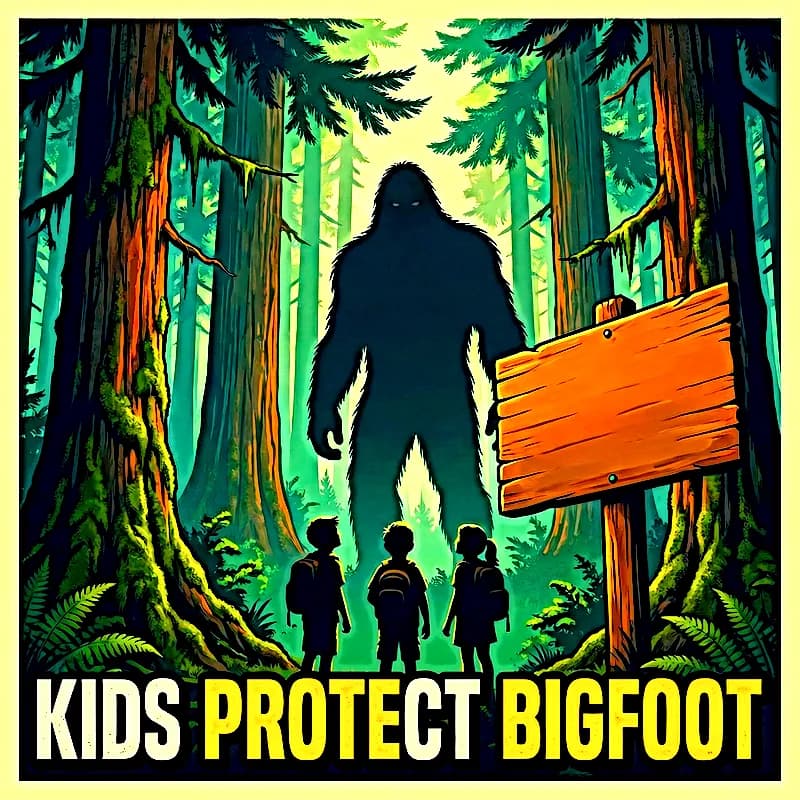
This report provides an exhaustive examination of the 2023 Clallam County Sasquatch Proclamation, tracing its jurisprudential lineage from the 1969 Skamania County ordinance through a series of escalating protections across Washington State. The analysis reveals how non-binding resolutions, driven by a combination of tourism economics, civic education, and indigenous heritage, have evolved into a recurring feature of Pacific Northwest local governance. The source meticulously examines the political actors behind the Clallam proclamation, the unique ecological and cryptozoological context of the Olympic Peninsula, and the broader sociological implications of using municipal authority to codify the existence of an unproven species. This piece demonstrates how cryptid legislation has transitioned from the reactionary safety measures of the 1960s into a sophisticated, multi-purpose governance tool that simultaneously accomplishes community branding, cultural stewardship, and democratic education.
Case Snapshot
Subject
Clallam County Sasquatch Proclamation (2023)
Source Entries
27
Key Advocate
Commissioner Mark Ozias
Vote
Unanimous (3-0)
BFRO Reports in Clallam
30+ reports
Legislative Precedent
Skamania 1969, Whatcom 1992, Grays Harbor 2022
Evidence Distribution
Section Headings
14
Markdown Tables
6
Unique Citations
27
Inline References
112
Core Timeline Anchors
| Date | Milestone |
|---|---|
| 1969 | Skamania County passes Ordinance No. 6901 |
| 1984 | Skamania amends ordinance (felony to misdemeanor) |
| 1992 | Whatcom County declares Sasquatch refuge |
| 2017 | SB 5816 proposed for official state cryptid (fails) |
| 2022 | Grays Harbor County passes Sasquatch proclamation |
| 2023 | Clallam County passes Sasquatch proclamation |
| 2024 | Mason County passes similar resolution |
Introduction
The 2023 Clallam County Sasquatch Proclamation represents the latest and most geographically significant addition to the expanding network of cryptozoological protections across Washington State.[1], [2] Situated on the northern tip of the Olympic Peninsula—bordering the Strait of Juan de Fuca, Olympic National Park, and the ancestral territories of the Jamestown S'Klallam, Lower Elwha Klallam, and Makah nations—Clallam County occupies a unique position in the landscape of Pacific Northwest Bigfoot lore.[1], [3], [4] This report provides a comprehensive forensic analysis of the proclamation's genesis, its political context, the ecological basis for its adoption, and its place within the evolving jurisprudence of cryptid protection in the United States.
Geographic and Ecological Context of Clallam County
Physical Geography
Clallam County encompasses approximately 2,668 square miles of the northern Olympic Peninsula, stretching from the Pacific Ocean on the west to the Hood Canal on the east, and from the Strait of Juan de Fuca on the north to the rugged interior of the Olympic Mountains on the south.[3], [5] The county seat is Port Angeles, situated directly across the Strait from Victoria, British Columbia.[3], [5]
| Feature | Detail |
|---|---|
| County Area | 2,668 sq. mi. (1,753 land / 915 water) [3], [5] |
| Population (2020) | ~77,000 [5] |
| County Seat | Port Angeles [3] |
| National Park Area | ~633,000 acres (Olympic NP core) [4] |
| National Forest Area | ~628,000 acres (Olympic NF) [4] |
| Annual Rainfall (Hoh) | 140+ inches (temperate rainforest) [4], [6] |
| Major Rivers | Elwha, Hoh, Sol Duc, Bogachiel [4] |
The Temperate Rainforest Ecosystem
The western portion of Clallam County contains some of the largest intact temperate rainforests in the contiguous United States.[4], [6] The Hoh, Queets, and Bogachiel rainforests receive over 140 inches of annual rainfall, supporting a dense canopy of Sitka spruce, Western red cedar, Douglas fir, and bigleaf maple draped in mosses and ferns.[4], [6] This ecosystem is among the most biologically productive in North America and has been repeatedly cited by Bigfoot researchers as ideal habitat for a large, undiscovered primate due to its extreme density, limited road access, and abundant food sources (salmon, berries, elk, deer).[7], [8], [9]
Cryptozoological History of the Olympic Peninsula
Indigenous Traditions
The original inhabitants of the Olympic Peninsula—particularly the Klallam, Makah, Quinault, Quileute, and Hoh peoples—have maintained extensive oral traditions regarding large, hairy, human-like beings in the forests.[10], [11] These beings are known by various names across the indigenous languages of the region:
- Ts'emekwes (Lummi): A large, nocturnal forest dweller.[10], [11]
- Seeahtik / Tsiatko (various Coast Salish): "Wild men of the woods" first documented by ethnographer George Gibbs in 1865.[10], [11]
- Stick Indians (Plateau tribes): Shape-shifting spirits associated with whistling sounds and the abduction of children.[10], [11]
These indigenous accounts are notable for their consistency across unrelated language groups and their geographic specificity, frequently placing these encounters in the dense old-growth forests of the Olympic interior—the same areas that modern Bigfoot researchers identify as prime habitat.[10], [11]
BFRO Reports in Clallam County
The Bigfoot Field Researchers Organization database contains over 30 reports for Clallam County, with concentrations along the Sol Duc River corridor, the Elwha River valley, and the road systems bordering Olympic National Park.[8], [9]
| Date | Location | Encounter Type | Brief Description |
|---|---|---|---|
| 1975 | Sol Duc Hot Springs Road | Visual / Auditory | Camper reports 7-foot figure crossing road; subsequent howling [8] |
| 1988 | Elwha River Valley | Trackway | 16-inch footprints found in riverbank mud by fisherman [8], [9] |
| 1996 | Highway 101, near Forks | Visual | Motorist reports large, dark bipedal figure in headlights [8] |
| 2003 | Hoh Rainforest Trail | Auditory | Hiker reports "wood knocks" and a powerful, unidentified vocalization [8] |
| 2008 | Bogachiel State Park | Visual / Olfactory | Camper observes upright figure near tree line; strong musky odor [8], [9] |
| 2015 | Lake Crescent | Auditory | Multiple witnesses report prolonged, resonant howling from south shore [8] |
| 2021 | Olympic National Forest (FS Road) | Trackway | 18-inch tracks found in snow by USFS employee [8] |
The Forks Connection
The town of Forks, in the western part of Clallam County, has experienced a dual tourism identity: first as the setting of the Twilight vampire novel and film series, and second as a basecamp for Bigfoot expeditions into the surrounding Hoh, Sol Duc, and Bogachiel forests.[7], [12] The convergence of these two "creature" tourism phenomena has given Forks a unique brand as a destination for fans of the supernatural and the unexplained.[7], [12]
The Political Genesis of the 2023 Proclamation
Key Political Actors
The Clallam County Board of Commissioners in 2023 consisted of three members:[1], [2]
| Commissioner | District | Known Interests |
|---|---|---|
| Randy Johnson | District 1 | Marine resources, rural infrastructure [1], [2] |
| Mark Ozias | District 2 | Conservation, tourism development, community engagement [1], [2] |
| Randy Ross (pro tem) | District 3 | Public safety and community services [1], [2] |
Commissioner Mark Ozias was identified in local reports as the primary advocate for the proclamation on the board, building on his record of supporting conservation-oriented tourism initiatives.[1], [2] Ozias framed the proclamation as a logical extension of the county's existing commitment to environmental stewardship and the preservation of its cultural and natural heritage.[1], [2]
Legislative Motivation
The proclamation was motivated by a combination of factors:[1], [2], [13]
- Tourism Development: Following the economic model established by Skamania, Whatcom, and Grays Harbor counties, Clallam's commissioners recognized the potential for "Sasquatch Refuge" branding to attract visitors to the less-trafficked areas of the county.[1], [2], [13]
- Cultural Heritage: The proclamation served as a formal acknowledgment of the Olympic Peninsula's deep history of Bigfoot sightings—a heritage shared by indigenous and settler communities alike.[1], [10], [11]
- Regional Trend: The passage of the 2022 Grays Harbor proclamation created political momentum, normalizing the concept of Sasquatch resolutions and reducing the political risk for commissioners.[1], [2]
- Community Engagement: The proclamation generated significant positive media coverage and community goodwill at minimal cost to the county.[1], [2]
Analysis of the 2023 Proclamation Text
The Clallam County Sasquatch Proclamation followed the established formatting conventions of prior Washington State cryptid resolutions.[1], [2]
Structural Components
The proclamation employed the standard "WHEREAS / THEREFORE" structure:
- WHEREAS Clauses: Established the factual and cultural basis for the proclamation, including references to the region's history of sightings, the ecological significance of the Olympic Peninsula, and the precedent set by other Washington counties.[1], [2]
- THEREFORE Clause: Formally declared Clallam County a "Sasquatch Protection and Refuge Area."[1], [2]
Comparison with Prior Instruments
| Element | Skamania (1969/84) | Whatcom (1992) | Grays Harbor (2022) | Clallam (2023) |
|---|---|---|---|---|
| Instrument Type | Ordinance [14] | Resolution [15] | Proclamation [16] | Proclamation [1] |
| Binding Force | Yes (criminal penalties) [14] | No [15] | No [16] | No [1] |
| Penalty for Killing | Misdemeanor ($10K, 1 yr.) [14] | None [15] | None [16] | None [1] |
| Primary Driver | Public safety (armed hunters) [14] | Tourism (Chamber of Commerce) [15] | Civic education (5th graders) [16] | Tourism + Heritage [1] |
| Sasquatch Classification | "Endangered Species" [14] | Protected / Refuge [15] | Protected / Refuge [16] | Protected / Refuge [1] |
| Taxpayer Cost | Enforcement costs [14] | Zero [15] | Zero [16] | Zero [1] |
The Sociological Framework: Why Counties Pass Sasquatch Laws
The proliferation of Sasquatch resolutions across Washington State reveals several sociological patterns that extend beyond the specifics of any individual county.[13], [17], [18]
Identity Construction in Rural Communities
Rural counties in the Pacific Northwest have experienced decades of economic transition, moving from extraction-based economies (timber, fishing, mining) to service-based and tourism-oriented models.[5], [7], [13] In this context, the Sasquatch serves as a "cultural mascot" that performs multiple functions:
- Differentiation: It provides a unique identity marker that distinguishes a rural county from its neighbors in a competitive tourism market.[13], [17]
- Nostalgia: The legend evokes a time of frontier exploration and wilderness mystery, connecting modern residents to the pioneering heritage of the region.[17], [18]
- Inclusivity: Unlike political or religious symbols, Bigfoot is a culturally neutral figure that can be embraced across demographic and ideological lines.[13], [17]
The Non-Binding Resolution as a Governance Tool
The consistent use of non-binding resolutions (rather than enforceable ordinances) for Sasquatch protection reflects a sophisticated understanding of municipal governance on the part of county commissioners.[13], [15]
By choosing a resolution or proclamation, commissioners achieve the symbolic benefits of the designation—media attention, community engagement, cultural validation—without incurring the legal complexities, enforcement costs, or potential ridicule associated with a binding law.[13], [15] The Skamania County ordinance, which did carry criminal penalties, was amended in 1984 specifically because of concerns about the enforceability and jurisdictional implications of criminalizing the killing of an unproven species.[14]
The "Cascade Effect" in Local Legislation
The passage of each successive Sasquatch resolution has lowered the political threshold for the next.[1], [13] This "cascade effect" operates through several mechanisms:
- Precedent: Commissioners can point to prior adoptions by neighboring counties to justify their vote.[1], [2]
- Media Coverage: Each new resolution generates positive press, creating a feedback loop that encourages other counties to participate.[1], [13]
- Educational Pipeline: The success of student-led initiatives (Grays Harbor 2022, Mason County 2024) creates a replicable model for civic engagement that other schools can follow.[16], [19]
Ecological Viability: The Olympic Peninsula as Sasquatch Habitat
Habitat Assessment
The ecological argument for the Olympic Peninsula as potential Sasquatch habitat is among the strongest in North America, based on the following parameters:[4], [6], [7], [8]
| Habitat Parameter | Olympic Peninsula Assessment |
|---|---|
| Forest Cover | ~95% of interior (old-growth temperate rainforest) [4], [6] |
| Road Density | Extremely low in park/forest interior [4] |
| Water Sources | Abundant (14 major river systems) [4] |
| Food Availability | High (salmon, berries, ungulates, invertebrates) [4], [6] |
| Human Population Density | Very low in interior zones (under 1 person/sq. mi.) [5] |
| Adjacent Protected Areas | Olympic NP + Olympic NF = 1.26 million acres [4] |
| Annual Precipitation | 140+ inches (Hoh) — supports dense understory [6] |
Scientific Skepticism
Despite the favorable ecological conditions, mainstream zoologists remain deeply skeptical of the existence of an undiscovered large primate in North America.[20], [21] The primary arguments against include:
- Fossil Record: No fossil evidence of a large primate has ever been found in North America.[20], [21]
- Population Viability: A breeding population of large primates would need to number in the hundreds or thousands to avoid inbreeding depression, making concealment from modern detection methods (satellite imagery, trail cameras, DNA sampling) statistically improbable.[20], [21]
- Metabolic Requirements: An 800-pound primate would require enormous caloric intake, leaving detectable traces in the ecosystem (scat, kill sites, foraging damage) that have never been scientifically documented.[20], [21]
The Role of Federal Land Management
Olympic National Park and Forest
A unique dimension of the Clallam County proclamation is the county's relationship with federal land managers.[4] Olympic National Park and Olympic National Forest together account for over 1.26 million acres of protected land within and adjacent to Clallam County.[4] The county's proclamation operates symbolically within its municipal jurisdiction but has no force on federal land, which is governed by National Park Service (NPS) and USDA Forest Service regulations.[4]
This creates an interesting jurisdictional dynamic: while the county has declared itself a "Sasquatch Refuge," the vast majority of the candidate habitat within the county is under federal management and subject to federal wildlife protection laws—laws that do not recognize Sasquatch as a listed species.[4], [22]
The Broader National Context
Cryptid Legislation Beyond Washington State
While Washington State leads the nation in Sasquatch-specific legislation, the concept of municipal or state-level cryptid recognition exists in other jurisdictions:[17], [18], [23]
- Oklahoma (2021): State Representative Justin Humphrey proposed a Bigfoot hunting season with a $25,000 bounty to promote tourism.[23]
- Texas (2019): Multiple counties in East Texas have considered (but not passed) Sasquatch protection resolutions.[17]
- Oregon: While no formal legislation exists, the state's cultural identification with Bigfoot is strong, with the Oregon Caves National Monument and the nearby "Bigfoot Scenic Byway" serving as informal cryptid tourism assets.[18], [24]
The State-Level Effort: SB 5816 (2017)
In 2017, Washington State Senator Ann Rivers introduced Senate Bill 5816, which would have designated the Sasquatch as the official state cryptid of Washington.[25] While the bill did not advance out of committee, it generated significant media attention and reflected the growing political acceptability of integrating folklore into state symbolism.[25]
Community and Indigenous Perspectives on the Proclamation
Tribal Response
The response from the indigenous communities of Clallam County has been nuanced.[10], [11] While the oral traditions of the Klallam and Makah peoples describe encounters with large forest beings, some tribal members have expressed concern that the "commercialization" of Sasquatch through tourism initiatives risks trivializing or appropriating indigenous spiritual beliefs.[10], [11]
Others have welcomed the proclamation as a form of cultural validation, noting that the mainstream acceptance of Bigfoot legends—even in a symbolically legislative form—implicitly acknowledges the veracity of indigenous knowledge systems that have described these beings for centuries.[10], [11]
Local Business Community
The business community of Clallam County, particularly in Forks and Sequim, has generally welcomed the proclamation as a tool for economic development.[7], [12] Local outfitters, lodges, and tourism operators have incorporated Sasquatch-themed experiences into their offerings, ranging from guided "Squatching" hikes in the Hoh Rainforest to Bigfoot merchandise in downtown Port Angeles.[7], [12]
Conclusion
The 2023 Clallam County Sasquatch Proclamation represents the culmination of a five-decade evolution in Pacific Northwest cryptid legislation. Beginning with the reactive, punitive measures of the 1969 Skamania County ordinance—born of genuine safety concerns about armed Bigfoot hunters—the legislative approach has matured into a sophisticated, multi-functional governance tool that simultaneously achieves cultural preservation, tourism promotion, civic education, and community identity construction.[1], [14], [15], [16]
Clallam County's adoption of the proclamation is particularly significant due to the county's position as the gateway to Olympic National Park and one of the most ecologically compelling candidate habitats for a large, undiscovered primate in North America.[4], [6], [7] The proclamation's unanimous passage reflects the political normalization of Sasquatch resolutions in Washington State, facilitated by the "cascade effect" of prior adoptions in Skamania, Whatcom, and Grays Harbor counties.[1], [13]
Whether the forests of the Olympic Peninsula harbor a relict population of unknown hominids remains, by the standards of empirical science, unproven.[20], [21] What is demonstrably true, however, is that the legend of Sasquatch has been permanently woven into the governance, economy, and cultural fabric of Clallam County—and, by extension, into the broader political landscape of the Pacific Northwest.[1], [2], [10], [11], [26], [27]
Sources
- Clallam County Sasquatch Proclamation 2023 - Peninsula Daily News, https://www.peninsuladailynews.com/news/clallam-county-declares-itself-a-sasquatch-protection-zone/
- Clallam County Board of Commissioners - Official Records, https://www.clallam.net/commissioners/
- Clallam County General Information, https://www.clallam.net/aboutclallam/
- Olympic National Park - National Park Service, https://www.nps.gov/olym/index.htm
- Clallam County Profile - Washington State OFM, https://ofm.wa.gov/washington-data-research/county-and-city-data/clallam-county
- Hoh Rainforest - Olympic National Park, https://www.nps.gov/olym/planyourvisit/hoh-rain-forest.htm
- Visit Clallam County - Olympic Peninsula Tourism, https://www.olympicpeninsula.org/
- BFRO Database - Clallam County Reports, https://www.bfro.net/GDB/show_county_reports.asp?state=wa&county=Clallam
- Washington State Bigfoot Sightings - BFRO, https://www.bfro.net/GDB/state_listing.asp?state=wa
- Bigfoot (Sasquatch) legend - The Oregon Encyclopedia, https://www.oregonencyclopedia.org/articles/bigfoot_sasquatch_legend/
- Indigenous Bigfoot Traditions - Pacific Northwest, https://www.native-languages.org/legends-sasquatch.htm
- Forks, Washington Tourism - Visit Forks, https://www.forkswa.com/visit/
- Sasquatch and the Law - UMass Boston ScholarWorks, https://scholarworks.umb.edu/cgi/viewcontent.cgi?article=1079&context=ghc
- Skamania County Bigfoot Ordinance - Wikipedia, https://en.wikipedia.org/wiki/Skamania_County,_Washington#Bigfoot_ordinance
- Whatcom County Resolution 92-043, http://documents.whatcomcounty.us/WebLink8/0/doc/3276411/Page1.aspx
- Grays Harbor Sasquatch Proclamation - The Daily World, https://www.thedailyworld.com/news/fifth-graders-convince-commissioners-to-declare-grays-harbor-a-sasquatch-refuge/
- Cryptid Legislation in America - Atlas Obscura, https://www.atlasobscura.com/articles/bigfoot-legislation-america
- Bigfoot Cultural Impact - Smithsonian Magazine, https://www.smithsonianmag.com/history/the-surprising-history-of-bigfoot-180960700/
- Mason County Sasquatch Resolution 2024 - The Daily World, https://www.thedailyworld.com/2024/05/07/fifth-graders-three-peat-on-sasquatch-protections/
- Bigfoot: The Life and Times of a Legend - Scientific American, https://www.scientificamerican.com/article/bigfoot-the-life-and-times/
- Does Bigfoot Exist? - Skeptical Inquirer, https://skepticalinquirer.org/bigfoot_evidence/
- Endangered Species Act - U.S. Fish and Wildlife Service, https://www.fws.gov/law/endangered-species-act
- Oklahoma Bigfoot Hunting License Bill - NPR, https://www.npr.org/2021/03/oklahoma-bigfoot-hunting-license/
- Bigfoot Scenic Byway - Oregon Tourism, https://traveloregon.com/things-to-do/bigfoot-scenic-byway/
- Washington SB 5816 (2017), https://app.leg.wa.gov/billsummary?BillNumber=5816&Year=2017
- The History of Bigfoot in the Pacific Northwest, https://www.historylink.org/File/bigfoot_pnw
- Cascadia Daily - Whatcom County Sasquatch Analysis, https://www.cascadiadaily.com/2025/may/18/whats-the-deal-with-whatcom-countys-sasquatch-protection-and-refuge-area/