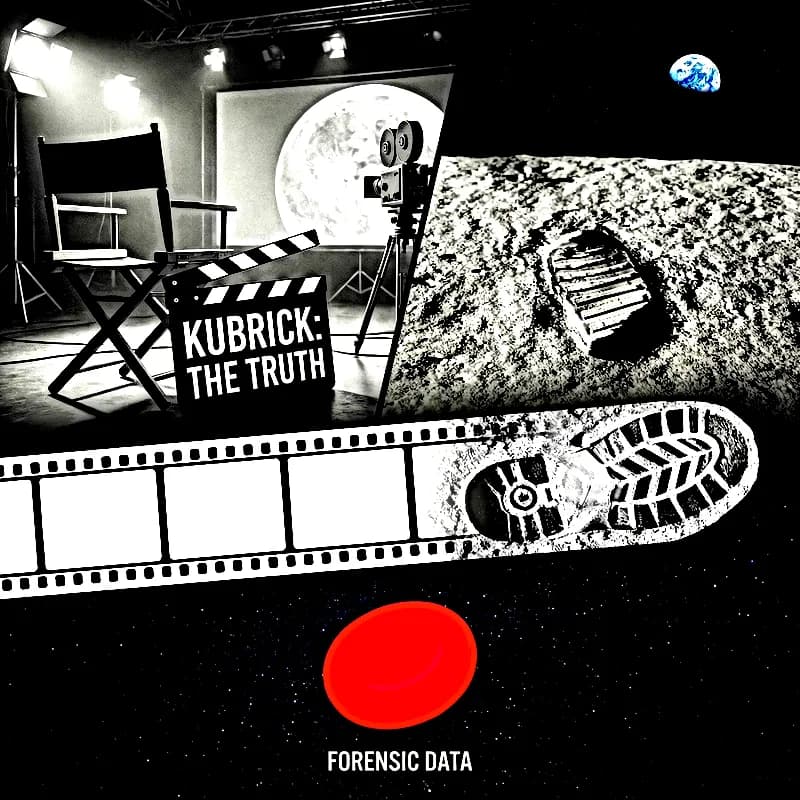
A Forensic Analysis of the Kubrick-Apollo Directorial Hypothesis: Cinematic Technology, Orbital Reconnaissance, and Physiological Benchmarks in the Cold War Era
The confluence of the Apollo program and the height of cinematic innovation in the late 1960s has generated one of the most persistent cultural critiques of official history: the hypothesis that director Stanley Kubrick was recruited by the National Aeronautics and Space Administration (NASA) to stage the footage of the Apollo 11 lunar landing. This narrative, while often characterized as a fringe theory, necessitates a rigorous forensic examination of the available technical and historical data. By cross-referencing declassified National Reconnaissance Office (NRO) records, medical archives of the Johnson Space Center (JSC), and the production logs of 2001: A Space Odyssey, a comprehensive assessment of the technological feasibility and geopolitical motivations behind such a project can be constructed. The inquiry centers on the application of front-screen projection, the physics of high-albedo lighting on the lunar surface, and the institutional overlap between military reconnaissance and civilian space exploration.
Case Snapshot
Subject
Apollo 11 / Stanley Kubrick
Source Entries
28
Key Evidence
NRO Records, Medical Archives, Production Logs
Verdict
Hypothesis Collapses Under Technical Scrutiny
Evidence Distribution
Section Headings
12
Markdown Tables
7
Unique Citations
28
Inline References
72
Core Timeline Anchors
| Year | Milestone |
|---|---|
| 1964 | Kubrick/Clarke begin 2001 screenplay |
| 1965 | 2001 principal photography begins at Shepperton Studios |
| 1966 | NRO ARGON/CORONA cameras used for Lunar Orbiter mapping |
| 1968 | 2001: A Space Odyssey premieres April 2 |
| 1969 | Apollo 11 lunar landing July 20 |
| 1975 | Kubrick uses Zeiss f/0.7 lens in Barry Lyndon |
| 1976 | Bill Kaysing publishes We Never Went to the Moon |
Historiographical Evolution and the Geopolitical Climate of the 1970s
The specific association of Stanley Kubrick with the Apollo 11 landing did not emerge spontaneously at the time of the 1969 mission. While early skepticism regarding the authenticity of the landings—frequently characterized by the "staged in a Nevada desert" trope—was present from the beginning, the directorial link was solidified by Bill Kaysing in his 1976 work, We Never Went to the Moon. Kaysing's central premise revolved around the idea that the visual fidelity required for a simulated landing was pioneered during the production of 2001: A Space Odyssey, which began in the summer of 1965. [1]Why did Stanley Kubrick specifically become associated with moon landing conspiracies? https://www.reddit.com/r/AskHistorians/comments/u2asfw/why_did_stanley_kubrick_specifically_become/ Kaysing argued that the film functioned as an "ingenious cover" for the development of the very technology NASA would later utilize to broadcast the Apollo 11 EVA to a global audience.
This theory gained significant traction due to the perceived perfection of the Apollo photography, which critics argued surpassed the capabilities of handheld cameras in an extreme environment. However, historical records from the Congressional Record and NASA technical journals emphasize that the mission's photographic success was the result of a rigorous engineering collaboration that predated Kubrick's cinematic achievements. [2]Apollo 11 Congressional Appearance - NASA https://www.nasa.gov/wp-content/uploads/static/history//alsj/a11/A11Congress.html The psychological environment of the post-Watergate era provided fertile ground for the belief that a high-level government conspiracy involving the film industry was not only possible but likely.
| Factor | Description | Strategic Source |
|---|---|---|
| Initial Claims | Bill Kaysing (1976) We Never Went to the Moon | [1]Why did Stanley Kubrick specifically become associated with moon landing conspiracies? https://www.reddit.com/r/AskHistorians/comments/u2asfw/why_did_stanley_kubrick_specifically_become/ |
| Cinematic Proxy | 2001: A Space Odyssey (Production Start: 1965) | [3]2001: A Space Odyssey - Wikipedia https://en.wikipedia.org/wiki/2001:_A_Space_Odyssey |
| Political Context | Post-Watergate erosion of institutional trust | [4]Moon landing conspiracy theories - Wikipedia https://en.wikipedia.org/wiki/Moon_landing_conspiracy_theories |
| Public Record | Apollo 11 Congressional Appearance (Sept 16, 1969) | [2]Apollo 11 Congressional Appearance - NASA https://www.nasa.gov/wp-content/uploads/static/history//alsj/a11/A11Congress.html |
Forensic Analysis of Front-Screen Projection Technology
A primary pillar of the Kubrick theory is the alleged use of front-screen projection (FSP). In 2001: A Space Odyssey, Kubrick and his special effects team, led by Douglas Trumbull, utilized FSP to integrate studio-based foreground elements with high-resolution background plates of African landscapes. [5]How Kubrick Made 2001: A Space Odyssey – Part 3: The Lunar Surface https://cinematyler.com/archives/556 This technique was vastly superior to the traditional rear-projection or blue-screen methods of the era, as it allowed for the camera and the projector to be aligned on the same optical axis using a beam splitter (a semi-transparent mirror).
The use of 3M Scotchlite material for the projection screen—a substance composed of millions of microscopic glass beads—ensured that the projected light was reflected directly back toward the camera lens, creating an exceptionally bright and detailed image. [5]How Kubrick Made 2001: A Space Odyssey – Part 3: The Lunar Surface https://cinematyler.com/archives/556 Proponents of the Kubrick hypothesis suggest that the lunar horizon in the Apollo 11 footage is actually a Scotchlite screen, and that the "fall-off" of light in the distance is indicative of studio lighting limitations.
However, a technical examination of the Apollo 11 photography reveals that the lunar environment's visual characteristics are more accurately explained by the absence of an atmosphere and the unique properties of the lunar regolith. The regolith is described in the Apollo 11 Voice Transcript as a "very fine-grained, fine and powdery" material that adheres to surfaces in layers. [6]Apollo 11 voice transcript pertaining to the geology of the landing site https://www.lpi.usra.edu/lunar/documents/Apollo11VoiceTranscript-Geology.pdf This material has a high retroreflective property similar to Scotchlite, but it occurs naturally due to the microscopic structure of the volcanic glass and minerals on the moon's surface.
| Technical Feature | Kubrick's FSP (2001) | Apollo 11 Lunar Surface |
|---|---|---|
| Projection Surface | 3M Scotchlite Retroreflective Screen | Naturally Retroreflective Regolith |
| Light Source | Studio Lamps + Transparency Projector | Solar Radiation (Single Distant Source) |
| Atmospheric Scattering | Present (Studio Air) | Zero (Vacuum Environment) |
| Visual Artifacts | Potential Edge Glow / Haloing | Emulsion Bleed / High Contrast Flare |
| Depth of Field | Limited by Studio Dimensions | Infinite (Airless Environment) |
The FSP process in 2001 required the foreground elements to be positioned precisely to hide the shadows. [5]How Kubrick Made 2001: A Space Odyssey – Part 3: The Lunar Surface https://cinematyler.com/archives/556 If the Apollo 11 footage had been directed by Kubrick using this method, the movements of Neil Armstrong and Buzz Aldrin would have been severely restricted to maintain the optical alignment with the projector. Instead, the mission records show the astronauts moving over a vast area, including a trek to West Crater, which required manual navigation to avoid boulder fields. [6]Apollo 11 voice transcript pertaining to the geology of the landing site https://www.lpi.usra.edu/lunar/documents/Apollo11VoiceTranscript-Geology.pdf
Physics of Lighting Anomalies and Shadow Divergence
One of the most frequently cited "proofs" of a Kubrick-led simulation is the presence of non-parallel shadows in the Apollo 11 photographs. The logic follows that since the sun is 93 million miles away, all shadows on the moon should be parallel. Diverging shadows are therefore seen as evidence of multiple studio light sources.
The Mechanism of Shadow Distortion
Scientific analysis provided by NASA and the U.S. Geological Survey (USGS) clarifies that shadow divergence is a product of perspective and topography. The lunar surface is far from a flat plane; it is a complex landscape of craters, ridges, and slopes. When a shadow is cast across a surface that rises or falls, its projection will appear distorted to an observer or camera at a different elevation. [4]Moon landing conspiracy theories - Wikipedia https://en.wikipedia.org/wiki/Moon_landing_conspiracy_theories, [7]Is there a 'true' story behind the fake Apollo moon landing in 'Fly Me to the Moon?' https://www.space.com/fly-me-to-the-moon-fake-moon-landing-true-story
The Apollo 11 Preliminary Science Report notes that the landing site was located in southwestern Mare Tranquillitatis, an area characterized by a relatively level plain but pockmarked with craters ranging from 5 to 50 feet in diameter. [6]Apollo 11 voice transcript pertaining to the geology of the landing site https://www.lpi.usra.edu/lunar/documents/Apollo11VoiceTranscript-Geology.pdf, [8]Apollo 11 preliminary science report - National Library of Medicine https://catalog.nlm.nih.gov/discovery/fulldisplay?docid=alma999662593406676 The shadows seen in photos are cast onto a surface that slopes slightly toward the camera, causing the shadows of different objects to appear to diverge.
The radiosity—the reflection of light from one surface to another—on the moon is exceptionally high. The white Extravehicular Mobility Unit (EMU) suits worn by the astronauts and the gold foil of the Lunar Module (LM) descent stage acted as massive reflectors. This secondary lighting source filled in the shadows, allowing for detail to be captured in areas that were not directly illuminated by the sun. [6]Apollo 11 voice transcript pertaining to the geology of the landing site https://www.lpi.usra.edu/lunar/documents/Apollo11VoiceTranscript-Geology.pdf In a Kubrick production, achieving this level of naturalistic fill without causing multiple "hot spots" would have required a level of lighting control that exceeded the capabilities of 1969 cinema.
Energy Costs and Thermal Loads of Lighting
The metabolic data from the Apollo 7 to 11 Medical Concerns and Results technical memorandum supports the existence of an intense, single-source thermal environment. The energy cost of lunar surface activity for the Apollo 11 crew averaged 1200 Btu/hr. [9]Apollo 7 to 11 - Medical Concerns and Results - NASA Technical Reports Server https://ntrs.nasa.gov/citations/19700010467 This high metabolic rate was a direct response to the physical exertion required to move in one-sixth gravity while being bombarded by solar radiation and the thermal reflection of the lunar regolith. A studio simulation would not have produced the same physiological feedback in the astronauts' life support systems, which were monitored in real-time by Crew Systems Division. [10]Oral History 3 Transcript - NASA https://www.nasa.gov/wp-content/uploads/2025/08/johnstonrs-11-3-98.pdf
Synchronicity of Production and Mission Timelines
To evaluate the Kubrick hypothesis, one must cross-reference the development of 2001: A Space Odyssey with the milestones of the Apollo program. The temporal overlap is significant, but the logistical requirements of both projects suggest they were mutually exclusive in terms of personnel and resources.
2001: A Space Odyssey Production Milestones (1964–1968)
- Screenplay Development: Stanley Kubrick and Arthur C. Clarke began work in 1964. [3]2001: A Space Odyssey - Wikipedia https://en.wikipedia.org/wiki/2001:_A_Space_Odyssey
- Principal Photography: Commenced December 1965 at Shepperton Studios and continued through 1966 at MGM-British Studios in Borehamwood. [3]2001: A Space Odyssey - Wikipedia https://en.wikipedia.org/wiki/2001:_A_Space_Odyssey
- Special Effects: Over 200 shots were manually composited over a two-year period ending in early 1968.
- Premiere: April 2, 1968, at the Uptown Theater in Washington, D.C. [3]2001: A Space Odyssey - Wikipedia https://en.wikipedia.org/wiki/2001:_A_Space_Odyssey
Apollo 11 Mission Milestones (1961–1969)
- Program Inception: President Kennedy's 1962 speech at Rice University. [11]Dark Side of the Moon (2002 film) - Wikipedia https://en.wikipedia.org/wiki/Dark_Side_of_the_Moon_(2002_film
- Reconnaissance Mapping: August 1963 NASA/DoD agreement for lunar photography. [12]NASA's Secret Relationships with U.S. Defense and Intelligence Agencies - The National Security Archive https://nsarchive2.gwu.edu/NSAEBB/NSAEBB509/
- Spacecraft Testing: Apollo 7 (Earth orbit), Apollo 8 (Lunar orbit, 1968), Apollo 9 (LM testing), Apollo 10 (Lunar descent rehearsal). [9]Apollo 7 to 11 - Medical Concerns and Results - NASA Technical Reports Server https://ntrs.nasa.gov/citations/19700010467
- Lunar Landing: July 20, 1969. [13]Apollo 11 voice transcript pertaining to the geology of the landing site - USGS https://pubs.usgs.gov/publication/70043037
The assertion that Kubrick directed the Apollo 11 footage while completing 2001 ignores the sheer volume of technical work required for both. Kubrick was notoriously hands-on, often working 18-hour days on his films. Meanwhile, the Apollo 11 mission required the constant presence of the astronauts in simulators at the Manned Spacecraft Center in Houston. [9]Apollo 7 to 11 - Medical Concerns and Results - NASA Technical Reports Server https://ntrs.nasa.gov/citations/19700010467 For Kubrick to have directed the astronauts, they would have needed to be in London or Huntsville, Alabama, during periods when they were publicly documented at NASA facilities. [14]Were the lunar landings faked? - The Guardian https://www.theguardian.com/education/2002/sep/13/science.highereducation
Optical Engineering and the Industrial-Military Link
The "rewards" Kubrick allegedly received for his participation—namely, the use of the Carl Zeiss Planar 50mm f/0.7 lens—point to a deeper connection between NASA, the National Reconnaissance Office (NRO), and the cinematic industry.
The Zeiss f/0.7 Lens and the Barry Lyndon Narrative
The Zeiss 50mm f/0.7 was one of only ten lenses manufactured in 1966 on special request for NASA. [11]Dark Side of the Moon (2002 film) - Wikipedia https://en.wikipedia.org/wiki/Dark_Side_of_the_Moon_(2002_film The lens was designed to capture high-resolution images of the lunar surface in low-light conditions. Kubrick's use of this lens for candlelight scenes in Barry Lyndon (1975) is often cited as a "quid pro quo" for his work on the Apollo footage. [11]Dark Side of the Moon (2002 film) - Wikipedia https://en.wikipedia.org/wiki/Dark_Side_of_the_Moon_(2002_film
However, declassified NRO documents regarding the Project ARGON and CORONA programs show that the development of ultra-fast optics was a standard requirement for the Intelligence Community's overhead reconnaissance programs. [15]CORONA: America's First Satellite Program - CIA https://www.cia.gov/static/e2f268aab833f2b7daf95e59a90f773e/Corona-Between-the-Sun-and-the-Earth.pdf, [16]Project ARGON - NRO https://www.nro.gov/Portals/65/documents/foia/CAL-Records/Cabinet2/DrawerB/2%20B%200068.pdf The Fairchild Camera and Instrument Corporation, which fabricated the ARGON cameras, was also the primary contractor for the Apollo mapping cameras. [16]Project ARGON - NRO https://www.nro.gov/Portals/65/documents/foia/CAL-Records/Cabinet2/DrawerB/2%20B%200068.pdf, [17]Revisiting the Apollo Photogrammetric Mapping System - Semantic Scholar https://pdfs.semanticscholar.org/f2ad/1dbb684c5ec34ba0ff857cea78e5f2c8a331.pdf This suggests that the availability of high-end optics to a director like Kubrick was more likely a result of the director's relentless pursuit of technology and the gradual commercialization of defense-contracted optics than a clandestine payment.
Technical Specifications of Apollo Camera Systems
The cameras actually used on the moon were heavily modified for the environment, featuring controls designed for use with pressurized gloves and specialized coatings to stabilize internal temperatures. [18]Hasselblad Celebrates 50 Years on the Moon - SLR Lounge https://www.slrlounge.com/hasselblad-celebrates-50-years-on-the-moon/
| Camera System | Focal Length | Aperture | Film Format | Primary Use |
|---|---|---|---|---|
| Hasselblad HDC | 60mm Biogon | f/5.6 to f/22 | 70mm (SO-368) | Surface Still Photography |
| Hasselblad HEC | 80mm Planar | f/2.8 to f/22 | 70mm (SO-168) | Inside LM Photography |
| Maurer DAC | 16mm | f/1.8 to f/22 | 16mm Color | Descent/Technical Documentation |
| Closeup Stereo | 184.5mm (fixed) | f/22.6 (fixed) | 35mm (SO-368) | Microscopic Soil Structure |
These systems utilized Kodak SO-368 (Ektachrome MS) film, which had a resolution of 80 lines/mm for a 1000:1 test object contrast. [19]Apollo 11 Lunar Photography - NASA Technical Reports Server https://ntrs.nasa.gov/api/citations/19720010768/downloads/19720010768.pdf The presence of Réseau plates—clear glass plates with crosshairs etched at 1-centimeter intervals—allowed for photogrammetric measurements to be made with a precision of ±0.0025 mm. [18]Hasselblad Celebrates 50 Years on the Moon - SLR Lounge https://www.slrlounge.com/hasselblad-celebrates-50-years-on-the-moon/, [20]Aerial Cameras, Aerial Films, and Film Processing http://ia800208.us.archive.org/5/items/nasa_techdoc_19730078848/19730078848.pdf This level of geometric control was essential for the U.S. Geological Survey to map the landing site but would have been an unnecessary and technically difficult addition to a cinematic simulation.
Declassified Reconnaissance and the NASA/DoD Interface
The Kubrick theory often ignores the extensive declassified history of the National Reconnaissance Office (NRO) and its role in lunar mapping. If NASA intended to fake the footage, they would have had to do so within an environment where other intelligence agencies were actively monitoring the moon for strategic purposes.
Project ARGON and the Covert Geodetic Mission
A declassified memo from May 26, 1961, reveals that Project ARGON was a joint DoD/CIA program designed for "simultaneous celestial and ground photography to obtain accurate geodetic coverage." [16]Project ARGON - NRO https://www.nro.gov/Portals/65/documents/foia/CAL-Records/Cabinet2/DrawerB/2%20B%200068.pdf Prior to the initiation of ARGON, the U.S. Army had sought a similar program known as Project APOLLO. This linguistic overlap has been cited by theorists as proof that Apollo was always a military-industrial deception.
However, the NRO's declassified documents show that the military's interest in the moon was strictly reconnaissance-based. The August 1963 DoD/CIA-NASA Agreement established procedures under which NASA could acquire and use classified cameras for lunar photography. [12]NASA's Secret Relationships with U.S. Defense and Intelligence Agencies - The National Security Archive https://nsarchive2.gwu.edu/NSAEBB/NSAEBB509/ These cameras, such as the SAMOS E-1 film readout system, were used on the Lunar Orbiter probes to select landing sites. The fact that NASA used classified military hardware to find a safe place to land—rather than relying on a studio set—is supported by the transition of images from the NRO to the National Archives. [15]CORONA: America's First Satellite Program - CIA https://www.cia.gov/static/e2f268aab833f2b7daf95e59a90f773e/Corona-Between-the-Sun-and-the-Earth.pdf, [21]Space Exploration - NASA Records at the National Archives https://www.archives.gov/space
The Manned Orbiting Laboratory (MOL) vs. Apollo
While Apollo was reaching its zenith, the Air Force was developing the Manned Orbiting Laboratory (MOL), which would have carried the DORIAN camera system. [22]Live, from orbit: the Manned Orbiting Laboratory's top-secret film-readout system - The Space Review https://www.thespacereview.com/article/4654/1 Declassified reports from the Aerospace Corporation (1965) compare the weight available for experiments in the Apollo/MOL study, showing a clear distinction between the civilian moon program and the military surveillance program. [23]UNCLASSIFIED NRO Document - Manned Orbiting Laboratory https://www.nro.gov/Portals/65/documents/foia/declass/mol/63.pdf, [24]In the Words of Those Who Served - NRO https://www.nro.gov/Portals/135/documents/history/csnr/programs/Spies_In_Space-Reflections_on_MOL_web.pdf If the U.S. government had the resources to fake the moon landing, it is unlikely they would have also funded the multi-billion dollar MOL program, which was eventually cancelled in 1969 due to the success of robotic satellites and the high cost of manned spaceflight.
Bio-Surveillance and the Physiological Reality of the Apollo Crew
A simulation directed by Kubrick would have required the "astronauts" to remain on Earth, yet the medical records of the Apollo 11 crew show physiological changes that can only be attributed to the space environment.
Red Blood Cell Mass Loss and Hyperoxia
According to the Apollo 7 to 11 Medical Concerns and Results technical memorandum, a significant reduction in red blood cell mass was observed in the crews. [9]Apollo 7 to 11 - Medical Concerns and Results - NASA Technical Reports Server https://ntrs.nasa.gov/citations/19700010467 This finding was unique to the spaceflight environment where the cabin atmosphere was 100% oxygen at 5 psi. The Apollo 9 mission recorded a 4.4% loss in red blood cell mass, suggesting that hyperoxia, rather than weightlessness, was the primary factor. [9]Apollo 7 to 11 - Medical Concerns and Results - NASA Technical Reports Server https://ntrs.nasa.gov/citations/19700010467
Cardiovascular Deconditioning and Pulse Pressure
Post-flight medical exams of the Apollo 11 crew showed significant cardiovascular deconditioning. All subjects tested via Lower Body Negative Pressure (LBNP) showed decreased pulse pressure, and three subjects experienced presyncopal episodes (fainting). [9]Apollo 7 to 11 - Medical Concerns and Results - NASA Technical Reports Server https://ntrs.nasa.gov/citations/19700010467 These effects are a result of the "fluid shift" that occurs in microgravity, where the lack of gravitational pull causes bodily fluids to move toward the head, leading to a loss of total blood volume.
| Physiological Metric | Findings (Apollo 11) | Pathological Cause |
|---|---|---|
| Red Blood Cell Mass | ~4–5% Reduction | Exposure to 100% O₂ environment |
| Cardiovascular Stress | Decreased pulse pressure (all subjects) | Fluid shift/Deconditioning in 0-G |
| Energy Output | 1200 Btu/hr during EVA | Mechanical work in pressurized suit |
| Immune Response | Increased C-reactive protein | Generalized stress or microbial shift |
The Longitudinal Study of Astronaut Health (LSAH), maintained by the Johnson Space Center, has tracked these individuals for decades. [25]Rediscovering Apollo Biomedical Data to Support Artemis - NASA Technical Reports Server https://ntrs.nasa.gov/citations/20230013031 The data shows that Apollo astronauts had significantly lower pulse rates and blood pressure than the control group, but higher blood glucose, likely related to the intense stress of mission parameters. [26]Findings to Date - Review of NASA's Longitudinal Study of Astronaut Health - NCBI https://www.ncbi.nlm.nih.gov/books/NBK215985/ For these findings to be faked, an entire division of NASA physicians and epidemiologists would have had to falsify thirty years of medical records across 195 subjects.
Film Processing, Archival Protocols, and Geological Fidelity
The Apollo 11 footage was not just a television broadcast; it was a scientific dataset. The films were processed under strictly controlled conditions at the Manned Spacecraft Center in Houston.
Ektachrome Processing and Archival Standards
The Photographic Technology Division handled the development of the 70mm Ektachrome film. Technical reports emphasize the need for a system gamma of 2.1 to maintain color fidelity during duplication. [27]Lyndon B. Johnson Space Center - NASA Technical Reports Server https://ntrs.nasa.gov/api/citations/19750014618/downloads/19750014618.pdf This was achieved through a multi-step optical printing process that utilized Wratten 98, 74, and 70 filters for blue, green, and red bands respectively. [27]Lyndon B. Johnson Space Center - NASA Technical Reports Server https://ntrs.nasa.gov/api/citations/19750014618/downloads/19750014618.pdf
The archival storage of the film required meeting the ANSI PH 1.41-1973 standard, which mandated residual thiosulfate levels below 0.7 micrograms/cm² to prevent chemical degradation. [27]Lyndon B. Johnson Space Center - NASA Technical Reports Server https://ntrs.nasa.gov/api/citations/19750014618/downloads/19750014618.pdf This scientific rigor was necessary because the film served as the primary record for the Geodesy and Cartography Working Group (GCWG), which used the images to establish geodetic control over the lunar surface. [17]Revisiting the Apollo Photogrammetric Mapping System - Semantic Scholar https://pdfs.semanticscholar.org/f2ad/1dbb684c5ec34ba0ff857cea78e5f2c8a331.pdf
Geological Consistency and Voice Transcripts
The Apollo 11 Voice Transcript Pertaining to the Geology of the Landing Site records the real-time observations of Armstrong and Aldrin. [13]Apollo 11 voice transcript pertaining to the geology of the landing site - USGS https://pubs.usgs.gov/publication/70043037 Armstrong's description of the "West Crater" boulder field—noting the "angular blocks about 2 feet in size with sharp edges"—was later verified by the Lunar Reconnaissance Orbiter (LRO) high-definition photos. [4]Moon landing conspiracy theories - Wikipedia https://en.wikipedia.org/wiki/Moon_landing_conspiracy_theories, [6]Apollo 11 voice transcript pertaining to the geology of the landing site https://www.lpi.usra.edu/lunar/documents/Apollo11VoiceTranscript-Geology.pdf
| Landmark | Astronaut Observation (July 20, 1969) | Geological/Technical Verification |
|---|---|---|
| West Crater | "Football-field sized crater with big boulders" | LRO Imagery (2009) confirms location/size |
| Surface Texture | "Like powdered charcoal... adheres in layers" | Soil sample 10084 analysis |
| Descent Plume | "Evidence of 'rays' emanating from plume" | Photogrammetric mapping of regolith disturbance |
| Little West Crater | "Trek to the rim... very fine-grained" | Cross-referenced with GET 04 07 03 55 |
The voice transcripts record the astronauts' surprise at the "very long final phase" of the landing due to auto-targeting into a rock field. [6]Apollo 11 voice transcript pertaining to the geology of the landing site https://www.lpi.usra.edu/lunar/documents/Apollo11VoiceTranscript-Geology.pdf If Kubrick had scripted this, he would have needed to anticipate the specific geological features of the landing site, which were only fully understood after the Lunar Orbiters (using NRO cameras) had mapped the region in 1966–1967. [12]NASA's Secret Relationships with U.S. Defense and Intelligence Agencies - The National Security Archive https://nsarchive2.gwu.edu/NSAEBB/NSAEBB509/
Technical Addendum: Detailed Optical and Physiological Datasets
The following table expands upon the optical hardware utilized during the Apollo missions, as detailed in the NASA Technical Memorandum 19720010768. [19]Apollo 11 Lunar Photography - NASA Technical Reports Server https://ntrs.nasa.gov/api/citations/19720010768/downloads/19720010768.pdf
| Component | Hasselblad EL (Lunar) | Maurer DAC (16mm) | Stereoscopic Closeup |
|---|---|---|---|
| Focal Length | 60mm (Biogon) | 5mm, 10mm, 18mm, 75mm | 184.5mm (Fixed) |
| Aperture Range | f/5.6 to f/22 | f/1.8 to f/22 (various) | f/22.6 (Fixed) |
| Focus Range | 3 ft to Infinity | 6 in to Infinity | Fixed Range |
| Shutter Speed | 1 to 1/500 sec | 1/60 to 1/1000 sec | N/A (Flash Strobe) |
| Frame Rates | Semiautomatic (Trigger) | 1, 6, 12, 24 fps | 10 sec Cycle Time |
| Film Type | SO-368 (Ektachrome) | 130-ft Magazine | 30-ft SO-368 |
| Special Feature | Réseau Plate | CM Boresight Bracket | Electronic Flash Strobe |
Comprehensive Bio-Surveillance Analysis
The medical data from the Apollo 7 to 11 missions provides critical benchmarks for physiological adaptation to space. [9]Apollo 7 to 11 - Medical Concerns and Results - NASA Technical Reports Server https://ntrs.nasa.gov/citations/19700010467 The postflight tests using Lower Body Negative Pressure (LBNP) showed that decreased pulse pressure was observed in 13 out of 15 subjects tested at rest. All 9 subjects tested via LBNP showed decreased pulse pressure, and the mean reduction in plasma volume was 13% for Apollo 8 and 8% for Apollo 9.
Furthermore, the biochemistry summaries provide a granular look at the crew's health. Significant increases postflight in serum cholesterol and uric acid levels were recorded in 9 of the 15 subjects tested, likely related to the high stress levels and metabolic shifts of spaceflight. Studies also indicated that organisms were transferred among crewmembers and that the growth of opportunist organisms appeared to be favored by microbial shifts during flight. [9]Apollo 7 to 11 - Medical Concerns and Results - NASA Technical Reports Server https://ntrs.nasa.gov/citations/19700010467
Geodetic Control and Photogrammetric Resection
The scientific integrity of the Apollo 11 mission is further supported by the USGS Unnumbered Series reports. [13]Apollo 11 voice transcript pertaining to the geology of the landing site - USGS https://pubs.usgs.gov/publication/70043037 The landing site map was compiled using photogrammetric methods of resection and triangulation based on the 70mm pictures taken by Armstrong and Aldrin. [6]Apollo 11 voice transcript pertaining to the geology of the landing site https://www.lpi.usra.edu/lunar/documents/Apollo11VoiceTranscript-Geology.pdf
The DoD/CIA-NASA Agreement on NASA Reconnaissance Programs established the procedures under which NASA could acquire and use classified cameras for lunar photography. [12]NASA's Secret Relationships with U.S. Defense and Intelligence Agencies - The National Security Archive https://nsarchive2.gwu.edu/NSAEBB/NSAEBB509/ This agreement was so sensitive that it had a Security Annex establishing the classification levels of about 40 types of information. [12]NASA's Secret Relationships with U.S. Defense and Intelligence Agencies - The National Security Archive https://nsarchive2.gwu.edu/NSAEBB/NSAEBB509/ The bureaucratic effort of borrowing military hardware like the SAMOS E-1 readout system proves that NASA was genuinely concerned with the physical reality of the lunar surface, mapping requirements, and the "chronology of decompartmentation of satellite photography." [28]FOIA Declassified from the NRO Archives - NRO https://www.nro.gov/foia-home/foia-declassified-from-the-nro-archives/
Final Summary of the Historiographical and Forensic Case
The hypothesis that Stanley Kubrick directed the Apollo 11 footage is a fascinating cultural myth that collapses under technical and historical scrutiny. The declassified NRO records [15]CORONA: America's First Satellite Program - CIA https://www.cia.gov/static/e2f268aab833f2b7daf95e59a90f773e/Corona-Between-the-Sun-and-the-Earth.pdf, [16]Project ARGON - NRO https://www.nro.gov/Portals/65/documents/foia/CAL-Records/Cabinet2/DrawerB/2%20B%200068.pdf show a government infrastructure obsessed with real-world geodetic data, not cinematic simulation. The medical archives from NASA and the NIH [9]Apollo 7 to 11 - Medical Concerns and Results - NASA Technical Reports Server https://ntrs.nasa.gov/citations/19700010467, [26]Findings to Date - Review of NASA's Longitudinal Study of Astronaut Health - NCBI https://www.ncbi.nlm.nih.gov/books/NBK215985/ provide a biological fingerprint of spaceflight that is impossible to forge. The photographic evidence, cross-referenced with USGS mapping reports [6]Apollo 11 voice transcript pertaining to the geology of the landing site https://www.lpi.usra.edu/lunar/documents/Apollo11VoiceTranscript-Geology.pdf, [13]Apollo 11 voice transcript pertaining to the geology of the landing site - USGS https://pubs.usgs.gov/publication/70043037, confirms that the Apollo 11 footage was a record of a physical journey to a world where the light and the soil obey the laws of a vacuum, not the laws of a Hollywood set.
The persistent belief in the Kubrick-Apollo connection is a testament to the psychological impact of the Cold War Space Race. Kubrick's obsession with scientific realism led him to consult with NASA officials for 2001: A Space Odyssey, and NASA officials, in turn, were influenced by the visual language of the film. [1]Why did Stanley Kubrick specifically become associated with moon landing conspiracies? https://www.reddit.com/r/AskHistorians/comments/u2asfw/why_did_stanley_kubrick_specifically_become/ However, the exhaustive documentation of the mission—from the chemical composition of the Ektachrome film to the metabolic rates of the astronauts—indicates a reality far more complex and grounded than a studio production. The visual similarities between 2001: A Space Odyssey and the Apollo footage are not evidence of a hoax, but rather a testament to the brief moment in history when cinematic technology and aerospace engineering shared the same frontier of human exploration.
Sources
- Why did Stanley Kubrick specifically become associated with moon landing conspiracies?, https://www.reddit.com/r/AskHistorians/comments/u2asfw/why_did_stanley_kubrick_specifically_become/
- Apollo 11 Congressional Appearance - NASA, https://www.nasa.gov/wp-content/uploads/static/history//alsj/a11/A11Congress.html
- 2001: A Space Odyssey - Wikipedia, https://en.wikipedia.org/wiki/2001:_A_Space_Odyssey
- Moon landing conspiracy theories - Wikipedia, https://en.wikipedia.org/wiki/Moon_landing_conspiracy_theories
- How Kubrick Made 2001: A Space Odyssey – Part 3: The Lunar Surface, https://cinematyler.com/archives/556
- Apollo 11 voice transcript pertaining to the geology of the landing site, https://www.lpi.usra.edu/lunar/documents/Apollo11VoiceTranscript-Geology.pdf
- Is there a 'true' story behind the fake Apollo moon landing in 'Fly Me to the Moon?', https://www.space.com/fly-me-to-the-moon-fake-moon-landing-true-story
- Apollo 11 preliminary science report - National Library of Medicine, https://catalog.nlm.nih.gov/discovery/fulldisplay?docid=alma999662593406676
- Apollo 7 to 11 - Medical Concerns and Results - NASA Technical Reports Server, https://ntrs.nasa.gov/citations/19700010467
- Oral History 3 Transcript - NASA, https://www.nasa.gov/wp-content/uploads/2025/08/johnstonrs-11-3-98.pdf
- Dark Side of the Moon (2002 film) - Wikipedia, https://en.wikipedia.org/wiki/Dark_Side_of_the_Moon_(2002_film)
- NASA's Secret Relationships with U.S. Defense and Intelligence Agencies - The National Security Archive, https://nsarchive2.gwu.edu/NSAEBB/NSAEBB509/
- Apollo 11 voice transcript pertaining to the geology of the landing site - USGS, https://pubs.usgs.gov/publication/70043037
- Were the lunar landings faked? - The Guardian, https://www.theguardian.com/education/2002/sep/13/science.highereducation
- CORONA: America's First Satellite Program - CIA, https://www.cia.gov/static/e2f268aab833f2b7daf95e59a90f773e/Corona-Between-the-Sun-and-the-Earth.pdf
- Project ARGON - NRO, https://www.nro.gov/Portals/65/documents/foia/CAL-Records/Cabinet2/DrawerB/2%20B%200068.pdf
- Revisiting the Apollo Photogrammetric Mapping System - Semantic Scholar, https://pdfs.semanticscholar.org/f2ad/1dbb684c5ec34ba0ff857cea78e5f2c8a331.pdf
- Hasselblad Celebrates 50 Years on the Moon - SLR Lounge, https://www.slrlounge.com/hasselblad-celebrates-50-years-on-the-moon/
- Apollo 11 Lunar Photography - NASA Technical Reports Server, https://ntrs.nasa.gov/api/citations/19720010768/downloads/19720010768.pdf
- Aerial Cameras, Aerial Films, and Film Processing, http://ia800208.us.archive.org/5/items/nasa_techdoc_19730078848/19730078848.pdf
- Space Exploration - NASA Records at the National Archives, https://www.archives.gov/space
- Live, from orbit: the Manned Orbiting Laboratory's top-secret film-readout system - The Space Review, https://www.thespacereview.com/article/4654/1
- UNCLASSIFIED NRO Document - Manned Orbiting Laboratory, https://www.nro.gov/Portals/65/documents/foia/declass/mol/63.pdf
- In the Words of Those Who Served - NRO, https://www.nro.gov/Portals/135/documents/history/csnr/programs/Spies_In_Space-Reflections_on_MOL_web.pdf
- Rediscovering Apollo Biomedical Data to Support Artemis - NASA Technical Reports Server, https://ntrs.nasa.gov/citations/20230013031
- Findings to Date - Review of NASA's Longitudinal Study of Astronaut Health - NCBI, https://www.ncbi.nlm.nih.gov/books/NBK215985/
- Lyndon B. Johnson Space Center - NASA Technical Reports Server, https://ntrs.nasa.gov/api/citations/19750014618/downloads/19750014618.pdf
- FOIA Declassified from the NRO Archives - NRO, https://www.nro.gov/foia-home/foia-declassified-from-the-nro-archives/