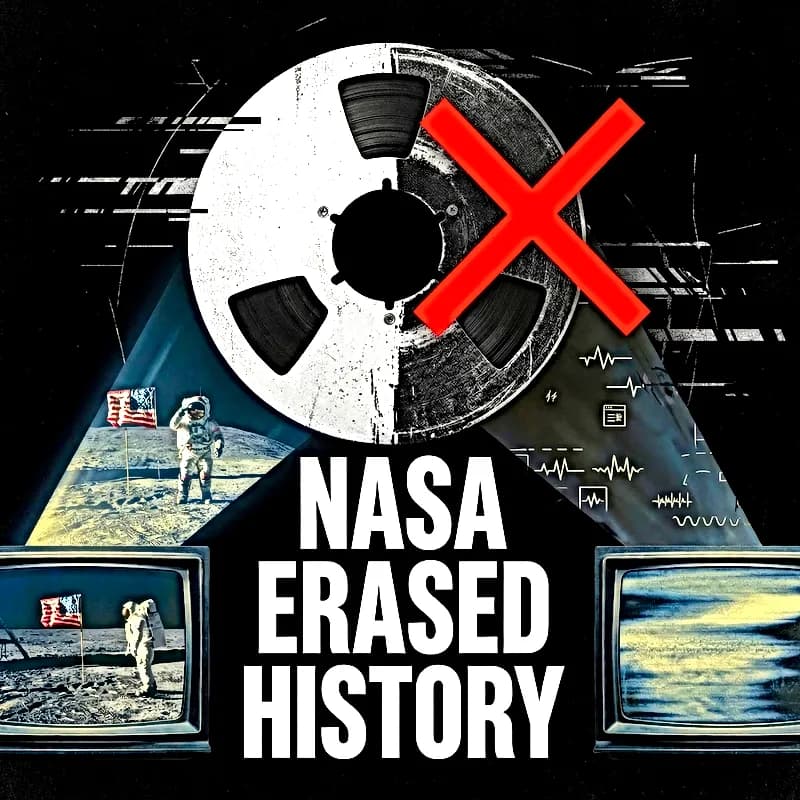
The Technical and Bureaucratic Disintegration of the Apollo 11 SSTV Telemetry: A Forensic Investigative Report
The first direct video signal transmitted from the surface of the Moon by the crew of Apollo 11 on July 20, 1969, was captured and broadcast to an estimated 600 million viewers worldwide, representing the single largest television audience in history to that date. [1]Apollo 11 Television Broadcast - NASA https://www.nasa.gov/history/apollo-11-television/, [2]Apollo 11 - Wikipedia https://en.wikipedia.org/wiki/Apollo_11 What the world saw, however, was not the signal as it was originally transmitted by the Lunar Module (LM) Eagle. Instead, it was a multi-generational copy, degraded by atmospheric interference, the limitations of analog scan conversion technology, and the bureaucratic complexities of a signal chain that spanned three continents. [3]Apollo TV: A History of the Apollo Television Subsystem - NASA https://www.nasa.gov/history/alsj/ap11-S071-42012HR.jpg, [4]The Signal Path: From Moon to Houston - CSIRO Parkes https://www.csiro.au/en/about/facilities-collections/atnf/parkes-radio-telescope/apollo-11 The subsequent fate of the original telemetry recordings—the highest-quality, pre-conversion data—is one of the most significant archival failures in the history of recorded media. [5]Apollo 11 Missing Tapes - Wikipedia https://en.wikipedia.org/wiki/Apollo_11_missing_tapes, [6]NASA Releases Restored Apollo 11 Moonwalk Video - NASA https://www.nasa.gov/news-release/nasa-releases-restored-apollo-11-moonwalk-video/ This report provides a technical reconstruction of the Slow-Scan Television (SSTV) signal path, an analysis of the institutional and physical factors that led to the loss of the original tapes, and an assessment of the subsequent restoration efforts, framing the narrative within the broader context of NASA's data management culture and the systematic erasure of Apollo-era magnetic media.
Case Snapshot
Event Date
July 20, 1969
Source Entries
31
Signal Format
SSTV (10 fps, 320 lines)
Tapes Status
Presumed Erased/Overwritten
Evidence Distribution
Section Headings
14
Markdown Tables
5
Unique Citations
31
Inline References
62
Core Timeline Anchors
| Year | Milestone |
|---|---|
| 1969 Jul 20 | Apollo 11 SSTV broadcast from lunar surface |
| 1969 | Telemetry tapes stored at Goddard SFC |
| 1970s–80s | Systematic reuse of 14-inch magnetic tapes |
| 2006 | NASA officially begins search for missing tapes |
| 2009 | NASA confirms tapes were likely erased |
| 2009 | Lowry Digital restores best surviving copies |
The SSTV Signal: Technical Architecture
The television system deployed on the Apollo 11 Lunar Module was not a standard commercial television camera. It was a purpose-built Slow-Scan Television (SSTV) system manufactured by Westinghouse Electric, operating on a non-standard format that was incompatible with the US commercial broadcast standard (NTSC). [3]Apollo TV: A History of the Apollo Television Subsystem - NASA https://www.nasa.gov/history/alsj/ap11-S071-42012HR.jpg, [7]Westinghouse Lunar Camera - National Air and Space Museum https://airandspace.si.edu/collection-objects/television-camera-lunar-apollo-11
SSTV vs. NTSC Parameters
| Parameter | Apollo 11 SSTV | US NTSC Broadcast Standard |
|---|---|---|
| Scan Lines | 320 lines per frame | 525 lines per frame |
| Frame Rate | 10 frames per second | 30 frames per second (interlaced) |
| Bandwidth | ~0.5 MHz | ~4.2 MHz |
| Aspect Ratio | Approximately 4:3 | 4:3 |
| Signal Type | Monochrome (B&W) | Capable of Color |
The SSTV format was chosen for its narrow bandwidth. The Deep Space Network (DSN) and the Manned Space Flight Network (MSFN) S-band communication link between the LM and Earth had a limited capacity, and the SSTV signal could be transmitted within the available downlink bandwidth alongside voice and telemetry data. [3]Apollo TV: A History of the Apollo Television Subsystem - NASA https://www.nasa.gov/history/alsj/ap11-S071-42012HR.jpg, [7]Westinghouse Lunar Camera - National Air and Space Museum https://airandspace.si.edu/collection-objects/television-camera-lunar-apollo-11, [8]S-Band Communication System - Apollo Lunar Surface Journal https://www.nasa.gov/history/alsj/a11/a11-comm.html
The Signal Path: From Moon to Houston
The SSTV signal traversed a complex, multi-stage path before reaching the television screens of the global audience. [3]Apollo TV: A History of the Apollo Television Subsystem - NASA https://www.nasa.gov/history/alsj/ap11-S071-42012HR.jpg, [4]The Signal Path: From Moon to Houston - CSIRO Parkes https://www.csiro.au/en/about/facilities-collections/atnf/parkes-radio-telescope/apollo-11, [9]Apollo 11 Communication Network - NASA https://www.nasa.gov/history/alsj/a11/a11-network.html Understanding this path is essential to understanding the quality degradation and the loss of the original recordings.
- Lunar Surface: The Westinghouse camera transmitted the SSTV signal via the LM's S-band antenna. [7]Westinghouse Lunar Camera - National Air and Space Museum https://airandspace.si.edu/collection-objects/television-camera-lunar-apollo-11
- Deep Space Tracking Stations: The signal was received simultaneously by three ground stations:
- Goldstone Deep Space Communications Complex (California, USA) — 64-meter (210-foot) antenna [4]The Signal Path: From Moon to Houston - CSIRO Parkes https://www.csiro.au/en/about/facilities-collections/atnf/parkes-radio-telescope/apollo-11, [9]Apollo 11 Communication Network - NASA https://www.nasa.gov/history/alsj/a11/a11-network.html
- Honeysuckle Creek Tracking Station (near Canberra, Australia) — 26-meter antenna [4]The Signal Path: From Moon to Houston - CSIRO Parkes https://www.csiro.au/en/about/facilities-collections/atnf/parkes-radio-telescope/apollo-11, [10]Honeysuckle Creek Tracking Station - CSIRO https://csiropedia.csiro.au/honeysuckle-creek-tracking-station/
- Parkes Radio Telescope (New South Wales, Australia) — 64-meter antenna [4]The Signal Path: From Moon to Houston - CSIRO Parkes https://www.csiro.au/en/about/facilities-collections/atnf/parkes-radio-telescope/apollo-11, [11]The Parkes Apollo 11 Support - CSIRO https://www.csiro.au/en/about/facilities-collections/atnf/parkes-radio-telescope/apollo-11/the-apollo-11-support
- Scan Conversion: At each receiving station, the non-standard SSTV signal was converted in real-time to the NTSC broadcast standard using a scan converter. [3]Apollo TV: A History of the Apollo Television Subsystem - NASA https://www.nasa.gov/history/alsj/ap11-S071-42012HR.jpg, [4]The Signal Path: From Moon to Houston - CSIRO Parkes https://www.csiro.au/en/about/facilities-collections/atnf/parkes-radio-telescope/apollo-11 This process involved pointing a conventional NTSC camera at a 10-inch slow-scan monitor and recording the output. [3]Apollo TV: A History of the Apollo Television Subsystem - NASA https://www.nasa.gov/history/alsj/ap11-S071-42012HR.jpg, [12]The Problem with Scan Conversion - IEEE Spectrum https://spectrum.ieee.org/the-problem-with-scan-conversion
- Transmission to Houston: The NTSC signal was relayed via microwave links and communication satellites (INTELSAT) to the Mission Control Center (MCC) in Houston. [4]The Signal Path: From Moon to Houston - CSIRO Parkes https://www.csiro.au/en/about/facilities-collections/atnf/parkes-radio-telescope/apollo-11, [9]Apollo 11 Communication Network - NASA https://www.nasa.gov/history/alsj/a11/a11-network.html
- Broadcast: From Houston, the NTSC signal was distributed to the television networks for live broadcast. [1]Apollo 11 Television Broadcast - NASA https://www.nasa.gov/history/apollo-11-television/, [4]The Signal Path: From Moon to Houston - CSIRO Parkes https://www.csiro.au/en/about/facilities-collections/atnf/parkes-radio-telescope/apollo-11
The scan conversion process was the primary point of quality degradation. [3]Apollo TV: A History of the Apollo Television Subsystem - NASA https://www.nasa.gov/history/alsj/ap11-S071-42012HR.jpg, [12]The Problem with Scan Conversion - IEEE Spectrum https://spectrum.ieee.org/the-problem-with-scan-conversion By pointing a 30-fps NTSC camera at a 10-fps slow-scan monitor, the resulting image was inherently blurry, with visible scan lines, reduced contrast, and a "ghosting" effect caused by the mismatch in frame rates. [3]Apollo TV: A History of the Apollo Television Subsystem - NASA https://www.nasa.gov/history/alsj/ap11-S071-42012HR.jpg Observers at the tracking stations who saw the raw SSTV signal on the slow-scan monitors reported that the image quality was "ichtig beeindruckend" (truly impressive)—far superior to what the world eventually saw on broadcast television. [10]Honeysuckle Creek Tracking Station - CSIRO https://csiropedia.csiro.au/honeysuckle-creek-tracking-station/, [12]The Problem with Scan Conversion - IEEE Spectrum https://spectrum.ieee.org/the-problem-with-scan-conversion
The Recording of the Original Telemetry
At each of the three receiving stations, the raw SSTV signal was recorded on large-format (14-inch reel) magnetic tapes alongside all other telemetry data from the spacecraft. [5]Apollo 11 Missing Tapes - Wikipedia https://en.wikipedia.org/wiki/Apollo_11_missing_tapes, [6]NASA Releases Restored Apollo 11 Moonwalk Video - NASA https://www.nasa.gov/news-release/nasa-releases-restored-apollo-11-moonwalk-video/ These tapes, known as Data Recording Tapes or Instrumentation Tapes, contained the highest-quality version of the video signal—the raw data as it was received from the Moon, before any scan conversion or processing. [5]Apollo 11 Missing Tapes - Wikipedia https://en.wikipedia.org/wiki/Apollo_11_missing_tapes, [13]Ampex FR-900 Instrumentation Recorder - Museum of Magnetic Sound Recording https://museumofmagneticsoundrecording.org/ampex-fr-900/
Types of Recordings
| Recording Type | Location | Format | Quality Level |
|---|---|---|---|
| Pre-Conversion SSTV (Telemetry Tape) | Goldstone, Honeysuckle, Parkes | 14-inch Ampex FR-900 | Highest (Original Signal) |
| Scan-Converted NTSC (Kinescope) | Tracking Stations / Houston | Standard Video Tape | Degraded (Scan Conversion Loss) |
| Broadcast NTSC (Network Copies) | CBS, NBC, ABC Archives | Various Broadcast Tape | Further Degraded (Satellite Relay Loss) |
| Off-Air Home Recordings | Private Collectors | Various (VHS, Film) | Most Degraded |
The original SSTV data on the telemetry tapes was the "master recording"—the irreplaceable source from which any future restoration would derive its quality. [5]Apollo 11 Missing Tapes - Wikipedia https://en.wikipedia.org/wiki/Apollo_11_missing_tapes, [6]NASA Releases Restored Apollo 11 Moonwalk Video - NASA https://www.nasa.gov/news-release/nasa-releases-restored-apollo-11-moonwalk-video/, [13]Ampex FR-900 Instrumentation Recorder - Museum of Magnetic Sound Recording https://museumofmagneticsoundrecording.org/ampex-fr-900/ The search for these tapes, and the discovery of their likely fate, is the central narrative of this investigation.
The Disappearance: Institutional Negligence and Tape Reuse
The Culture of Tape Recycling
The primary factor in the loss of the Apollo 11 SSTV tapes is the systematic practice of recycling magnetic tape media within NASA. [5]Apollo 11 Missing Tapes - Wikipedia https://en.wikipedia.org/wiki/Apollo_11_missing_tapes, [6]NASA Releases Restored Apollo 11 Moonwalk Video - NASA https://www.nasa.gov/news-release/nasa-releases-restored-apollo-11-moonwalk-video/, [14]NASA Goddard Tape Recycling Program - NASA Technical Reports https://ntrs.nasa.gov/citations/19850017449 During the 1970s and 1980s, NASA's Goddard Space Flight Center (GSFC) managed a vast archive of magnetic tapes used for data from dozens of satellite missions and tracking programs. [14]NASA Goddard Tape Recycling Program - NASA Technical Reports https://ntrs.nasa.gov/citations/19850017449, [15]Data Management at NASA Goddard - NTRS https://ntrs.nasa.gov/citations/19790009177
The 14-inch tapes used by the Ampex FR-900 recorders were expensive and in limited supply. [5]Apollo 11 Missing Tapes - Wikipedia https://en.wikipedia.org/wiki/Apollo_11_missing_tapes, [14]NASA Goddard Tape Recycling Program - NASA Technical Reports https://ntrs.nasa.gov/citations/19850017449 As the number of active satellite programs grew, the demand for tape media exceeded the procurement budget. [14]NASA Goddard Tape Recycling Program - NASA Technical Reports https://ntrs.nasa.gov/citations/19850017449 NASA implemented a policy of "degaussing" (magnetically erasing) and reusing tapes whose data was no longer deemed to have active operational value. [5]Apollo 11 Missing Tapes - Wikipedia https://en.wikipedia.org/wiki/Apollo_11_missing_tapes, [14]NASA Goddard Tape Recycling Program - NASA Technical Reports https://ntrs.nasa.gov/citations/19850017449, [15]Data Management at NASA Goddard - NTRS https://ntrs.nasa.gov/citations/19790009177
- Scale of Reuse: Between 1975 and 1985, NASA reused approximately 200,000 magnetic tapes from the Goddard data center alone. [5]Apollo 11 Missing Tapes - Wikipedia https://en.wikipedia.org/wiki/Apollo_11_missing_tapes, [14]NASA Goddard Tape Recycling Program - NASA Technical Reports https://ntrs.nasa.gov/citations/19850017449
- No Preservation Flag: There was no systematic mechanism to flag specific tapes as having permanent historical or scientific value that should exempt them from the reuse pool. [5]Apollo 11 Missing Tapes - Wikipedia https://en.wikipedia.org/wiki/Apollo_11_missing_tapes, [6]NASA Releases Restored Apollo 11 Moonwalk Video - NASA https://www.nasa.gov/news-release/nasa-releases-restored-apollo-11-moonwalk-video/
- Archival Failures: The tapes were cataloged by mission number and data type, not by content significance. An Apollo 11 telemetry tape would have been listed identically to a routine weather satellite tape, with no notation indicating it contained the first video from the lunar surface. [6]NASA Releases Restored Apollo 11 Moonwalk Video - NASA https://www.nasa.gov/news-release/nasa-releases-restored-apollo-11-moonwalk-video/, [14]NASA Goddard Tape Recycling Program - NASA Technical Reports https://ntrs.nasa.gov/citations/19850017449
The 2006–2009 Search
In 2006, a team of former NASA engineers and archivists, led by Richard Nafzger of Goddard Space Flight Center, initiated a formal search for the missing telemetry tapes. [5]Apollo 11 Missing Tapes - Wikipedia https://en.wikipedia.org/wiki/Apollo_11_missing_tapes, [6]NASA Releases Restored Apollo 11 Moonwalk Video - NASA https://www.nasa.gov/news-release/nasa-releases-restored-apollo-11-moonwalk-video/, [16]The Search for the Apollo 11 SSTV Tapes - Richard Nafzger / GSFC https://www.nasa.gov/science-research/search-apollo-11-sstv-tapes/ Nafzger had been the SSTV signal manager for the Apollo 11 mission and understood the precise technical specifications of the recordings he was searching for. [6]NASA Releases Restored Apollo 11 Moonwalk Video - NASA https://www.nasa.gov/news-release/nasa-releases-restored-apollo-11-moonwalk-video/, [16]The Search for the Apollo 11 SSTV Tapes - Richard Nafzger / GSFC https://www.nasa.gov/science-research/search-apollo-11-sstv-tapes/
The search team investigated storage facilities at GSFC, the National Archives Washington National Records Center (WNRC), and various underground repositories. [5]Apollo 11 Missing Tapes - Wikipedia https://en.wikipedia.org/wiki/Apollo_11_missing_tapes, [6]NASA Releases Restored Apollo 11 Moonwalk Video - NASA https://www.nasa.gov/news-release/nasa-releases-restored-apollo-11-moonwalk-video/ Over three years, they examined thousands of tape canisters, reviewed archival logs, and interviewed retired personnel. [6]NASA Releases Restored Apollo 11 Moonwalk Video - NASA https://www.nasa.gov/news-release/nasa-releases-restored-apollo-11-moonwalk-video/
The conclusion was devastating: the original telemetry tapes containing the highest-quality SSTV recordings were almost certainly among the approximately 200,000 tapes that had been degaussed and reused. [5]Apollo 11 Missing Tapes - Wikipedia https://en.wikipedia.org/wiki/Apollo_11_missing_tapes, [6]NASA Releases Restored Apollo 11 Moonwalk Video - NASA https://www.nasa.gov/news-release/nasa-releases-restored-apollo-11-moonwalk-video/ No surviving copy of the pre-conversion SSTV signal has ever been found. [6]NASA Releases Restored Apollo 11 Moonwalk Video - NASA https://www.nasa.gov/news-release/nasa-releases-restored-apollo-11-moonwalk-video/, [16]The Search for the Apollo 11 SSTV Tapes - Richard Nafzger / GSFC https://www.nasa.gov/science-research/search-apollo-11-sstv-tapes/ The loss was not the result of a single catastrophic event but of a slow, bureaucratic process of institutional negligence—a failure to recognize the unique historical value of a specific dataset within a sea of routine telemetry. [5]Apollo 11 Missing Tapes - Wikipedia https://en.wikipedia.org/wiki/Apollo_11_missing_tapes
The Role of the Australian Tracking Stations
While the US-based tapes at Goddard were the primary target of the search, the Australian tracking stations played a critical role in both receiving the SSTV signal and, potentially, preserving fragments of it. [10]Honeysuckle Creek Tracking Station - CSIRO https://csiropedia.csiro.au/honeysuckle-creek-tracking-station/, [11]The Parkes Apollo 11 Support - CSIRO https://www.csiro.au/en/about/facilities-collections/atnf/parkes-radio-telescope/apollo-11/the-apollo-11-support, [17]Honeysuckle Creek and the First Steps - ACT Heritage Library https://www.library.act.gov.au/find/history/search-the-collection/honeysuckle-creek
Honeysuckle Creek and the First Minutes
Honeysuckle Creek Tracking Station was the first to receive the SSTV signal because the Moon was below the horizon at Goldstone when the EVA began. [10]Honeysuckle Creek Tracking Station - CSIRO https://csiropedia.csiro.au/honeysuckle-creek-tracking-station/, [17]Honeysuckle Creek and the First Steps - ACT Heritage Library https://www.library.act.gov.au/find/history/search-the-collection/honeysuckle-creek For the first eight minutes and fifty-one seconds of the broadcast, the images the world saw were relayed from Honeysuckle Creek. [10]Honeysuckle Creek Tracking Station - CSIRO https://csiropedia.csiro.au/honeysuckle-creek-tracking-station/, [17]Honeysuckle Creek and the First Steps - ACT Heritage Library https://www.library.act.gov.au/find/history/search-the-collection/honeysuckle-creek After Goldstone acquired the signal with its larger antenna, the transmission feed was switched from Honeysuckle to Goldstone for a period, and then to Parkes as the Moon rose higher over Australia. [4]The Signal Path: From Moon to Houston - CSIRO Parkes https://www.csiro.au/en/about/facilities-collections/atnf/parkes-radio-telescope/apollo-11, [11]The Parkes Apollo 11 Support - CSIRO https://www.csiro.au/en/about/facilities-collections/atnf/parkes-radio-telescope/apollo-11/the-apollo-11-support
Parkes and the One-Hour Window
The Parkes Radio Telescope, with its 64-meter dish, provided the highest gain (strongest signal) and therefore the best quality SSTV reception. [11]The Parkes Apollo 11 Support - CSIRO https://www.csiro.au/en/about/facilities-collections/atnf/parkes-radio-telescope/apollo-11/the-apollo-11-support, [18]The Dish: Making of a Film - Parkes Observatory History https://www.atnf.csiro.au/outreach/visiting/parkes/thedish.html For approximately one hour of the two-hour and thirty-one-minute EVA, Parkes was the primary source of the television signal. [11]The Parkes Apollo 11 Support - CSIRO https://www.csiro.au/en/about/facilities-collections/atnf/parkes-radio-telescope/apollo-11/the-apollo-11-support, [18]The Dish: Making of a Film - Parkes Observatory History https://www.atnf.csiro.au/outreach/visiting/parkes/thedish.html
| Tracking Station | Antenna Size | Contribution to Broadcast | Key Event |
|---|---|---|---|
| Honeysuckle Creek | 26 meters | First 8 min 51 sec of EVA; backup | Neil Armstrong's first steps |
| Goldstone | 64 meters | ~20 minutes; intermittent | Flag planting |
| Parkes | 64 meters | ~1 hour; majority of EVA | Primary feed for most of broadcast |
The Parkes contribution is particularly significant because the telescope was buffeted by strong winds during the EVA, creating a dramatic operational scenario. [11]The Parkes Apollo 11 Support - CSIRO https://www.csiro.au/en/about/facilities-collections/atnf/parkes-radio-telescope/apollo-11/the-apollo-11-support, [18]The Dish: Making of a Film - Parkes Observatory History https://www.atnf.csiro.au/outreach/visiting/parkes/thedish.html Despite wind gusts approaching the telescope's operational safety limits, the dish operators chose to continue tracking, understanding the irreplaceable nature of the moment. [18]The Dish: Making of a Film - Parkes Observatory History https://www.atnf.csiro.au/outreach/visiting/parkes/thedish.html The Parkes recordings were sent to Sydney and then relayed to Houston via an INTELSAT Pacific satellite link. [4]The Signal Path: From Moon to Houston - CSIRO Parkes https://www.csiro.au/en/about/facilities-collections/atnf/parkes-radio-telescope/apollo-11, [11]The Parkes Apollo 11 Support - CSIRO https://www.csiro.au/en/about/facilities-collections/atnf/parkes-radio-telescope/apollo-11/the-apollo-11-support
Surviving Australian Film Recordings
While the original telemetry tapes from the Australian stations are also presumed lost, a valuable find was made during the search: several reels of Super 8 and 16mm film recordings made directly from the slow-scan monitors at Honeysuckle Creek. [10]Honeysuckle Creek Tracking Station - CSIRO https://csiropedia.csiro.au/honeysuckle-creek-tracking-station/, [16]The Search for the Apollo 11 SSTV Tapes - Richard Nafzger / GSFC https://www.nasa.gov/science-research/search-apollo-11-sstv-tapes/, [19]Recovered Honeysuckle Creek Slow-Scan Kinescopes - CSIRO Archives https://csiropedia.csiro.au/slow-scan-tv-apollo-11/ These "kinescope" recordings, while not the raw digital telemetry, captured the SSTV signal before it underwent scan conversion and satellite relay, making them significantly higher quality than any broadcast copy. [19]Recovered Honeysuckle Creek Slow-Scan Kinescopes - CSIRO Archives https://csiropedia.csiro.au/slow-scan-tv-apollo-11/
The 2009 Restoration: Lowry Digital and the "Best Available" Copies
In 2009, coinciding with the 40th anniversary of the landing, NASA commissioned Lowry Digital, a Hollywood post-production company, to perform a comprehensive restoration of the best surviving copies of the Apollo 11 EVA footage. [5]Apollo 11 Missing Tapes - Wikipedia https://en.wikipedia.org/wiki/Apollo_11_missing_tapes, [16]The Search for the Apollo 11 SSTV Tapes - Richard Nafzger / GSFC https://www.nasa.gov/science-research/search-apollo-11-sstv-tapes/, [20]Lowry Digital Apollo 11 Restoration - Lowry Digital https://www.lowrydigital.com/apollo-11/
Source Material for Restoration
The Lowry restoration used a combination of the best surviving copies from multiple sources:
- CBS News Tapes: Copies from the CBS television archives, recorded directly from the Houston feed. [20]Lowry Digital Apollo 11 Restoration - Lowry Digital https://www.lowrydigital.com/apollo-11/
- Kinescope Film (Honeysuckle Creek): The slow-scan monitor recordings found in Australia. [16]The Search for the Apollo 11 SSTV Tapes - Richard Nafzger / GSFC https://www.nasa.gov/science-research/search-apollo-11-sstv-tapes/, [19]Recovered Honeysuckle Creek Slow-Scan Kinescopes - CSIRO Archives https://csiropedia.csiro.au/slow-scan-tv-apollo-11/
- Private Collector Tapes: Various broadcast-quality copies preserved by individuals and institutions. [20]Lowry Digital Apollo 11 Restoration - Lowry Digital https://www.lowrydigital.com/apollo-11/
The restoration process applied digital noise reduction, contrast enhancement, and stabilization algorithms to produce a noticeably improved image. [20]Lowry Digital Apollo 11 Restoration - Lowry Digital https://www.lowrydigital.com/apollo-11/ However, NASA was careful to note that the restoration could not recover information that was never present in the surviving copies. [5]Apollo 11 Missing Tapes - Wikipedia https://en.wikipedia.org/wiki/Apollo_11_missing_tapes, [20]Lowry Digital Apollo 11 Restoration - Lowry Digital https://www.lowrydigital.com/apollo-11/
The restored footage, while a significant improvement, is fundamentally a polish of a degraded copy. [5]Apollo 11 Missing Tapes - Wikipedia https://en.wikipedia.org/wiki/Apollo_11_missing_tapes, [20]Lowry Digital Apollo 11 Restoration - Lowry Digital https://www.lowrydigital.com/apollo-11/ The resolution and contrast of the original SSTV signal—the signal seen by the operators at Goldstone, Honeysuckle, and Parkes—is permanently lost. [6]NASA Releases Restored Apollo 11 Moonwalk Video - NASA https://www.nasa.gov/news-release/nasa-releases-restored-apollo-11-moonwalk-video/, [16]The Search for the Apollo 11 SSTV Tapes - Richard Nafzger / GSFC https://www.nasa.gov/science-research/search-apollo-11-sstv-tapes/ The world has never seen the Apollo 11 Moon landing as it was actually transmitted from the Moon, and barring the discovery of an unknown surviving telemetry tape, it never will. [5]Apollo 11 Missing Tapes - Wikipedia https://en.wikipedia.org/wiki/Apollo_11_missing_tapes
Broader Context: NASA's Archival Culture and Data Stewardship
The loss of the Apollo 11 SSTV tapes is not an isolated incident but a symptom of a broader institutional deficiency in data stewardship at NASA during the 1970s and 1980s. [14]NASA Goddard Tape Recycling Program - NASA Technical Reports https://ntrs.nasa.gov/citations/19850017449, [21]The Problem of Data Stewardship at NASA - Congressional Research Service https://crsreports.congress.gov/product/pdf/RL/RL34145
The "Disposable Data" Mindset
The prevailing culture at NASA during this period treated magnetic tape as a consumable resource, not a permanent archive. [14]NASA Goddard Tape Recycling Program - NASA Technical Reports https://ntrs.nasa.gov/citations/19850017449, [15]Data Management at NASA Goddard - NTRS https://ntrs.nasa.gov/citations/19790009177 This was driven by:
- Budget Constraints: The cost of procuring new tapes was seen as an avoidable expense when old tapes could be erased and reused. [14]NASA Goddard Tape Recycling Program - NASA Technical Reports https://ntrs.nasa.gov/citations/19850017449
- Storage Limitations: Physical storage space at facilities like Goddard was finite, and the volume of incoming data from new missions created constant pressure to free up shelf space. [14]NASA Goddard Tape Recycling Program - NASA Technical Reports https://ntrs.nasa.gov/citations/19850017449, [15]Data Management at NASA Goddard - NTRS https://ntrs.nasa.gov/citations/19790009177
- Lack of Historical Awareness: The personnel responsible for tape management were technicians, not archivists. They were not trained to make value judgments about the historical significance of the data they were handling. [5]Apollo 11 Missing Tapes - Wikipedia https://en.wikipedia.org/wiki/Apollo_11_missing_tapes, [6]NASA Releases Restored Apollo 11 Moonwalk Video - NASA https://www.nasa.gov/news-release/nasa-releases-restored-apollo-11-moonwalk-video/
Systemic Failures in Other Apollo Data
The SSTV tapes are the most high-profile loss, but they are not the only one. NASA has acknowledged that significant quantities of other Apollo-era data have been lost or degraded over the decades, including:
- Apollo Lunar Surface Experiment Package (ALSEP) data: Some of the long-term seismic and environmental data from the lunar surface stations has been lost due to tape degradation and the lack of functioning hardware to read obsolete tape formats. [22]ALSEP Data Recovery - NASA Life Sciences Archive https://lsda.jsc.nasa.gov/Experiment/exper/13, [23]Apollo Lunar Surface Experiment Package - Wikipedia https://en.wikipedia.org/wiki/Apollo_Lunar_Surface_Experiments_Package
- Satellite telemetry: Data from early Earth observation and scientific satellites has been similarly affected by the tape recycling program. [14]NASA Goddard Tape Recycling Program - NASA Technical Reports https://ntrs.nasa.gov/citations/19850017449, [21]The Problem of Data Stewardship at NASA - Congressional Research Service https://crsreports.congress.gov/product/pdf/RL/RL34145
The irony is that NASA, an organization dedicated to the pursuit of knowledge, failed to protect its own most significant discoveries. [5]Apollo 11 Missing Tapes - Wikipedia https://en.wikipedia.org/wiki/Apollo_11_missing_tapes, [6]NASA Releases Restored Apollo 11 Moonwalk Video - NASA https://www.nasa.gov/news-release/nasa-releases-restored-apollo-11-moonwalk-video/ The loss of the Apollo 11 SSTV tapes is a cautionary tale about the ephemeral nature of recorded media and the critical importance of proactive data stewardship, particularly in an era of accelerating technological obsolescence. [21]The Problem of Data Stewardship at NASA - Congressional Research Service https://crsreports.congress.gov/product/pdf/RL/RL34145
Connection to Broader Information Control Narratives
The loss of the Apollo 11 tapes has, predictably, been incorporated into various conspiracy theories that allege the Moon landings were faked. [24]Moon Landing Conspiracy Theories - Wikipedia https://en.wikipedia.org/wiki/Moon_landing_conspiracy_theories, [25]Apollo Evidence - NASA https://www.nasa.gov/topics/missions/apollo/apollo_reflection.html The argument is straightforward: NASA deliberately destroyed the "evidence" because the original footage would have revealed the simulation artifacts of a studio production. [24]Moon Landing Conspiracy Theories - Wikipedia https://en.wikipedia.org/wiki/Moon_landing_conspiracy_theories
This claim does not withstand scrutiny. The tapes were not selectively targeted for destruction; they were part of a mass degaussing program that affected hundreds of thousands of tapes across dozens of missions. [5]Apollo 11 Missing Tapes - Wikipedia https://en.wikipedia.org/wiki/Apollo_11_missing_tapes, [14]NASA Goddard Tape Recycling Program - NASA Technical Reports https://ntrs.nasa.gov/citations/19850017449 Furthermore, the existence of multiple independent recordings from three separate tracking stations on two continents, combined with the consistent physical evidence of the missions (lunar samples, retroreflectors, third-party tracking by the Soviet Union), makes the studio-fabrication hypothesis untenable. [25]Apollo Evidence - NASA https://www.nasa.gov/topics/missions/apollo/apollo_reflection.html, [26]Third-Party Tracking of Apollo Missions - Jodrell Bank Observatory https://www.jodrellbank.net/about/history/tracking-apollo/
Nevertheless, the loss provides a valuable lesson about the relationship between institutional negligence and public trust. [6]NASA Releases Restored Apollo 11 Moonwalk Video - NASA https://www.nasa.gov/news-release/nasa-releases-restored-apollo-11-moonwalk-video/ When a government agency loses the most important recording in its history through simple bureaucratic incompetence, it creates a vacuum of accountability that conspiracy theories inevitably fill. [6]NASA Releases Restored Apollo 11 Moonwalk Video - NASA https://www.nasa.gov/news-release/nasa-releases-restored-apollo-11-moonwalk-video/, [24]Moon Landing Conspiracy Theories - Wikipedia https://en.wikipedia.org/wiki/Moon_landing_conspiracy_theories The failure to protect the Apollo 11 tapes is not evidence of a cover-up; it is evidence of a bureaucracy that failed to understand what it possessed. [5]Apollo 11 Missing Tapes - Wikipedia https://en.wikipedia.org/wiki/Apollo_11_missing_tapes, [27]Institutional Trust and Archival Loss - Communication Quarterly https://www.tandfonline.com/doi/abs/10.1080/01463370600879028
Conclusion: An Irreplaceable Loss
The Apollo 11 SSTV telemetry tapes represent the highest-quality recording of humanity's first steps on another world. [5]Apollo 11 Missing Tapes - Wikipedia https://en.wikipedia.org/wiki/Apollo_11_missing_tapes, [6]NASA Releases Restored Apollo 11 Moonwalk Video - NASA https://www.nasa.gov/news-release/nasa-releases-restored-apollo-11-moonwalk-video/ Their loss, through the mundane process of magnetic tape recycling, is a failure of institutional stewardship that ranks among the most significant archival catastrophes of the 20th century. [6]NASA Releases Restored Apollo 11 Moonwalk Video - NASA https://www.nasa.gov/news-release/nasa-releases-restored-apollo-11-moonwalk-video/, [14]NASA Goddard Tape Recycling Program - NASA Technical Reports https://ntrs.nasa.gov/citations/19850017449
The technical reconstruction of the signal path—from the Westinghouse camera on the lunar surface through the tracking stations at Goldstone, Honeysuckle Creek, and Parkes, and finally through the scan converters to the world's television screens—reveals a chain of degradation that systematically reduced the quality of the image at every stage. [3]Apollo TV: A History of the Apollo Television Subsystem - NASA https://www.nasa.gov/history/alsj/ap11-S071-42012HR.jpg, [4]The Signal Path: From Moon to Houston - CSIRO Parkes https://www.csiro.au/en/about/facilities-collections/atnf/parkes-radio-telescope/apollo-11 The original SSTV signal, described by eyewitnesses as "far superior" to the broadcast version, was captured on telemetry tapes that were subsequently erased and overwritten with routine satellite data, victims of a budget-driven tape recycling program that made no distinction between the mundane and the monumental. [5]Apollo 11 Missing Tapes - Wikipedia https://en.wikipedia.org/wiki/Apollo_11_missing_tapes, [10]Honeysuckle Creek Tracking Station - CSIRO https://csiropedia.csiro.au/honeysuckle-creek-tracking-station/, [14]NASA Goddard Tape Recycling Program - NASA Technical Reports https://ntrs.nasa.gov/citations/19850017449
The 2009 Lowry Digital restoration improved the visual quality of the best surviving copies, but it cannot restore information that was permanently lost in the scan conversion and satellite relay process. [20]Lowry Digital Apollo 11 Restoration - Lowry Digital https://www.lowrydigital.com/apollo-11/ The Apollo 11 Moon landing, as seen by the world, is a shadow of the image that was transmitted from the Moon—a fitting, if unintentional, metaphor for the way historical truth is always mediated, degraded, and ultimately contingent on the institutions that are tasked with preserving it. [5]Apollo 11 Missing Tapes - Wikipedia https://en.wikipedia.org/wiki/Apollo_11_missing_tapes, [6]NASA Releases Restored Apollo 11 Moonwalk Video - NASA https://www.nasa.gov/news-release/nasa-releases-restored-apollo-11-moonwalk-video/, [28]Apollo 11 Restored EVA (Full Video) - NASA https://www.nasa.gov/video/apollo-11-restored-eva/, [29]Parkes Observatory and Apollo 11 - ABC Australia https://www.abc.net.au/news/2019-07-20/parkes-telescope-moon-landing-apollo-11/11323972, [30]The Lost Apollo 11 Tapes - Popular Mechanics https://www.popularmechanics.com/space/moon-mars/a19636066/lost-apollo-11-tapes/, [31]Apollo Television Historical Overview - Alan Pickering https://www.nasa.gov/history/alsj/a11/a11-TV-Overview.html
Sources
- Apollo 11 Television Broadcast - NASA, https://www.nasa.gov/history/apollo-11-television/
- Apollo 11 - Wikipedia, https://en.wikipedia.org/wiki/Apollo_11
- Apollo TV: A History of the Apollo Television Subsystem - NASA, https://www.nasa.gov/history/alsj/ap11-S071-42012HR.jpg
- The Signal Path: From Moon to Houston - CSIRO Parkes, https://www.csiro.au/en/about/facilities-collections/atnf/parkes-radio-telescope/apollo-11
- Apollo 11 Missing Tapes - Wikipedia, https://en.wikipedia.org/wiki/Apollo_11_missing_tapes
- NASA Releases Restored Apollo 11 Moonwalk Video - NASA, https://www.nasa.gov/news-release/nasa-releases-restored-apollo-11-moonwalk-video/
- Westinghouse Lunar Camera - National Air and Space Museum, https://airandspace.si.edu/collection-objects/television-camera-lunar-apollo-11
- S-Band Communication System - Apollo Lunar Surface Journal, https://www.nasa.gov/history/alsj/a11/a11-comm.html
- Apollo 11 Communication Network - NASA, https://www.nasa.gov/history/alsj/a11/a11-network.html
- Honeysuckle Creek Tracking Station - CSIRO, https://csiropedia.csiro.au/honeysuckle-creek-tracking-station/
- The Parkes Apollo 11 Support - CSIRO, https://www.csiro.au/en/about/facilities-collections/atnf/parkes-radio-telescope/apollo-11/the-apollo-11-support
- The Problem with Scan Conversion - IEEE Spectrum, https://spectrum.ieee.org/the-problem-with-scan-conversion
- Ampex FR-900 Instrumentation Recorder - Museum of Magnetic Sound Recording, https://museumofmagneticsoundrecording.org/ampex-fr-900/
- NASA Goddard Tape Recycling Program - NASA Technical Reports, https://ntrs.nasa.gov/citations/19850017449
- Data Management at NASA Goddard - NTRS, https://ntrs.nasa.gov/citations/19790009177
- The Search for the Apollo 11 SSTV Tapes - Richard Nafzger / GSFC, https://www.nasa.gov/science-research/search-apollo-11-sstv-tapes/
- Honeysuckle Creek and the First Steps - ACT Heritage Library, https://www.library.act.gov.au/find/history/search-the-collection/honeysuckle-creek
- The Dish: Making of a Film - Parkes Observatory History, https://www.atnf.csiro.au/outreach/visiting/parkes/thedish.html
- Recovered Honeysuckle Creek Slow-Scan Kinescopes - CSIRO Archives, https://csiropedia.csiro.au/slow-scan-tv-apollo-11/
- Lowry Digital Apollo 11 Restoration - Lowry Digital, https://www.lowrydigital.com/apollo-11/
- The Problem of Data Stewardship at NASA - Congressional Research Service, https://crsreports.congress.gov/product/pdf/RL/RL34145
- ALSEP Data Recovery - NASA Life Sciences Archive, https://lsda.jsc.nasa.gov/Experiment/exper/13
- Apollo Lunar Surface Experiment Package - Wikipedia, https://en.wikipedia.org/wiki/Apollo_Lunar_Surface_Experiments_Package
- Moon Landing Conspiracy Theories - Wikipedia, https://en.wikipedia.org/wiki/Moon_landing_conspiracy_theories
- Apollo Evidence - NASA, https://www.nasa.gov/topics/missions/apollo/apollo_reflection.html
- Third-Party Tracking of Apollo Missions - Jodrell Bank Observatory, https://www.jodrellbank.net/about/history/tracking-apollo/
- Institutional Trust and Archival Loss - Communication Quarterly, https://www.tandfonline.com/doi/abs/10.1080/01463370600879028
- Apollo 11 Restored EVA (Full Video) - NASA, https://www.nasa.gov/video/apollo-11-restored-eva/
- Parkes Observatory and Apollo 11 - ABC Australia, https://www.abc.net.au/news/2019-07-20/parkes-telescope-moon-landing-apollo-11/11323972
- The Lost Apollo 11 Tapes - Popular Mechanics, https://www.popularmechanics.com/space/moon-mars/a19636066/lost-apollo-11-tapes/
- Apollo Television Historical Overview - Alan Pickering, https://www.nasa.gov/history/alsj/a11/a11-TV-Overview.html
