Strategic Competition in Cislunar Space: A Comparative Analysis of the Artemis Program and the International Lunar Research Station
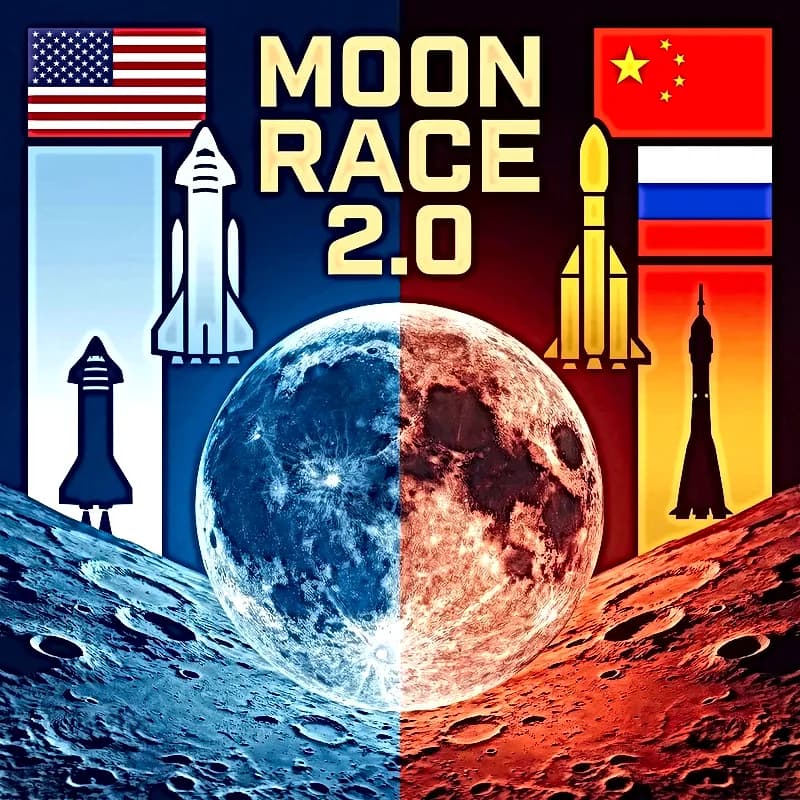
The 21st-century return to the Moon is defined not by the desire for scientific discovery, but by the imperatives of strategic competition. Two fundamentally distinct architectural and diplomatic systems—the US-led Artemis program and the Sino-Russian International Lunar Research Station (ILRS)—are now on parallel paths toward permanent lunar presence. [1]Artemis Overview - NASA Moon to Mars https://www.nasa.gov/specials/artemis/, [2]International Lunar Research Station - Wikipedia https://en.wikipedia.org/wiki/International_Lunar_Research_Station, [3]International Lunar Research Station Guide for Partnership - CNSA https://www.cnsa.gov.cn/english/n6465652/n6465653/c6812150/content.html This competition represents a contemporary extension of the Cold War space race, operating under the increasingly fragile framework of the 1967 Outer Space Treaty, and its outcome will determine the governance model for cislunar space for the remainder of the century. This report evaluates the investment structures, technology roadmaps, and diplomatic strategies of each program, identifying the critical intersections where cooperation has been supplanted by sovereign interests and emerging contests over lunar resources, particularly water ice at the South Pole. [4]NASA Fact Sheet: Artemis Campaign Overview https://www.nasa.gov/wp-content/uploads/2024/05/artemis-campaign-overview.pdf, [5]China's Space Dream - CSIS https://features.csis.org/ChinaSpaceDream/, [6]Lunar South Pole Resource Overview - LPI https://www.lpi.usra.edu/lunar/lunar-south-pole/
Case Snapshot
Programs Compared
Artemis vs. ILRS
Source Entries
37
Artemis Partners
56 countries
ILRS Partners
20+ countries
Evidence Distribution
Section Headings
14
Markdown Tables
6
Unique Citations
37
Inline References
76
Core Timeline Anchors
| Year | Milestone |
|---|---|
| 2017 | NASA authorized to pursue next crewed lunar mission |
| 2019 | Chang'e 4 lands on lunar far side |
| 2020 | Artemis Accords signed by 8 founding nations |
| 2023 | Chandrayaan-3 lands at South Pole |
| 2025 | 56 countries have signed Artemis Accords |
| 2028 | ILRS Phase 1 target completion |
Architectural Divergence of Cislunar Infrastructure
The competition between Artemis and the ILRS begins with fundamentally different approaches to the transportation problem at the heart of lunar exploration. The US has embraced a model of public-private partnership, while the Sino-Russian bloc relies on state-directed heavy industry for its launch vehicles and surface systems. [1]Artemis Overview - NASA Moon to Mars https://www.nasa.gov/specials/artemis/, [7]Space Launch System - Wikipedia https://en.wikipedia.org/wiki/Space_Launch_System, [8]Long March 10 - Wikipedia https://en.wikipedia.org/wiki/Long_March_10
The Artemis Architecture: SLS, Gateway, and Commercial Landers
The Artemis program employs a layered architecture that includes NASA's Space Launch System (SLS), the Orion Multi-Purpose Crew Vehicle (MPCV), the Lunar Gateway orbital station, and commercially developed Human Landing Systems (HLS) from SpaceX and Blue Origin. [1]Artemis Overview - NASA Moon to Mars https://www.nasa.gov/specials/artemis/, [9]Lunar Gateway - NASA https://www.nasa.gov/mission/gateway/
| Component | Function | Status (2025) |
|---|---|---|
| SLS Block 1B | Crew/cargo launch to TLI | In development; targeted for Artemis IV |
| Orion MPCV | Crew transit Earth-to-Gateway | Flight-proven (Artemis I, 2022) |
| Lunar Gateway | Cislunar orbital habitat and staging | PPE/HALO launch targeted 2028 |
| SpaceX Starship HLS | Crewed lunar landing (Artemis III/IV) | In development; demo landing pending |
| Blue Moon MK2 | Crewed lunar landing (Artemis V+) | Contract awarded May 2023 |
The Gateway is a critical differentiator. Unlike the ISS, it operates in a Near-Rectilinear Halo Orbit (NRHO) around the Moon, providing persistent access to the lunar South Pole while maintaining a stable communications link with Earth. [9]Lunar Gateway - NASA https://www.nasa.gov/mission/gateway/ It will serve as a staging point for landers and a hub for international science modules. [10]Gateway: International Deep Space Exploration Partnership - ESA https://www.esa.int/Science_Exploration/Human_and_Robotic_Exploration/Exploration/Gateway
The ILRS Architecture: CZ-10 and Autonomous Surface Stations
The Chinese approach, led by the China National Space Administration (CNSA), prioritizes autonomous surface operations over crewed orbital infrastructure. [3]International Lunar Research Station Guide for Partnership - CNSA https://www.cnsa.gov.cn/english/n6465652/n6465653/c6812150/content.html, [11]China's Crewed Lunar Program - Space News https://spacenews.com/chinas-crewed-lunar-program/ The ILRS is envisioned as a modular base at the lunar South Pole with both robotic and crewed capabilities, built in three phases. [2]International Lunar Research Station - Wikipedia https://en.wikipedia.org/wiki/International_Lunar_Research_Station, [3]International Lunar Research Station Guide for Partnership - CNSA https://www.cnsa.gov.cn/english/n6465652/n6465653/c6812150/content.html
| Component | Function | Status (2025) |
|---|---|---|
| Chang Zheng 10 (CZ-10) | Crew launch to lunar orbit | Maiden flight targeted 2027 |
| Mengzhou Capsule | Crew transit (3 astronauts) | In development |
| Lanyue Lander | Crewed lunar descent | In development |
| Chang'e 6 | Lunar far-side sample return | Completed June 2024 (Far side samples!) |
| Chang'e 7 | South Pole resource survey | Targeted 2026 |
Phase 1 of the ILRS (2028–2035) involves robotic deployment of a command center, energy station, communications hub, and scientific research station. [3]International Lunar Research Station Guide for Partnership - CNSA https://www.cnsa.gov.cn/english/n6465652/n6465653/c6812150/content.html, [12]ILRS Phase Implementation - CNSA Official Documents https://www.cnsa.gov.cn/english/n6465652/n6465653/c10268494/content.html Phase 2 involves crewed missions to expand the base, while Phase 3 envisions full autonomous operation with advanced technologies like space-based solar power and in-situ manufacturing. [3]International Lunar Research Station Guide for Partnership - CNSA https://www.cnsa.gov.cn/english/n6465652/n6465653/c6812150/content.html
Investment Structures and Financial Commitments
US Artemis Program Spending
The GAO has estimated that total Artemis spending by NASA will reach approximately $93 billion by 2025. [13]GAO Report on Artemis Costs - GAO https://www.gao.gov/products/gao-22-105856 This includes the development of SLS ($23.8 billion through FY2022), Orion ($21 billion), and the various HLS contracts. [14]NASA OIG: Artemis Status Report - NASA OIG https://oig.nasa.gov/docs/IG-22-003.pdf The SLS program has been subject to significant cost overruns, with the per-unit marginal cost estimated at $2.5 billion per launch. [15]SLS Marginal Cost Analysis - Ars Technica https://arstechnica.com/space/2022/03/nasa-inspector-general-says-sls-costs-are-unsustainable/
A significant portion of the US cost advantage lies in the fixed-price contracts awarded to commercial partners. SpaceX's initial HLS award was $2.89 billion, while Blue Origin's SLD contract was $3.4 billion—modest sums compared to the $23+ billion spent on SLS development. [16]SpaceX HLS Contract Award - NASA https://www.nasa.gov/news-release/as-artemis-moves-forward-nasa-picks-spacex-to-land-next-americans-on-moon/, [17]Blue Origin HLS Contract Award - NASA https://www.nasa.gov/news-release/nasa-selects-blue-origin-as-second-artemis-lunar-lander-provider/ This reflects a deliberate strategy to shift financial risk from the government to the private sector.
Chinese ILRS Program Investment
China's lunar spending is harder to quantify due to the opacity of its military-industrial budgets. However, CNSA's total budget is estimated at approximately $16 billion per year, a figure that includes all of its space activities, not just the lunar program. [18]CNSA Budget Estimates - The Space Review https://www.thespacereview.com/article/4559/1 The CZ-10 rocket and associated crewed systems have been estimated to cost approximately $15–20 billion in total development costs, a fraction of the SLS/Orion total. [11]China's Crewed Lunar Program - Space News https://spacenews.com/chinas-crewed-lunar-program/
| Financial Dimension | Artemis (US-led) | ILRS (Sino-Russian) |
|---|---|---|
| Estimated Total Investment (to 2028) | $93+ Billion | $30–40 Billion (Estimated) |
| Primary Funding Model | Public-Private Partnership | State-Directed Industry |
| Per-Launch Cost (Crew Vehicle) | ~$4.2B (SLS/Orion) | ~$1.5B (Estimated CZ-10) |
| Commercial Lander Costs | $2.89B (SpaceX) / $3.4B (Blue Origin) | Included in state budget |
Diplomatic Engagement and the "Accords vs. Agreement" Divide
The diplomatic competition between the two blocs is as significant as the technological race. The US leverages the Artemis Accords as a tool for building a coalition of like-minded nations, while China and Russia promote the ILRS through bilateral agreements and multilateral organizations. [19]Artemis Accords - State Department https://www.state.gov/artemis-accords/, [20]Russia-China Joint Lunar Statement https://www.roscosmos.ru/30569/, [21]China Inviting International Partners to ILRS - Space Policy Online https://spacepolicyonline.com/news/china-inviting-international-partners-to-international-lunar-research-station/
The Artemis Accords Coalition
As of late 2025, 56 nations have signed the Artemis Accords. [22]Artemis Accords Signatories - NASA https://www.nasa.gov/artemis-accords/ The signatories span all inhabited continents and include both established space powers (Japan, ESA member states, Canada) and emerging space nations (Rwanda, Nigeria, Colombia). [22]Artemis Accords Signatories - NASA https://www.nasa.gov/artemis-accords/ The Accords are non-binding but establish shared principles on:
- Section 10: Affirmation that resource extraction is permissible under the OST. [23]Artemis Accords Text - Section 10 https://www.nasa.gov/wp-content/uploads/2022/11/Artemis-Accords-signed-13Oct2020.pdf
- Section 11: Establishment of "safety zones" around operational sites. [24]Safety Zones Under the Artemis Accords - Secure World Foundation https://swfound.org/media/207548/swf-safety-zones-fact-sheet-2022.pdf
- Section 4: Commitment to open sharing of scientific data. [22]Artemis Accords Signatories - NASA https://www.nasa.gov/artemis-accords/
- Section 7: Interoperability standards for docking and communication. [22]Artemis Accords Signatories - NASA https://www.nasa.gov/artemis-accords/
The ILRS Partnership Network
China and Russia have recruited a smaller but growing number of partners for the ILRS, including Belarus, Pakistan, South Africa, Thailand, Turkey, Egypt, and several other nations. [25]ILRS Partnership Expansion - China Daily https://www.chinadaily.com.cn/a/202312/05/WS656e8d6aa31040ac0a5a0723.html In a significant development, Saudi Arabia's Moonsite Exploration project was initially cooperative with both programs before aligning more closely with the ILRS framework. [26]Saudi Arabia Moonsite Exploration - Arab News https://www.arabnews.com/node/2400876/saudi-arabia
The diplomatic strategy of the ILRS is to present an alternative to US-led space governance that does not require adherence to US-drafted principles. Rather than a single accords framework, China uses bilateral memoranda of understanding (MOUs) that can be tailored to each partner's capabilities and interests. [25]ILRS Partnership Expansion - China Daily https://www.chinadaily.com.cn/a/202312/05/WS656e8d6aa31040ac0a5a0723.html This flexibility may prove attractive to nations wary of US political influence over space activities.
Resource Competition at the Lunar South Pole
The convergence of both programs on the lunar South Pole is driven by a single resource: water ice. [6]Lunar South Pole Resource Overview - LPI https://www.lpi.usra.edu/lunar/lunar-south-pole/, [27]Water on the Moon - NASA Science https://science.nasa.gov/moon/water-on-the-moon/ Permanently Shadowed Regions (PSRs) within craters like Shackleton, Haworth, and Cabeus are believed to contain hundreds of millions of metric tons of water ice deposited over billions of years. [6]Lunar South Pole Resource Overview - LPI https://www.lpi.usra.edu/lunar/lunar-south-pole/
Strategic Importance of Water Ice
Water ice is not merely a scientific curiosity; it is a strategic enabler:
- Life Support: Water can be electrolyzed into oxygen for breathing and hydrogen for fuel cells. [6]Lunar South Pole Resource Overview - LPI https://www.lpi.usra.edu/lunar/lunar-south-pole/
- Propellant Production: Hydrogen and oxygen are the primary propellants for many rocket engines, enabling a "gas station" model. [28]ISRU and Propellant Production - NTRS https://ntrs.nasa.gov/citations/20210024085
- Radiation Shielding: Water is an effective shield against cosmic rays and solar flares. [6]Lunar South Pole Resource Overview - LPI https://www.lpi.usra.edu/lunar/lunar-south-pole/
- Construction Material: Regolith mixed with water can be used as a form of "lunar concrete." [29]Lunar Regolith as Construction Material - ResearchGate https://www.researchgate.net/publication/346267894
Overlapping Exploration Zones
Both Artemis and ILRS missions are targeting the same general area near the lunar South Pole, specifically the rim of Shackleton Crater and its surrounding ridges, which offer near-continuous solar illumination and access to shadowed crater floors. [30]Artemis III Landing Site Selection - NASA https://www.nasa.gov/news-release/nasa-identifies-candidate-regions-for-landing-next-americans-on-moon/, [31]ILRS Phase 1 Landing Site Analysis - CNSA https://www.cnsa.gov.cn/english/n6465652/n6465653/c10268494/content_44.html
| Landing Zone | Program | Target Date | Primary Objective |
|---|---|---|---|
| Shackleton Crater Rim | Artemis III (SpaceX) | 2026 (NET) | Crewed exploration, water prospecting |
| Shackleton/de Gerlache | Artemis V (Blue Origin) | 2028 (NET) | Extended surface stay, ISRU demo |
| Shackleton South | Chang'e 7 (CNSA) | 2026 | Robotic volatile mapping |
| South Pole Region | ILRS Phase 1 (CNSA) | 2028–2035 | Autonomous base infrastructure |
The proximity of these landing zones raises the question of "harmful interference" under Article IX of the OST. Rocket exhaust plumes from one program's lander could contaminate the pristine ice deposits targeted by the other, a scenario for which no legal resolution mechanism exists. [32]The Problem of Rocket Exhaust Contamination - The Planetary Society https://www.planetary.org/articles/the-problem-of-rocket-exhaust-contamination
Technological Risk and Programmatic Uncertainty
Artemis Program Risks
The Artemis program faces significant schedule risk. The GAO has repeatedly flagged the SLS production timeline and the Starship development schedule as critical path items. [13]GAO Report on Artemis Costs - GAO https://www.gao.gov/products/gao-22-105856, [14]NASA OIG: Artemis Status Report - NASA OIG https://oig.nasa.gov/docs/IG-22-003.pdf The Starship HLS requires up to 16 on-orbit refueling tanker flights for a single lunar mission—a concept that has never been demonstrated. [33]Starship Orbital Refueling - SpaceX https://www.spacex.com/vehicles/starship/
ILRS Program Risks
The ILRS faces its own challenges, particularly the reliance on Russia's Roscosmos, which has been significantly weakened by international sanctions and the economic fallout of the Ukraine conflict. [34]Russia's Space Program Post-Sanctions - CSIS https://www.csis.org/analysis/russias-space-program-sanctions Russia's planned contributions—including the launch of a Luna-28 sample return mission—have been delayed by years, shifting more of the ILRS burden onto China. [35]Luna-28 Delays - TASS https://tass.com/science/1536295
Synthesis: The Emergence of a Bifurcated Lunar Order
The strategic competition in cislunar space is not a replay of the Cold War moon race. It is a more complex, multi-actor affair in which the Moon serves as a proxy for competing visions of international governance. The Artemis model, with its emphasis on commercial extraction and property rights, envisions a Moon integrated into the global capitalist economy. The ILRS model, guided by state sovereignty and bilateral agreements, envisions a Moon where access is negotiated by governments, not market forces. [36]The Moon as Geopolitical Arena - International Affairs https://academic.oup.com/ia/article/99/4/1665/7237425, [37]Competing Lunar Orders - War on the Rocks https://warontherocks.com/2024/01/competing-lunar-orders/
The convergence of both programs on the water-ice resources of the South Pole guarantees that the question of precedence—who establishes the first safety zone, who extracts the first liter of water—will become a defining geopolitical event. The legal and diplomatic frameworks currently in place are insufficient to manage this convergence peacefully, and the absence of a shared governance mechanism for resource extraction poses the most significant risk to the long-term stability of human activities on the Moon.
Sources
- Artemis Overview - NASA Moon to Mars, https://www.nasa.gov/specials/artemis/
- International Lunar Research Station - Wikipedia, https://en.wikipedia.org/wiki/International_Lunar_Research_Station
- International Lunar Research Station Guide for Partnership - CNSA, https://www.cnsa.gov.cn/english/n6465652/n6465653/c6812150/content.html
- NASA Fact Sheet: Artemis Campaign Overview, https://www.nasa.gov/wp-content/uploads/2024/05/artemis-campaign-overview.pdf
- China's Space Dream - CSIS, https://features.csis.org/ChinaSpaceDream/
- Lunar South Pole Resource Overview - LPI, https://www.lpi.usra.edu/lunar/lunar-south-pole/
- Space Launch System - Wikipedia, https://en.wikipedia.org/wiki/Space_Launch_System
- Long March 10 - Wikipedia, https://en.wikipedia.org/wiki/Long_March_10
- Lunar Gateway - NASA, https://www.nasa.gov/mission/gateway/
- Gateway: International Deep Space Exploration Partnership - ESA, https://www.esa.int/Science_Exploration/Human_and_Robotic_Exploration/Exploration/Gateway
- China's Crewed Lunar Program - Space News, https://spacenews.com/chinas-crewed-lunar-program/
- ILRS Phase Implementation - CNSA Official Documents, https://www.cnsa.gov.cn/english/n6465652/n6465653/c10268494/content.html
- GAO Report on Artemis Costs - GAO, https://www.gao.gov/products/gao-22-105856
- NASA OIG: Artemis Status Report - NASA OIG, https://oig.nasa.gov/docs/IG-22-003.pdf
- SLS Marginal Cost Analysis - Ars Technica, https://arstechnica.com/space/2022/03/nasa-inspector-general-says-sls-costs-are-unsustainable/
- SpaceX HLS Contract Award - NASA, https://www.nasa.gov/news-release/as-artemis-moves-forward-nasa-picks-spacex-to-land-next-americans-on-moon/
- Blue Origin HLS Contract Award - NASA, https://www.nasa.gov/news-release/nasa-selects-blue-origin-as-second-artemis-lunar-lander-provider/
- CNSA Budget Estimates - The Space Review, https://www.thespacereview.com/article/4559/1
- Artemis Accords - State Department, https://www.state.gov/artemis-accords/
- Russia-China Joint Lunar Statement, https://www.roscosmos.ru/30569/
- China Inviting International Partners to ILRS - Space Policy Online, https://spacepolicyonline.com/news/china-inviting-international-partners-to-international-lunar-research-station/
- Artemis Accords Signatories - NASA, https://www.nasa.gov/artemis-accords/
- Artemis Accords Text - Section 10, https://www.nasa.gov/wp-content/uploads/2022/11/Artemis-Accords-signed-13Oct2020.pdf
- Safety Zones Under the Artemis Accords - Secure World Foundation, https://swfound.org/media/207548/swf-safety-zones-fact-sheet-2022.pdf
- ILRS Partnership Expansion - China Daily, https://www.chinadaily.com.cn/a/202312/05/WS656e8d6aa31040ac0a5a0723.html
- Saudi Arabia Moonsite Exploration - Arab News, https://www.arabnews.com/node/2400876/saudi-arabia
- Water on the Moon - NASA Science, https://science.nasa.gov/moon/water-on-the-moon/
- ISRU and Propellant Production - NTRS, https://ntrs.nasa.gov/citations/20210024085
- Lunar Regolith as Construction Material - ResearchGate, https://www.researchgate.net/publication/346267894
- Artemis III Landing Site Selection - NASA, https://www.nasa.gov/news-release/nasa-identifies-candidate-regions-for-landing-next-americans-on-moon/
- ILRS Phase 1 Landing Site Analysis - CNSA, https://www.cnsa.gov.cn/english/n6465652/n6465653/c10268494/content_44.html
- The Problem of Rocket Exhaust Contamination - The Planetary Society, https://www.planetary.org/articles/the-problem-of-rocket-exhaust-contamination
- Starship Orbital Refueling - SpaceX, https://www.spacex.com/vehicles/starship/
- Russia's Space Program Post-Sanctions - CSIS, https://www.csis.org/analysis/russias-space-program-sanctions
- Luna-28 Delays - TASS, https://tass.com/science/1536295
- The Moon as Geopolitical Arena - International Affairs, https://academic.oup.com/ia/article/99/4/1665/7237425
- Competing Lunar Orders - War on the Rocks, https://warontherocks.com/2024/01/competing-lunar-orders/