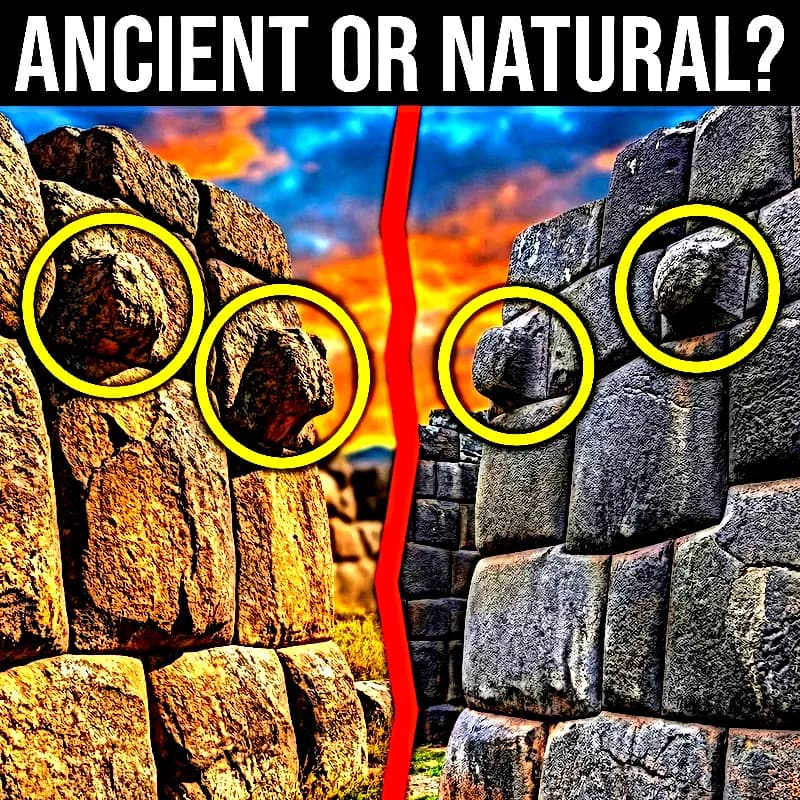
The investigation into the origins of monumental stone structures often serves as a primary friction point between conventional geological science and alternative historical paradigms. The "Montana Sage Wall," a feature located within the 75-million-year-old Boulder Batholith, has emerged as a significant case study in this debate [1]. To proponents of alternative history, the wall represents a North American extension of the sophisticated cyclopean masonry traditionally associated with the Inca and pre-Inca cultures of Peru, specifically sites such as Sacsayhuaman, Ollantaytambo, and Cusco [2]. This comparative analysis evaluates the structural, visual, and functional features of the Montana formations against the Peruvian benchmark, while detailing the standard geological processes, such as orthogonal jointing and spheroidal weathering, that offer a naturalistic explanation for these phenomena [3].
Dossier Snapshot
Year Span
12,000 BCE-2025 CE
Word Count
2,260
Source Entries
47
Citation Calls
104
Report Signal Profile
Section Headings
11
Table Blocks
4
Unique Citations
47
Source Entries
47
Verification Metrics
| Metric | Value |
|---|---|
| Section Headings | 11 |
| Table Blocks | 4 |
| Citation Coverage | 47/47 |
| Format | MDX |
Comparative Overview of Structural Features
The following table provides a high-level comparison of the visual and structural hallmarks observed at the Montana Sage Wall and representative megalithic sites in the Peruvian Andes.
| Feature Category | Montana Sage Wall / Megaliths | Peruvian Megalithic Architecture |
|---|---|---|
| Primary Material | Quartz monzonite and dolerite (Boulder Batholith) [4], [5] | Andesite, diorite, and limestone [6], [7] |
| Typical Block Weight | Estimated multi-ton blocks; largest recorded at 92 tons [8], [9] | Individual blocks exceeding 100-150 tons at Sacsayhuaman [10], [11] |
| Surface Protrusions | Rounded "nubs" or knobs scattered across block faces [1], [12] | Functional "lifting bosses" or "roof pegs" [13] |
| Joinery Style | Polygonal interlocking with straight-planed fits [1], [12] | Precision mortarless fitting; millimetric joints [14], [15] |
| Block Aesthetic | "Puffy" or "pillowed" faces with rounded corners [2], [5] | Intentional "pillow-faced" architectural style [16], [17] |
| Foundation Status | GPR indicates a flat base 15-20 feet underground [12], [18] | Excavated living rock foundations for seismic stability [16], [19] |
| Linear Consistency | Highly linear; extends approximately 275 feet [3] | Integrated into complex urban and defensive plans [16], [19] |
Analysis of the "Anomalous" Features: The Proponent View
The core of the "Montana Megaliths" theory relies on the observation of specific features that proponents argue defy standard geological explanations and instead point to intentional engineering.
The "Nubs" or Protruding Bosses
One of the most striking visual similarities cited by alternative historians is the presence of "nubs" or knobs on the faces of the Montana granite blocks [1]. These features, found at the Sage Wall and the nearby Tizer Dolmen, consist of rounded protrusions that appear to be integrated into the surface of the massive stones [12].
In Peru, these protrusions are well-documented as "bosses" or "lifting knobs." Archaeologists like John Howland Rowe and Jean-Pierre Protzen have established that these were utilitarian aids used during the construction process [13]. Proponents of the Montana megaliths argue that the Montana nubs serve a similar purpose, potentially as tie-downs for wooden structures or as byproducts of a geopolymer casting process [12], [20]. However, an analysis of the Montana nubs suggests they are often in random alignments and lack the functional asymmetry (rounded tops and cupped undersides) seen in Peruvian lifting bosses, which were specifically shaped to provide purchase for pry bars [13].
Polygonal Interlocking and Joinery
The Sage Wall exhibits a "polygonal" layout, where blocks of varying sizes and irregular shapes are fitted together without mortar [1]. Proponents highlight "V" or "U-shaped" gaps at regular intervals along the top of the wall, suggesting intentional placements or "doors" that were once filled with precisely cut stones [1], [18]. Michael Collins and Jimmy Corsetti have pointed to these features as "anomalies" that align with the high-precision mortarless masonry found at Sacsayhuaman, where joints are so tight that a sheet of paper cannot pass between them [1], [21].
In Montana, the blocks are described as being fitted in an "S" pattern in certain sections, specifically involving blocks of "pink granite" that proponents claim are non-native to the immediate area [12], [22]. This is used as evidence that the stones were moved from their original source and placed into a deliberate structure. Standard archaeology in Peru explains this interlocking as a seismic mitigation strategy, allowing walls to "breathe" and shift during earthquakes without collapsing [6], [23]. Alternative theorists suggest that if the Sage Wall served a similar purpose, it implies a shared engineering culture spanning the Americas [9], [18].
Corner Rounding and the "Pillowed" Aesthetic
The "puffy" or "pillowed" look of the Montana blocks is another central argument for intentionality [2], [5]. This aesthetic mimics the "pillow-faced" architecture of royal Inca sites like Machu Picchu and the Qorikancha [13], [16]. Proponents suggest that this was not the result of erosion but a specific stylistic or functional choice. In Peru, the pillowed effect was achieved by sanding and shaping the edges of the stones to create recessed joints, which emphasizes the massiveness of the blocks [16], [17]. Proponents claim that the Montana stones show a similar degree of intentional "rounding" that exceeds what would be expected from random environmental exposure [24].
The Geological Rebuttal: The Skeptic's View
Geological consensus maintains that the Montana Sage Wall is a natural byproduct of the Boulder Batholith's formation and subsequent erosion.
The Boulder Batholith and Orthogonal Jointing
The Sage Wall is composed of quartz monzonite and dolerite within the Boulder Batholith, a 75-million-year-old igneous intrusion [4], [5]. The "wall" itself is interpreted by geologists as a vertical granite vein or dike that has been exposed by the erosion of softer surrounding rock [3], [5].
The blocky appearance is attributed to "orthogonal jointing." As magma cools deep underground, it is subjected to intense pressure; when it is uplifted and the overburden is removed, the rock expands and fractures along systematic planes [3], [25]. When these joints intersect at 90-degree angles, they create the appearance of stacked rectangular courses [3]. Geologists note that these joint sets pervade the entire region and can extend for miles, creating numerous "wall-like" features that occur naturally without human intervention [3].
Spheroidal Weathering and the Formation of "Nubs"
The "nubs" and rounded corners that proponents call intentional are explained geologically by "spheroidal weathering" (also known as onion-skin weathering) [26], [27]. This chemical process occurs when groundwater penetrates the joint systems. Chemical decay is most aggressive at the corners (exposed on three sides) and edges (exposed on two sides) of the granite blocks, leading to a progressive rounding of the stones in situ [28], [29].
This process creates "corestones," unweathered, rounded centers of rock surrounded by decayed material called "saprolite" [27]. When erosion removes the saprolite, these corestones and their associated surface "knobs" are exposed. Geologists argue that the Montana nubs are either unweathered remnants of the original stone or mineral inclusions (xenoliths) that are more resistant to erosion than the host matrix [3], [12].
| Geological Process | Resulting Visual Feature | Human Comparison |
|---|---|---|
| Orthogonal Jointing | Rectangular and square block formations [3] | Intentional masonry courses |
| Spheroidal Weathering | Rounded corners and "puffy" block faces [27], [29] | Pillowed-faced architecture |
| Corestone Exposure | Rounded knobs or protrusions on surfaces [26], [28] | Lifting bosses/nubs |
| Vertical Vein Erosion | Linear, standing walls of granite [3], [5] | Defensive or retaining walls |
| Differential Erosion | Concave pits or "scoop marks" [25], [30] | Tool marks or cups |
The "Ancient Civilization" Connection: Alternative Theories
Alternative history researchers posit that the Montana megaliths are remnants of a lost, pre-diluvial civilization that may have had links to the high-culture builders of South America.
Transoceanic and Global Connectivity
A central theme in the "Montana Megaliths" theory, led by Julie Ryder, is the existence of a "Mother Civilization" that possessed advanced technology prior to the catastrophic tidal waves at the end of the last Ice Age, approximately 12,000 years ago [31], [32]. Ryder and her colleagues, including Andrew Barker (nicknamed "Dr. Dolmen"), argue that the Montana sites are part of a global "megatropolis" [31].
They support this claim with the theory of a "Star Nation Language," an ancient global language found in symbols and pictographs across Montana, Illinois, and Colombia [31], [33]. Specifically, the "Changing of the Worlds" symbol (hourglass-shaped) has been identified on a stone carving in Colombia and matched to glyphs found in Montana [31], [33]. This shared iconography is used to suggest that the builders of the Montana walls and the Peruvian fortresses were culturally or genetically linked [18], [31].
The Geopolymer and Plasma Theory
To explain the precision of the joints and the "melted" look of the stones, some researchers propose that the stones were not carved but cast using "geopolymer concrete" [31], [34]. This theory, also popularized by researchers like Helmut Tributsch for Peruvian masonry, suggests that ancient builders used acidic mud or plant extracts to soften rock into a plastic state [34], [35]. The nubs, in this view, are seen as remnants of the molding process or vents for the escaping gas [12], [20]. Ryder's team also speculates that civilizations worked with "plasma and frequency" to manipulate the weight of the massive 92-ton blocks [31], [36].
Indigenous Oral Traditions and Regional Legends
Investigating the Montana region's Indigenous oral traditions provides a cultural context that, while distinct from the "Incan" narrative, emphasizes a deep ancestral memory regarding the manipulation of the landscape.
Blackfeet and the Creator Napi
The Blackfeet (Niitsitapi) people possess origin stories that date back 18,000 years, linking them to the Montana prairie east of the Northern Rockies [37]. Their legends describe "Old Man" (Napi), who created the mountains and prairies as he traveled north [38]. Napi is said to have memorialized his journey by creating "boulder effigies," laying down to rest and marking the shape of his body, head, and limbs with stones [38], [39]. These stone figures are still visible on the landscape today and are treated as religious architecture rather than archaeological data [38], [40].
Crow Legends of the "Little People"
The Crow (Apsaalooke) Tribe has a profound spiritual connection to the Pryor Mountains, where they believe the "Awa-Kulay" or "Little People" reside [41]. These dwarves are described as supernatural beings with advanced knowledge who primarily dwell underground in mountain tunnels [41], [42]. According to Crow oral history, the Bighorn Medicine Wheel was already in existence when the Crow entered the region, having been built by "ancient ancestors" or "people without iron" [43]. Some legends, such as that of "Burnt Face," describe the construction of stone wheels with the aid of the Little People, establishing a tradition of stone-working that predates recorded history [40], [43].
Salish Traditions and Subterranean Corridors
The Bitterroot Salish tribe possesses oral histories that alternative researchers like Julie Ryder claim describe ancestors traveling through "tunnels under pyramids" in the Montana megalithic sites [31], [44]. These accounts also mention interactions with ancient maritime groups like the Sumerians and Phoenicians, supported by the supposed discovery of artifacts left behind by these visitors [31]. While these claims are outside the mainstream archaeological consensus, they illustrate the complex intersection of Indigenous memory and modern alternative historical inquiry.
Technical Surveys and Geophysical Data
To move beyond visual interpretation, recent studies have employed non-invasive geophysical technology to assess the Montana Sage Wall.
Ground-Penetrating Radar (GPR) and LIDAR
The Sage Mountain Center initiated GPR and electromagnetic surveys in 2023, conducted by geophysicist Karl Manzer [12], [18]. The GPR report suggested the existence of a "reflector" or flat stone base under the wall, with portions of the structure continuing more than 15 feet beneath the surface [5], [18]. Proponents use this "manufactured foundation" to argue against the natural granite dike theory [12].
LIDAR studies have also been requested to map the full extent of the complex, as much of the area is obscured by dense Douglas fir and lodgepole pine timber [5]. Satellite scans using Merlin Burrows technology have allegedly verified that the layout of the Montana "megatropolis" matches ancient structures like the Hawara Labyrinth in Egypt, though these claims have not been peer-reviewed by conventional archaeologists [31].
Magnetic and Mineralogical Characteristics
Analysis of the Sage Wall's granite has revealed high concentrations of hematite and magnetite, creating strong localized magnetic fields [5]. This quality is so intense that the site has been dubbed a "drone-eater," with six drones reportedly crashing due to signal disruptions over three years [18].
While geologists explain this as a natural outcome of the Boulder Batholith's mineral-rich veins (which have produced hundreds of millions of dollars in copper, silver, and gold), alternative theorists suggest the site may have functioned as an ancient "power-generating plant" [4], [31]. They point to the 40% quartz crystal content in the granite as evidence of its piezoelectric potential, a theory also applied to the granite chambers of the Great Pyramid of Giza [5], [31].
Comparative Functional Logic: Lifting vs. Nature
The core functional difference between the Montana and Peruvian sites lies in the evidence of human labor.
The Protzen Experiments in Peru
In Peru, the "lifting bosses" are supported by experimental archaeology. Jean-Pierre Protzen demonstrated that multi-ton stones could be shaped using only hammerstones of hematite or andesite [13], [45]. By striking the rock at a 15-25 degree angle, masons could chip away material with surprising speed [13]. The nubs were essential for "trial and error" fitting, a stone would be lifted onto the wall, its fit checked, and then tilted back using the nubs to allow for further trimming [13], [45].
The existence of "white dots" on limestone blocks at Sacsayhuaman, which are metamorphic signatures of hammerstone impacts, provides physical proof of this process [13]. Furthermore, historical accounts from Spanish chroniclers describe tens of thousands of workers mobilized through the Mit'a labor system to pull massive stones on oiled logs and wooden reeds [10], [16].
The Montana "Wall" and Lack of Tooling
In contrast, the Montana Sage Wall lacks the specific hammerstone impact marks or "white dots" found in Peru [3]. Skeptics note that if the wall were only 10,000 to 12,000 years old, tooling marks on granite would not have disappeared through weathering [3]. Furthermore, there is no evidence of a sedentary agricultural civilization in Pleistocene Montana capable of providing the massive workforce (estimated at 20,000 for Sacsayhuaman) required to construct such a monument [8], [16]. Proponents counter that the civilization was destroyed and its traces erased, relying on the "flash fossilized" beings and geopolymer theories to fill the gaps in the archaeological record [31], [46].
Conclusions and Synthesis
The comparison between the Montana Sage Wall and Peruvian megalithic masonry reveals a profound divergence between visual morphology and established functional logic.
Visually, the similarities are undeniable: both environments feature massive blocks, mortar-free polygonal fits, pillowed aesthetics, and surface nubs [1], [2]. To the alternative historian, these are the hallmarks of a global prehistoric engineering tradition that was once capable of manipulating stone on an industrial scale [12], [31].
However, the functional and geological data present a different picture. In Peru, the nubs are functional tools for a massive labor force, supported by experimental proof and historical records [45]. In Montana, the nubs and "joinery" are the predictable outcomes of the cooling and weathering of a massive granitic batholith [26], [28]. The linear nature of the wall is explained as a vertical vein exposed by erosion, and the magnetic anomalies are the result of natural magnetite concentrations in the quartz monzonite [3], [4].
Indigenous oral traditions offer a potential middle ground, suggesting that while the formations may be natural, they were recognized, venerated, and potentially modified by ancient ancestors [3], [40]. The legends of Napi marking the landscape and the "Little People" building medicine wheels imply that the stone formations of Montana have served as a focus of human intention and spiritual architecture for millennia, regardless of whether they were originally "constructed" in the modern sense. Future research, particularly paleomagnetic testing to see if the blocks cooled in place or were moved, will be essential to providing a definitive scientific resolution to the mystery of the Sage Wall [47].
Sources
- Megalithic North America - Part 1: The Sage Wall : r/AlternativeHistory, https://www.reddit.com/r/AlternativeHistory/comments/13il6gz/megalithic_north_america_part_1_the_sage_wall/
- The Sage Wall in Montana shares similar polygonal architecture to the ancient walls in Cusco, Sacsayhuaman and Egypt - and even has the same 'nubs' with an unknown purpose. - Reddit, https://www.reddit.com/r/AlternativeHistory/comments/1iy9cgt/the_sage_wall_in_montana_shares_similar_polygonal/
- What do you pros think of the Sage Wall in Montana ? : r/geology - Reddit, https://www.reddit.com/r/geology/comments/1dtwpc8/what_do_you_pros_think_of_the_sage_wall_in_montana/
- Boulder Batholith - Wikipedia, https://en.wikipedia.org/wiki/Boulder_Batholith
- Montana megaliths, Part 5 - PLEISTOCENE COALITION NEwS, https://pleistocenecoalition.com/newsletter/january-february2024.pdf
- The Enigma of Perfectly Fitted Stones: How the Incas Built Without Cement, https://www.casadelsolhotels.com/blog/the-enigma-of-perfectly-fitted-stones-how-the-incas-built-without-cement
- Twelve Angled Stone Peru Guide: History, Hiking, Facts, Maps, and Tours, https://www.evolutiontreksperu.com/twelve-angled-stone/
- Montana megaliths, Part 1 - PLEISTOCENE COALITION NEwS, https://pleistocenecoalition.com/newsletter/may-june2023.pdf
- Native Americana - Out of Babel Books, https://outofbabelbooks.com/tag/native-americana/
- Everything you need to know about Sacsayhuaman Fortress | Blog - Machu Travel Peru, https://www.machutravelperu.com/blog/sacsayhuaman
- What was Special About Inca Stonework? Ancient Mysteries - Peru Explorer, https://www.peru-explorer.com/what-was-special-about-inca-stonework-ancient-mysteries.htm
- PCN - PLEISTOCENE COALITION NEwS, https://pleistocenecoalition.com/newsletter/november-december2023.pdf
- Masonry Techniques of the Inca's Master Builders - Earth As We Know It, https://www.earthasweknowit.com/pages/inca_construction
- (PDF) Fabrication Methods of the Polygonal Masonry of Large Tightly-fitted Stone Blocks with Curved Surface Interfaces in Megalithic Structures of Peru - ResearchGate, https://www.researchgate.net/publication/366084073_Fabrication_methods_of_the_polygonal_masonry_of_large_tightly-fitted_stone_blocks_with_curved_surface_interfaces_in_megalithic_structures_of_Peru
- Machu Picchu architecture: The Inca buildings explained - Quechuas Expeditions, https://www.quechuasexpeditions.com/machu-picchu-architecture-the-buildings-of-the-incas-explained/
- Inca architecture - Wikipedia, https://en.wikipedia.org/wiki/Inca_architecture
- Rock Whisperers: The Subtle Power of Incan Masonry | The Architects' Take, https://thearchitectstake.com/editorials/rock-whisperers-the-subtle-power-of-incan-masonry/
- Megalithic Ruins in Montana II: Sage Wall, near Butte - Out of Babel Books, https://outofbabelbooks.com/2025/06/27/megalithic-ruins-in-montana-ii-sage-wall-near-butte/
- Sacsayhuaman - Wikipedia, https://en.wikipedia.org/wiki/Sacsayhuam%C3%A1n
- strange looking marks on granite stoneblocks in Coriancha : r/AlternativeHistory - Reddit, https://www.reddit.com/r/AlternativeHistory/comments/10j4rsu/strange_looking_marks_on_granite_stoneblocks_in/
- Sacsayhuaman is an ancient stone wall complex near the Cusco city of Peru. The blocks have a different shape, but despite this they are fit together with unbelievable precision. The stones are so closely spaced even a single piece of paper will not fit between many of the stones. : r/GrahamHancock - Reddit, https://www.reddit.com/r/GrahamHancock/comments/llsnh2/sacsayhuaman_is_an_ancient_stone_wall_complex/
- PLEISTOCENE COALITION NEwS - The Pleistocene Coalition, https://www.pleistocenecoalition.com/newsletter/march-april2024.pdf
- Polygonal Masonry - The Stone Trust, https://thestonetrust.org/polygonal-masonry/
- Montana megaliths - PLEISTOCENE COALITION NEwS, https://pleistocenecoalition.com/newsletter/september-october2023.pdf
- 5 Weathering, Erosion, and Sedimentary Rocks – An Introduction to Geology - OpenGeology, https://opengeology.org/textbook/5-weathering-erosion-and-sedimentary-rocks/
- Our Dynamic Desert - USGS.gov, https://pubs.usgs.gov/of/2004/1007/granite.html
- Spheroidal weathering - Wikipedia, https://en.wikipedia.org/wiki/Spheroidal_weathering
- Spheroidal Weathering, https://www2.paradisevalley.edu/~douglass/v_trips/mrcs_lndsld/stop03/3b/3b.html
- Spheroidal Weathering Vs Exfoliation Weathering - Geology In, https://www.geologyin.com/2025/12/spheroidal-vs-exfoliation-weathering.html
- New Evidence of an Ancient Megalithic Civilization in Montana : r/AlternativeHistory - Reddit, https://www.reddit.com/r/AlternativeHistory/comments/w3pcju/new_evidence_of_an_ancient_megalithic/
- MONTANA MEGALITHS, https://www.montanamegaliths.com/
- Man-made Pyramids Discovered in Montana - Body Mind Spirit Journeys, https://bodymindspiritjourneys.com/news/man-made-pyramids-discovered-in-montana.html
- Epochs of Civilizations - MONTANA MEGALITHS, https://www.montanamegaliths.com/epochs-of-civilizations.html
- This is How They Built the Inca Stone Walls | Ancient Architects - YouTube, https://www.youtube.com/watch?v=_KbSFphHCZY
- Polygonal masonry, including Incan walls : r/AlternativeHistory - Reddit, https://www.reddit.com/r/AlternativeHistory/comments/w4w26m/polygonal_masonry_including_incan_walls/
- Julie Ryder: The Megaliths of Montana | Earth Ancients Podcast - Everand, https://www.everand.com/podcast/674665663/Julie-Ryder-The-Megaliths-of-Montana-The-Montana-Megaliths-a-captivating-collection-of-towering-dolmens-intricate-polygonal-block-granite-walls-a
- The Blackfeet Nation Has Long, Epic History | University of Montana, https://www.umt.edu/this-is-montana/columns/stories/blackfeet.php
- Montana Indians Their History and Location, https://opi.mt.gov/Portals/182/Page%20Files/Indian%20Education/Indian%20Education%20101/Montana%20Indians%20Their%20History%20and%20Location.pdf
- Oral tradition as emplacement: Ancestral Blackfoot memories of the ..., https://blackfootconfederacy.ca/wp-content/uploads/2024/04/Creation-Stories.pdf
- Medicine Wheel/Medicine Mountain: Celebrated and Controversial Landmark | WyoHistory.org, https://www.wyohistory.org/encyclopedia/medicine-wheel
- CROW ARCHAEOLOGY AND ORAL HISTORY: THE ILLUSTRATIVE STORY OF ARROW SHOT INTO ROCK AND THE LITTLE PEOPLE OF THE PRYOR MOUNTAINS - University of Idaho, https://verso.uidaho.edu/view/pdfCoverPage?instCode=01ALLIANCE_UID&filePid=13308620510001851&download=true
- Little Human Subspecies: Where's the Evidence? | Ancient Origins, https://www.ancient-origins.net/human-origins-folklore/human-subspecies-0015014
- Medicine Wheel/Medicine Mountain National Historic Landmark - Wikipedia, https://en.wikipedia.org/wiki/Medicine_Wheel/Medicine_Mountain_National_Historic_Landmark
- Montana Megaliths Dreams & Spiritual Guidance Episode 2 - Vriend van de Show, https://vriendvandeshow.nl/coast-to-coast-am/episodes/montana-megaliths-dreams-spiritual-guidance-episode-2
- How were the Inca's masons able to create such tightly joined stonework? Here's what the evidence suggests... : r/Archeology - Reddit, https://www.reddit.com/r/Archeology/comments/1prsg4r/how_were_the_incas_masons_able_to_create_such/
- Montana Megaliths and Pyramids Spiritual Guided Tour - Body Mind Spirit Journeys, https://bodymindspiritjourneys.com/montana.html
- Sage Wall in Montana??.... (stone work forum at permies), https://permies.com/t/269559/Sage-Wall-Montana